

Paris region’s June heatwave killed 3,000 more than normal, over 1,565 extra deaths
France’s health agency reports a record-setting week in June, with over-65s driving more than 80% of fatalities.

France’s public health agency said authorities in the Paris region recorded 1,565 more deaths than expected over a one-week period in June. The agency linked the spike to a protracted heatwave that broke all-time temperature records and warned that people over 65 accounted for more than 80% of deaths.
Paris region officials recorded “1,565 more deaths than expected” over a one-week period in June, according to a report from France’s public health agency released on Friday. Those excess deaths pushed the heatwave toll in the region to about 3,000 more fatalities than normal mortality rates.
The numbers are stark because they describe something beyond a headline temperature. They measure real-world harm, and the report also points to who bore the brunt: people over 65 accounted for more than 80% of fatalities. In other words, this was not just “bad weather.” It was a mortality event concentrated among the oldest residents, the group that many health and social systems rely on least ability to absorb shocks.
For executives and boards, the immediate takeaway is that heatwaves do not behave like ordinary operational risks. When the thermometer breaks all-time temperature records, the impact cascades through emergency care, nursing and long-term support, and the everyday logistics of keeping vulnerable populations safe. Public health agencies track expected mortality because it captures baseline risk, then excess deaths reveal the gap when conditions push beyond what systems can comfortably handle.
In France, a report like this does more than inform the public. It becomes part of the regulatory and planning backdrop for how authorities manage extreme weather and how institutions justify budgets, staffing, and preventive measures. Even when companies are not the direct subject of such reports, they can become indirectly accountable through supply chains, workforce safety obligations, insurance considerations, facility design standards, and government procurement priorities tied to resilience.
The heatwave described here was protracted, not a quick spike. That detail matters. Extended periods of extreme heat tend to amplify strain rather than cause a single surge that passes quickly. That is when “expected” baselines get overwhelmed. It is also when recovery time shrinks, which can compound downstream effects in hospitals and care facilities. For an organization managing anything from healthcare partnerships to municipal contracts to critical infrastructure, the lesson is that readiness needs to be sustained, not just triggered.
There is also a governance angle. When more than 80% of fatalities are among those over 65, it highlights an uneven risk distribution. Boards overseeing retirement communities, care networks, and social service operators should treat heat resilience as a targeted responsibility. The same principle applies broadly in workforce settings: if extreme conditions disproportionately affect a particular demographic, contingency planning needs to match that profile, including cooling access, check-in protocols, and escalation pathways.
Second-order implications show up in how stakeholders will talk about this event. Excess mortality figures provide a language for policymakers and regulators to connect climate and public health outcomes to preparedness measures. That can translate into faster scrutiny of emergency response plans and more attention on compliance with heat action frameworks. It can also feed into how investors evaluate climate risk, not as a vague future scenario, but as a measurable event with recorded mortality impact.
For executives at companies operating across the Paris region, the business relevance is simple: when the public sector documents excess deaths tied to extreme heat, the operating environment changes. Demand for care spikes, staffing gets harder, and logistics become unreliable when systems are stressed. Even organizations not directly in healthcare can face knock-on effects through transportation, utilities, and client needs. And because the report specifically cites a one-week period in June and ties it to record temperature conditions, it sets a reference point that will likely be used in future assessments.
The strategic stakes are clear. Heatwaves that break all-time temperature records can produce mortality events where the expected versus observed gap is large enough to reach around 3,000 additional deaths in the Paris region, driven heavily by older residents. For decision-makers, the question is not whether extreme heat is a concern, it is whether their plans and partners can protect the people most at risk when conditions keep escalating for days, not hours.
This story's Key Insights and Take-aways are locked.
Create a free account to unlock Executive Actions for one credit.
Register to UnlockAlways free for Executives Club members. Join the Club
More in Politics

LA County: DOJ's 20,000 'noncitizen' voter list is 'unreliable,' includes U.S.-born
Preliminary review by Los Angeles County election officials finds errors in the federal list, raising the stakes for voter roll integrity ahead of November.

Trump's $1.5B Pentagon chip investment lands in North Carolina
A $1.5 billion defense infusion for North Carolina chipmaking signals a new era of Pentagon-backed reshoring - here's what it means for the industry.
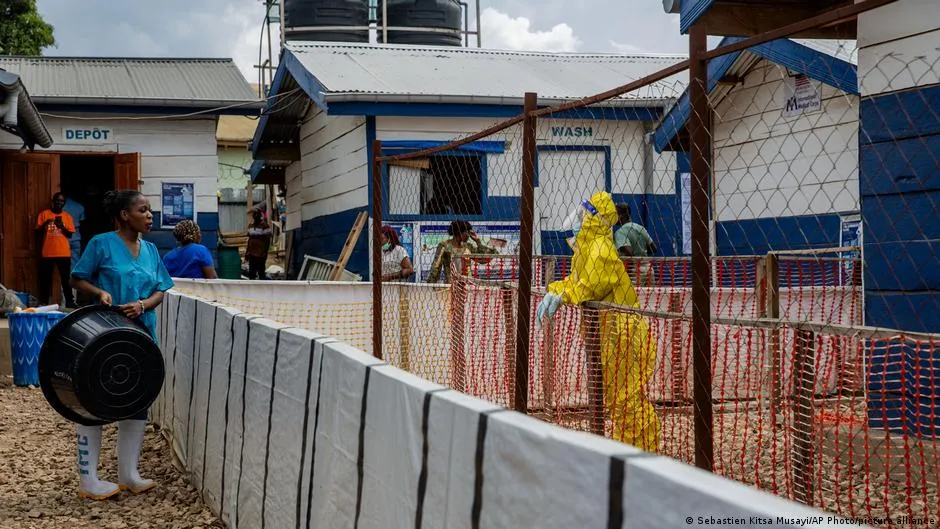
Nigeria confirms first Ebola case in Abuja, a woman just off a Uganda flight
Health Minister Muhammad Ali Pate says the patient flew in from Uganda, putting Africa's latest outbreak on Nigeria's doorstep.