
Peru’s Andes quake kills at least six and injures 30+ as surface-shallow shaking hits
A 5.5 magnitude earthquake in Peru’s Andes leaves at least six dead and 30+ injured, worsening damage from fragile structures.
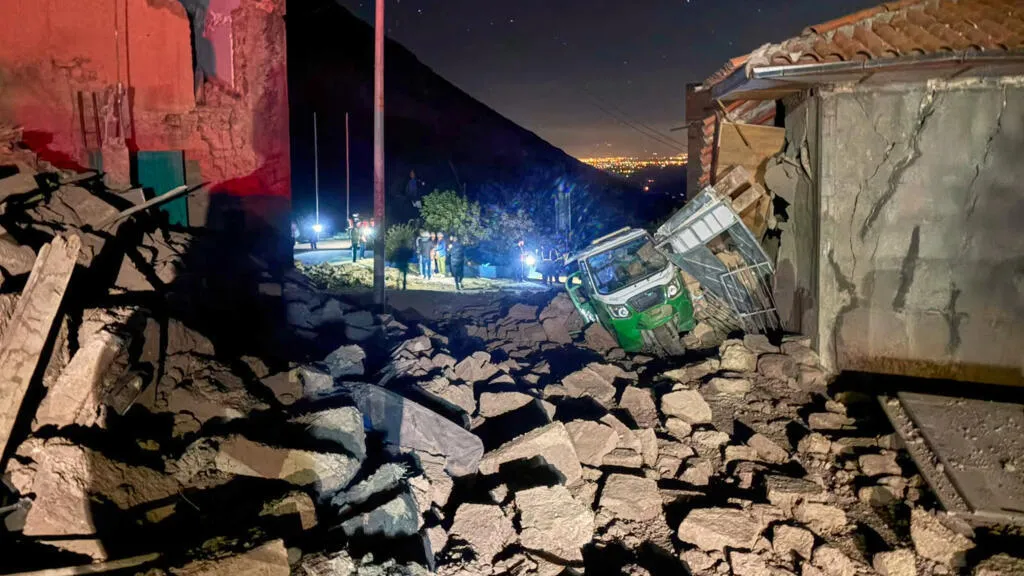
A 5.5 magnitude earthquake hit Peru’s Andes, with local authorities reporting at least six deaths and more than 30 injuries. For decision-makers, the incident is a reminder that infrastructure resilience and risk planning matter even when the event lasts minutes.
A 5.5 magnitude earthquake struck Peru’s Andes, and local authorities say at least six people died with more than 30 injured. The quake’s impact was amplified because the shaking came from an epicenter close to the surface, turning a sudden tremor into a deadly force where buildings cannot absorb it.
That is the immediate headline reality, but there is a second layer leaders should care about: the region’s damage risk was already built in. The damage was compounded by the area’s rustic constructions, which are often less able to withstand strong ground motion than more engineered structures. When you combine shallow epicenter energy with construction that was never designed for seismic loads, the outcome can be catastrophic fast, even for a magnitude that does not automatically imply mass destruction elsewhere.
For executives and boards, earthquakes are one of those hazards that stay invisible until they do not. The Andes region is not a blank slate. In disaster risk terms, magnitude is only one variable; depth, local geology, and building design often determine whether injuries remain limited or escalate. This event is a live example of that logic. A shallow epicenter means the energy is delivered closer to the ground level people inhabit. Rustic construction means the weakest point is not the road to recovery, it is the structure itself.
There is also a practical business and governance angle. After a quake, the costs that hit hardest are often not just the emergency response. They include disruptions to basic services, housing stability, and the speed at which communities can restore work and commerce. Even when authorities release early figures like “at least six dead” and “more than 30 injured,” the bigger question for leaders is what happens in the days and weeks that follow: which assets can reopen, which supply chains stall, and which spending priorities get forced into the emergency bucket.
The regulatory and planning context matters here because it shapes what gets funded before the next event. Many jurisdictions rely on building codes, land-use rules, and enforcement mechanisms to reduce casualties. But the source points to rustic constructions, suggesting vulnerability rooted in how housing is built and maintained. In practice, when enforcement or retrofit coverage is limited, the result is not theoretical. It shows up as collapsing or severely damaged structures when seismic shaking hits, and it becomes a human cost problem before it becomes a balance sheet problem.
Second-order implications extend beyond Peru’s Andes. Supply chain and investment decisions are increasingly shaped by climate and disaster risk modeling, but earthquake risk is often treated as a background factor rather than an operating constraint. This quake underlines why boards should stress test not just continuity plans, but also the assumptions behind them. If a region’s housing stock is fragile and the epicenter is shallow, casualty severity can rise quickly. That affects everything that depends on local labor availability, transportation access, and the ability to resume production.
For companies with operations, personnel, or contractor networks in seismic areas, the strategic stakes are straightforward: what would you do if the strongest impact is delivered directly to fragile structures? The lesson is not abstract preparedness. It is specificity: plans should account for abrupt infrastructure damage scenarios, not just evacuation. That includes communications, medical support pathways, temporary housing coordination, and a clear chain of responsibility when local authorities are already managing casualties.
Finally, peers should see this as a governance prompt. Earthquakes are not board-level drama because they are rare. They become board-level issues because they are hard to control once they start, and because the damage profile depends on site conditions that predate the quake. With local authorities reporting at least six deaths and more than 30 injuries after a 5.5 magnitude event, the takeaway for decision-makers is direct: resilience is not a slogan, it is structural design, enforcement reality, and planning that respects shallow epicenters and vulnerable building stock.
This story's Key Insights and Take-aways are locked.
Create a free account to unlock Executive Actions for one credit.
Register to UnlockAlways free for Executives Club members. Join the Club
More in Politics

LA County: DOJ's 20,000 'noncitizen' voter list is 'unreliable,' includes U.S.-born
Preliminary review by Los Angeles County election officials finds errors in the federal list, raising the stakes for voter roll integrity ahead of November.

Trump's $1.5B Pentagon chip investment lands in North Carolina
A $1.5 billion defense infusion for North Carolina chipmaking signals a new era of Pentagon-backed reshoring - here's what it means for the industry.
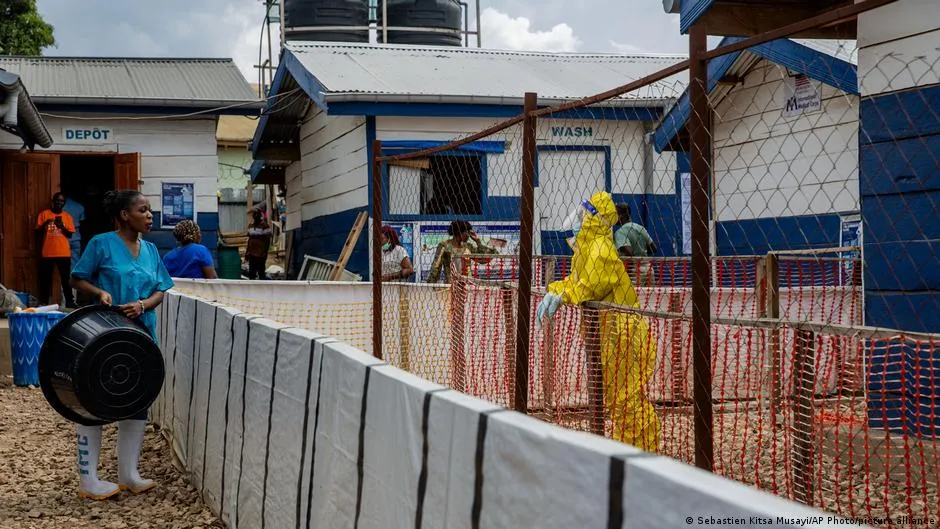
Nigeria confirms first Ebola case in Abuja, a woman just off a Uganda flight
Health Minister Muhammad Ali Pate says the patient flew in from Uganda, putting Africa's latest outbreak on Nigeria's doorstep.