
Pierre Coffin says voicing Minions is “exhausting,” yet he’s still building louder comedy
After nearly two decades in the Despicable Me universe, the director explains why the work never really stops, and what comes next.

Pierre Coffin, longtime co-director and voice actor behind the Despicable Me franchise, discusses his tribute to Hollywood, the exhausting nature of voicing the Minions, and what drives his comedy. For executives and creatives, it is a reminder that sustaining a global hit franchise is operationally brutal, not just creatively exciting.
Pierre Coffin thought he was done with the Minions. After nearly two decades inside the “Despicable Me” universe - described as the highest-grossing animated franchise of all time, with more than $5.5 billion worldwide across six films - the French animator says he had earned the right to feel worn out. He co-directed four of those movies and, beyond directing, voices the yellow creatures that have become shorthand for the franchise itself.
So when Coffin talks about why the work still feels exhausting, he is not doing it as a victory lap. He is essentially outlining the cost of staying “on” for the characters, the pace required to keep a comedic engine running, and the effort involved in crafting comedy that he frames as “more irreverent than some of the competition.” That combination matters: it is the difference between a brand that rests on goodwill and one that keeps competing in a crowded, constantly refreshing animation market.
Coffin’s comments land in a moment where everyone in entertainment is asking the same question: what does it take to extend a blockbuster franchise without thinning the product? The Despicable Me numbers from the source provide the baseline. More than $5.5 billion across six films is not just success, it is proof that Minions are not a one-off meme. That kind of track record creates its own pressure. When a franchise becomes a global category, audiences start expecting consistency at scale, which means the creative bar is both public and operational. Coffin’s sense of being worn out after nearly two decades signals an important truth for anyone trying to run a long-duration creative business: longevity does not mean burnout becomes optional.
The source also frames Coffin’s work as two parallel jobs. First is the production side, where he co-directed four Despicable Me movies. Co-directing at that level is not simply about “making scenes.” It is about managing comedic timing across story, animation, and voice performance, while still meeting the industrial reality of large-scale animated filmmaking. Second is voice performance itself. Voicing the Minions is its own kind of labor, involving characterization and delivery that has to remain instantly recognizable even when the actor is improvising within constraints. That is why Coffin calling it exhausting is not a throwaway detail. If the characters are the product, the performance has to stay sharp, repeatable, and funny.
There is also a Hollywood angle in the source: Coffin offers a tribute to Hollywood. That is the kind of statement executives tend to treat as branding, but it also helps explain the craft choices behind comedy. Comedy built for mainstream audiences is rarely random. It often relies on cultural touchpoints that international viewers can still recognize: classic movie rhythms, genre winks, and comedic tension that lands quickly. In other words, tribute can be a strategy for making jokes legible across markets. And since the source says Coffin is aiming for comedy that is “more irreverent than some of the competition,” the tribute is not just nostalgia. It is a competitive positioning decision, suggesting he believes irreverence can differentiate even when the franchise is already famous.
For decision-makers, the second-order issue is what burnout and franchise success do to internal planning. When a director and voice actor is signaling exhaustion, boards and studio leadership have to interpret it as capacity risk, not just a personal feeling. That can impact everything from succession planning to staffing and scheduling. Even with proven IP and proven box office outcomes, the human bottleneck can quietly become the limiting factor. Animated comedy also has feedback loops: if voice performance is not energized, it affects character behavior in animation timing, which affects how jokes land. So exhaustion is not only a morale issue. It is a production quality issue.
Finally, the source points to a broader competitive reality. The animated space is crowded, and humor is a differentiator that studios try to engineer, not just improvise. Coffin’s comment about crafting comedy that he says is “more irreverent than some of the competition” is basically an argument that differentiation is still possible inside an established universe. That matters for anyone running adjacent franchises or investing in them: the endgame is not merely to keep the brand alive, it is to keep the comedy engine evolving so audiences feel like they are getting something new, not just the same jokes with updated costumes.
This story's Key Insights and Take-aways are locked.
Create a free account to unlock Executive Actions for one credit.
Register to UnlockAlways free for Executives Club members. Join the Club
More in Entertainment

Steam drops four paid games to free for 24 hours starting June 20
Management sim, grand strategy, sports, and mech FPS go free this weekend, so plan installs and playtime like a release week.
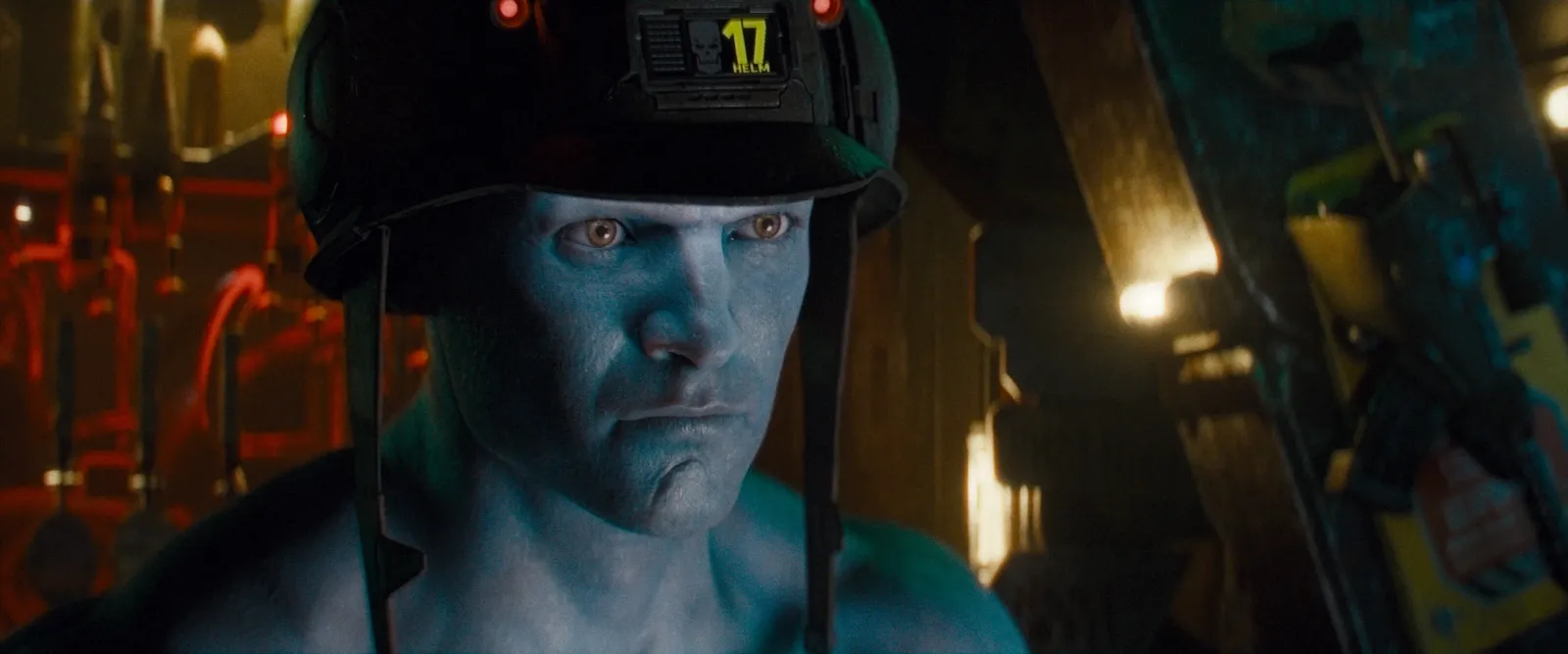
Duncan Jones says “Rogue Trooper” has no AI, then sells its indie-size miracle
The director-writer and producer break down how they landed major voice talent and kept the process clean.

Dua Lipa posts first photos of her custom Chanel wedding dress after Palermo celebrations
The Grammy winner and Callum Turner share debut wedding-dress images from a separate three-day Palermo event.