

Pipeline giants are on a $11B buying spree to feed AI's gas demand
ONEOK's $4.42 billion Brazos deal is the latest in a consolidation wave as U.S. natural gas output heads 35% higher by 2050.
ONEOK acquired Brazos Midstream's Permian Basin gas assets for $4.42 billion, following Williams' $5.5 billion Momentum Midstream purchase. The consolidation wave signals that pipeline giants are betting heavily on surging gas demand from AI data centers and LNG exports.
It is shopping season for America's pipeline giants, and the shelves are getting bare. On Tuesday, Tulsa-based ONEOK closed a $4.42 billion deal to buy Brazos Midstream's Permian Basin gas facilities, adding 700 miles of gathering lines and 1.2 billion cubic feet per day (Bcf/d) of gas processing capacity. The purchase comes just weeks after Williams acquired Momentum Midstream for $5.5 billion, and only months after Western Midstream paid $1.6 billion for Brazos' Delaware Basin assets. Add it up: roughly $11.5 billion in pipeline M&A in under a year, all aimed at one prize - positioning for a wave of U.S. natural gas production that is being supercharged by AI data centers and overseas LNG exports.
That wave is enormous - and measurable. Over the 20 years of the U.S. shale boom since 2006, natural gas production has more than doubled after three decades of flat output. The U.S. now produces about a quarter of the world's natural gas, almost double the output of second-place Russia, and leads the world in LNG exports even though it only started shipping LNG a decade ago. According to U.S. Department of Energy projections, output could rise another 35% by 2050, hitting 150 Bcf/d - up from 50 Bcf/d 20 years ago. ONEOK is not buying a terminal; it is buying the pipes, plants, and gathering lines that sit between the wellhead and the data center. As energy analyst London Spivey of East Daley Analytics told Fortune, "They're getting the gas to help feed that AI demand to profit along every step of the value chain." Pull it out of the ground, bring it to the plant, process it, put it on a pipeline, and deliver it to an AI data center or an LNG terminal.
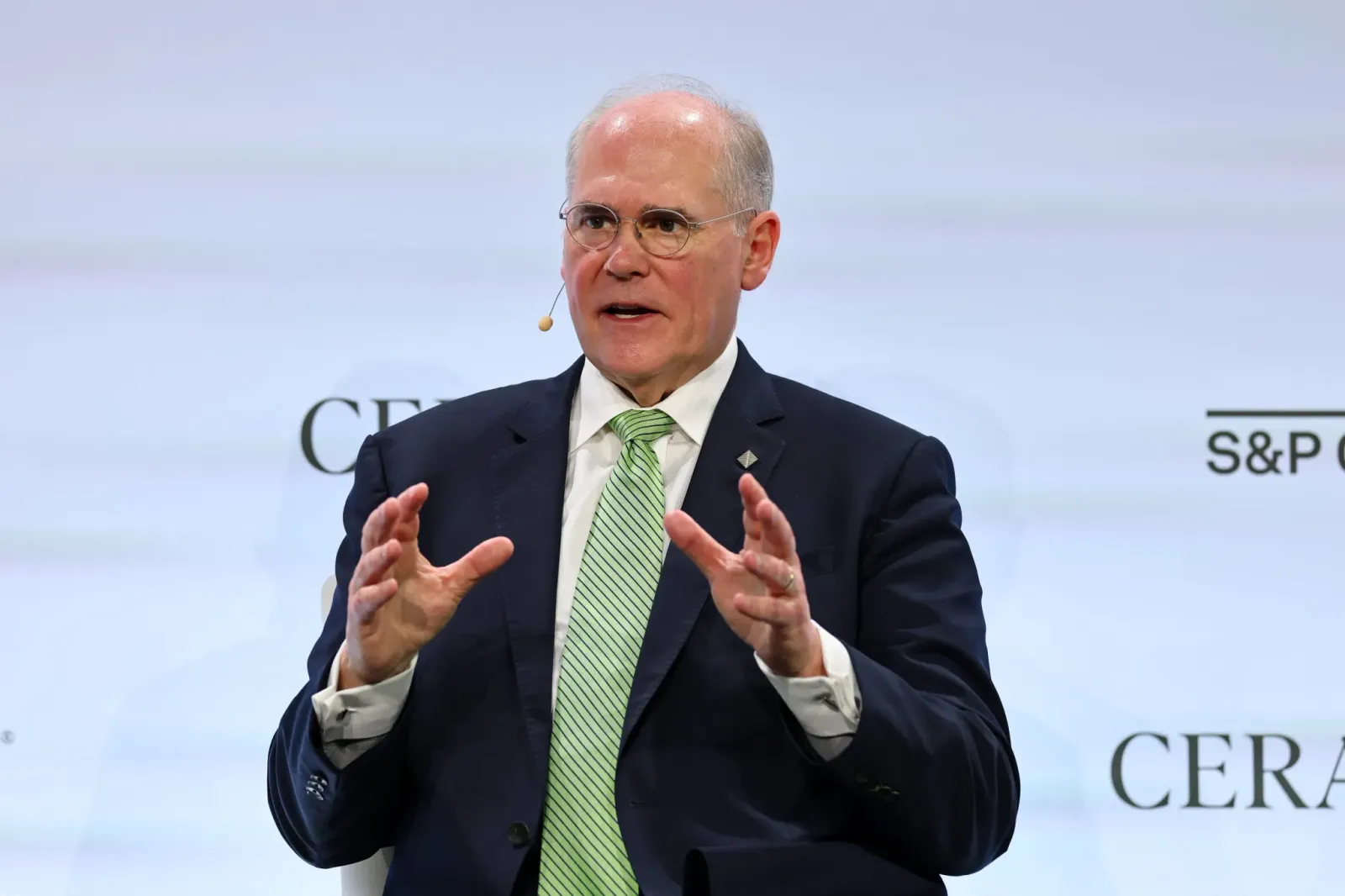
The deal is also a direct answer to a structural mismatch. The Permian Basin produces enormous volumes of gas alongside oil, but there are not enough pipelines to move it all to the Gulf Coast. At times, regional spot prices have gone negative - producers literally had to pay to have excess gas taken away. ONEOK's response, separate from the Brazos deal, is the 450-mile Eiger Express Pipeline from the Permian to the Houston area, slated to come online in 2028. Customer interest was so intense that ONEOK quickly expanded planned capacity from 2.5 Bcf/d to more than 3.5 Bcf/d. "The problem with the gas price in the Permian is going to get solved when all these pipes get built out," ONEOK CEO Pierce Norton told Fortune prior to the Brazos deal. For any executive whose business depends on energy prices, that is a signal: the bottleneck is being unclogged, and gas will flow far more freely to the coast.
The demand side is just as structural. Norton pointed out that LNG exports and AI data centers will drive the need for more drilling, which will likely push gas prices upward. "The demand is going to be there, and it's going to be driven by LNG exports and the AI data centers," he said. Data center developers are concentrating projects in Texas and Louisiana - the same states hosting the LNG buildout - because they offer ample gas supply and industry-friendly regulatory environments. As the oily Permian matures and depletes, its wells produce a higher ratio of natural gas relative to oil, so even flat oil output will yield rising gas volumes. In other words, the gas is coming whether or not anyone drills a new well; the question is who captures the margin. Norton's motto: "Touch as many molecules as we can for as long as we can." That means owning the entire chain, from wellhead to power plant.
ONEOK's shopping spree did not start with Brazos. In 2023, the company bought Magellan Midstream for $18.8 billion including debt, followed in 2024 by EnLink Midstream and Medallion Midstream. These deals were primarily about crude oil and refined products, except for EnLink, which was heavily concentrated in gas infrastructure across Texas, Louisiana, and Oklahoma. "EnLink was the perfect fit," Norton said. The Brazos acquisition integrates neatly into that footprint, giving ONEOK scale in the Permian's more mature Midland Basin. Spivey characterized the strategy succinctly: "They're picking the basins that they want to fight for, and they're piecemeal acquiring as they're trying to get dominant."
All this scale comes at a price - literally. ONEOK had already assumed substantial debt from its earlier deals, so to fund Brazos it brought in Apollo Global Management for a $9 billion investment, of which $4 billion goes toward the acquisition and $5 billion toward debt reduction. That structuring shows the capital discipline required as pipeline giants race to consolidate while keeping balance sheets intact. For peers in the midstream sector, the lesson is clear: the window for buying private gas assets is closing, and the price of admission is rising. As Norton said in the earnings call, "This is a decisive step in the strategy that we have executed for years, building scale in the most attractive producing regions and connecting that supply to ONEOK's integrated system."
The strategic stakes extend well beyond ONEOK. Every pipeline CEO is watching the same data: U.S. LNG export facilities in Texas and Louisiana are still expanding, AI data centers are multiplying, and the DOE projects 35% output growth over the next quarter-century. The companies that control the molecules between the well and the coast will capture the toll road economics of the energy transition - not because of policy, but because of physics and geography. With valuations climbing and private targets disappearing, the next year will separate the consolidators from the spectators. For boards and CFOs, the question is no longer whether to build scale, but whether their balance sheets can stomach the price before the cheap assets are gone.
This story's Key Insights and Take-aways are locked.
Create a free account to unlock Executive Actions for one credit.
Register to UnlockAlways free for Executives Club members. Join the Club
More in Business
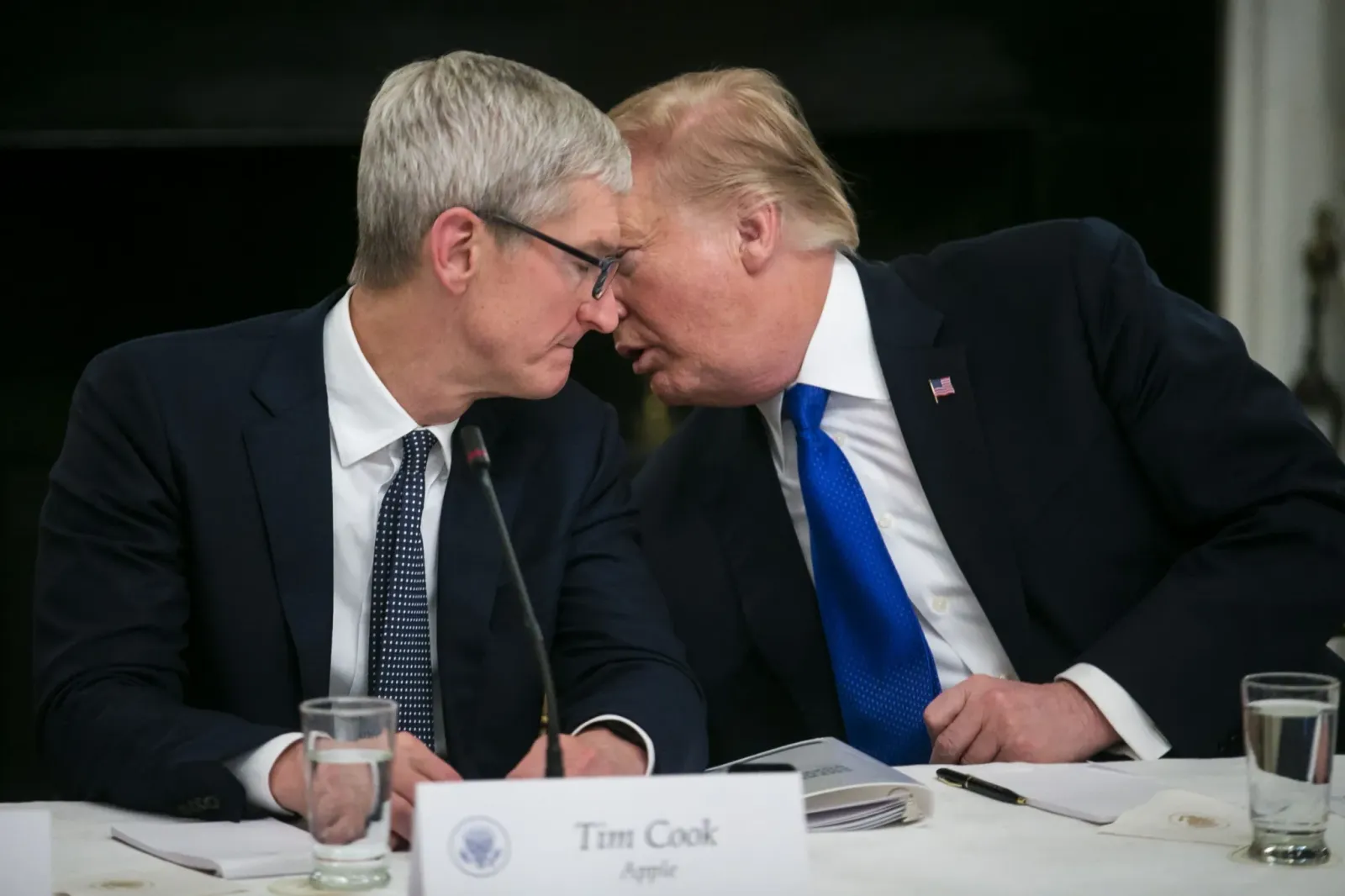
Tim Cook steps down as Apple CEO, stays on as chair with $45M equity
The 'Trump whisperer' keeps his White House and Beijing access as Apple navigates tariffs and a $4.6 trillion market cap.
Snowflake shares surge as AI data demand crushes estimates, lifting full-year forecast
Stocks jumped on stronger-than-expected guidance, signaling enterprise AI workloads are accelerating faster than Wall Street priced in.
Tim Cook's 15-year Apple CEO run ends: 3 lessons for any successor
After 15 years, Tim Cook hands Apple to John Ternus - here's how he turned a $350B company into a $4.6T juggernaut.