
Prenatal estrogen-linked finger patterns predict larger head size in boys, not girls
A study of 225 newborns ties before-birth estrogen exposure to brain-size proxies for boys, reshaping how researchers model development.
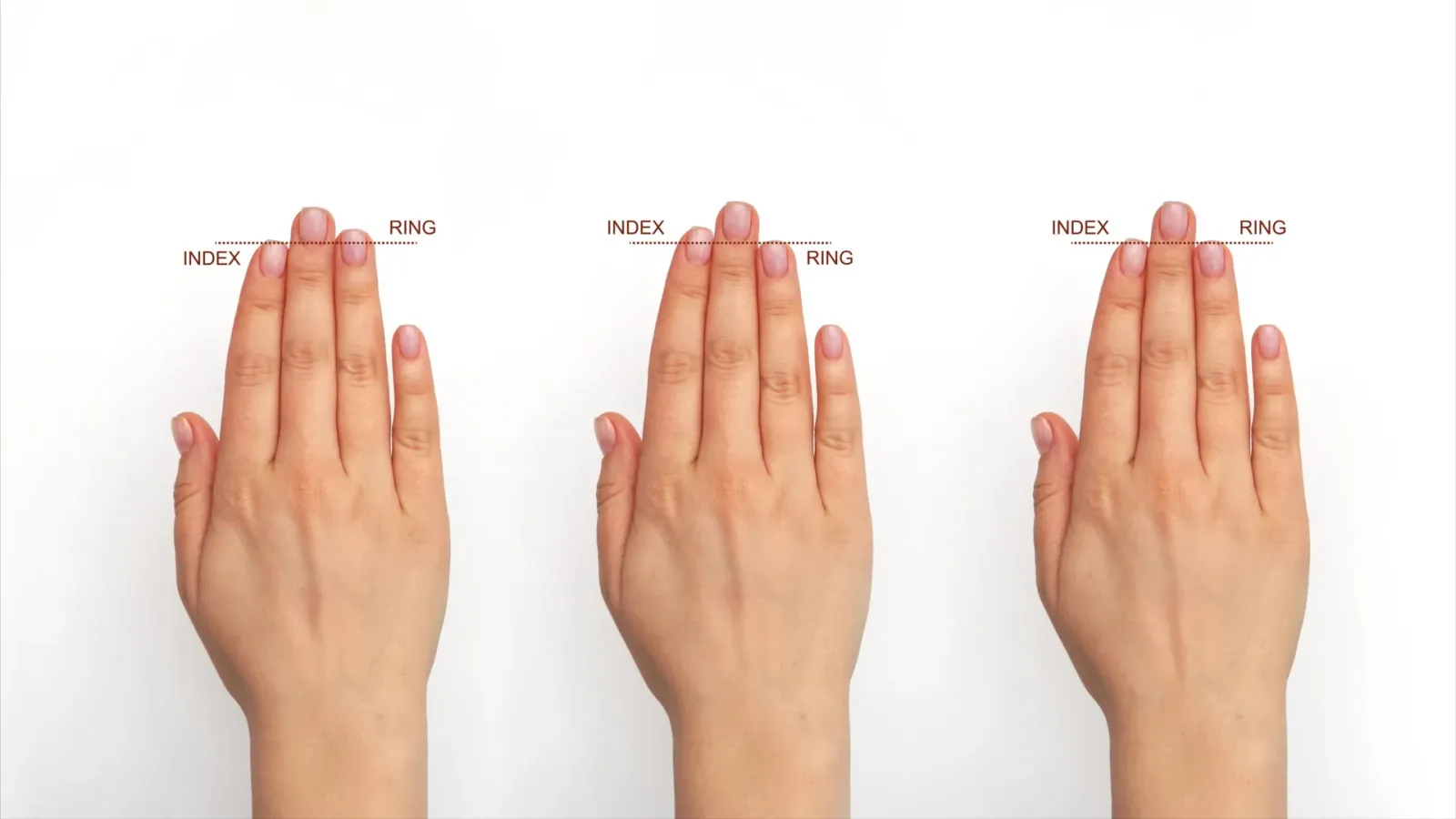
A new study of 225 newborns suggests prenatal estrogen may have played a role in the evolution of larger human brains. Boys with finger-length patterns linked to higher prenatal estrogen exposure tended to have larger head circumferences, a proxy strongly associated with brain size, while the same connection was not seen in girls.
A study of 225 newborns points to prenatal estrogen as a possible lever in the evolution of larger human brains. Here is the punchline: in boys, certain finger-length patterns tied to higher estrogen exposure before birth also showed up alongside larger head circumferences, a marker strongly associated with brain size. In girls, that same pattern did not appear.
That sex-specific link is the key detail decision-makers in research leadership should notice. It is not just “hormones matter.” It is “the same biological signal may not map the same way across sexes,” and the study used a developmental proxy you can measure early: finger-length patterns that the authors connect to prenatal estrogen exposure, and head circumference at birth.
To understand why this is interesting beyond the biology classroom, zoom out to how brain size and development are typically studied. Brain size is hard to measure directly in living newborns. So researchers lean on measurable surrogates. In this case, head circumference is used because it is strongly associated with brain size. The idea is straightforward: if a prenatal factor (here, estrogen exposure) reliably aligns with a postnatal proxy that tracks brain size, that prenatal factor could be part of the story.
Then comes the evolutionary framing. The study “suggests prenatal estrogen may have played a role in the evolution of larger human brains.” That is a big claim, and it is also why the methodology matters. The researchers examined finger-length patterns, which are often used in developmental research as indirect readouts of prenatal hormone environment. By linking those patterns to differences in head circumference at birth, the study is making a case that prenatal hormone exposure could influence developmental trajectories that relate to brain size.
The part that should make executives and board-level research stakeholders sit up is the boundary condition: the same connection was not seen in girls. That does not make the finding weaker automatically. It means the biological pathway could be sex-modulated. For institutions funding research, running programs that assume a one-size-fits-all endocrine model across sexes can be an expensive way to get the wrong answer. This study is a reminder that stratification is not a “nice-to-have.” It is often where the signal lives.
There is also a systems angle that matters for anyone overseeing product or policy work around health and development. Prenatal biology is downstream of many factors, including maternal health and endocrine milieu. But the study’s framing focuses specifically on estrogen exposure before birth. If a prenatal hormone environment can associate with a brain-size proxy differently for boys and girls, it changes how outcomes might be interpreted when translating research into clinical risk assessment, monitoring, or future interventions. Even if the work is still at the research stage, the direction is clear: sex differences in developmental signaling can cascade into different distributions of measurable outcomes at birth.
Now consider second-order implications for decision-makers in adjacent fields, from early detection to public health messaging. Biomarkers are often marketed as universal. The story here is more nuanced. If finger-length patterns linked to prenatal estrogen exposure predict head circumference in boys but not girls, then any downstream program that treats the biomarker the same way across sexes risks miscalibration. That can affect everything from who gets flagged in screening to how outcomes are modeled in studies that aim to link early proxies to later neurodevelopment.
Finally, there is the broader stakes for peers leading research organizations. Evolutionary claims depend on careful, repeatable patterns across cohorts and measurement choices. This study’s foundation is a specific sample size, 225 newborns, and specific associations: boys with finger-length patterns linked to higher prenatal estrogen exposure tended to have larger head circumferences, while girls did not show the same connection. Leaders should treat this as a “promising map,” not a final destination, and push for confirmatory work that tests whether the sex-specific association holds up under different populations and analytic approaches.
In short: the study gives a concrete, measurable clue to a complex question. It suggests prenatal estrogen may have helped shape developmental outcomes related to brain size, but the link appears in boys and not girls. For anyone steering research strategy or translational goals, that sex-specificity is not a footnote. It is the finding you build around.
This story's Key Insights and Take-aways are locked.
Create a free account to unlock Executive Actions for one credit.
Register to UnlockAlways free for Executives Club members. Join the Club
More in Science
2026 Nikon Small World Winners Reveal the Hidden Machinery of Everyday Life
A mycologist's frozen Edinburgh garden became the backdrop for vivid views inside cells, a reminder of what advanced imaging now makes visible to researchers and the industries built on biology.

Study: 1 in 4 depression cases may be a body-clock problem, not a chemical one
A 10,000-person study finds standard antidepressants often fail these patients, but melatonin and morning sunlight may hit the real root cause.

Start-Up Says A.I. Designed a Virus to Attack One Patient's Superbug
If the claim holds up, personalized phage therapy could become a new frontline weapon against antibiotic resistance - but proof is far from final.