
Russia drones near Kyiv kill 10, injure 100; Zelenskyy met Raytheon officials first
A Kyiv-area strike kills 10 and injures around 100, hitting a day after Zelenskyy met Raytheon officials.
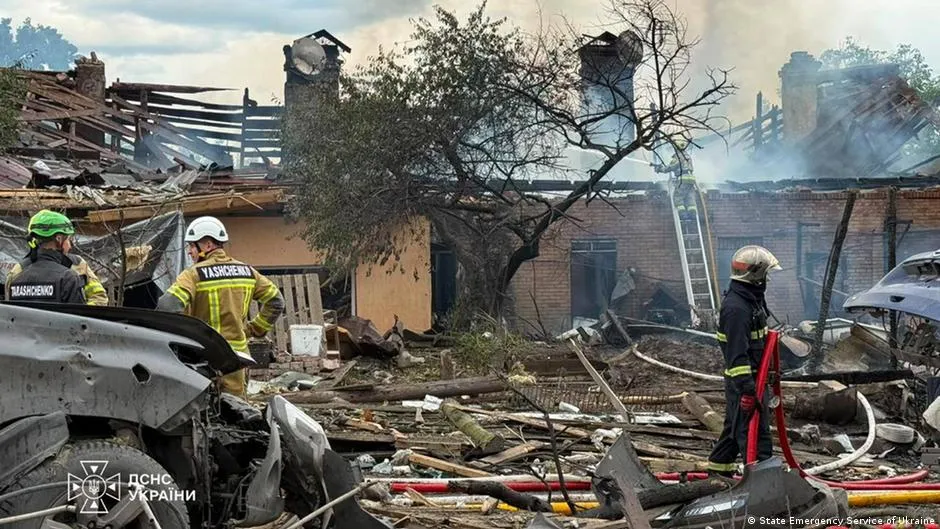
Ukraine says a Russian drone strike near Kyiv killed 10 people and injured around 100. The timing matters for decision-makers because the attack came a day after President Volodymyr Zelenskyy met with officials from US defense contractor Raytheon.
Russia’s drone campaign near Kyiv has produced a grim, immediate outcome: Ukraine says the strike killed 10 people and injured around 100. The attack happened a day after President Volodymyr Zelenskyy met with officials from US arms giant Raytheon, underscoring how closely battlefield events can track diplomatic and procurement cycles.
For executives and investors watching defense demand and risk, the “sequence” is not just news trivia. A meeting with a major US defense firm signals active discussions on capabilities, support, or procurement priorities. Then, the next day, drones hit. Even when officials cannot control timing, the pairing is a reminder that operational realities can change what buyers need, how urgently they need it, and how long they can afford to wait.
There is a second front to this story, and it hints at why planning for security is hard to firewall into one geography. In St. Petersburg, another Wildberries warehouse came under drone fire. That matters because it reinforces a pattern: drones are being used not only against front-line infrastructure, but also against logistics and commerce nodes. For companies that rely on stable supply chains, warehouses, and predictable throughput, drone threats are not a distant military headline. They are an operational continuity problem, which can ripple into inventory, insurance costs, delivery timelines, and customer commitments.
Zoom out further, and you get the market logic behind why defense headlines move so quickly. Defense procurement during active conflict often runs on a blend of short-term urgency and longer-term capability building. Meetings with firms like Raytheon can be part of that longer-term build, but the battlefield keeps rewriting the checklist in real time. If the threat shifts to drones and counter-drone needs accelerate, decision-makers who control budgets and vendor relationships may find that “future” contracts start looking like “today” requirements.
Regulatory and compliance context also matters here, even for non-defense companies. Cross-border defense cooperation typically intersects with government approvals, end-use rules, export controls, and sanction regimes. Those systems are designed to reduce diversion and misuse, but they can also create friction and delays. When strikes escalate quickly, the policy question becomes whether existing frameworks can keep pace with how fast threats evolve. In practical terms, this can affect timelines for delivery, training, maintenance support, and the ability to integrate new systems into existing defense structures.
At the same time, drone attacks on commercial facilities like a Wildberries warehouse can trigger a different set of corporate responses, even when defense policy is not the company’s main lane. Retailers and logistics operators are forced to think in layers: physical security, redundancy of storage and routing, and crisis planning for when facilities are hit. That kind of planning often involves vendors, insurers, and sometimes government liaison for threat assessments. When drone fire shows up in new places, those decision trees get stress-tested fast.
For peers in similar roles, the strategic stake is the same across boardrooms: risk is now operational and geopolitical, not theoretical. The headline numbers from Kyiv, 10 dead and around 100 injured, are the human cost. But they also represent a planning constraint for defense and security stakeholders who need to match capabilities to threats under time pressure. Meanwhile, the St. Petersburg Wildberries incident adds the commercial continuity angle: drone risk can leak into everyday economic infrastructure.
If you lead a defense-adjacent program, run a logistics company, or sit on a board overseeing risk, the takeaway is blunt. Threat signals can arrive on a timeline that is faster than procurement and policy cycles. The people and companies that win in this environment are the ones that connect meetings and contracts to field execution, security planning to supply chain resilience, and regulatory constraints to practical timelines.
This story's Key Insights and Take-aways are locked.
Create a free account to unlock Executive Actions for one credit.
Register to UnlockAlways free for Executives Club members. Join the Club
More in Politics

LA County: DOJ's 20,000 'noncitizen' voter list is 'unreliable,' includes U.S.-born
Preliminary review by Los Angeles County election officials finds errors in the federal list, raising the stakes for voter roll integrity ahead of November.

Trump's $1.5B Pentagon chip investment lands in North Carolina
A $1.5 billion defense infusion for North Carolina chipmaking signals a new era of Pentagon-backed reshoring - here's what it means for the industry.

Nigeria confirms first Ebola case in Abuja, a woman just off a Uganda flight
Health Minister Muhammad Ali Pate says the patient flew in from Uganda, putting Africa's latest outbreak on Nigeria's doorstep.