
Russia hits Kyiv with war's highest ballistic missile count, sparking fires and injuries
The latest ballistic assault uses the most ballistic missiles of the war so far, with fires and injuries across Kyiv.
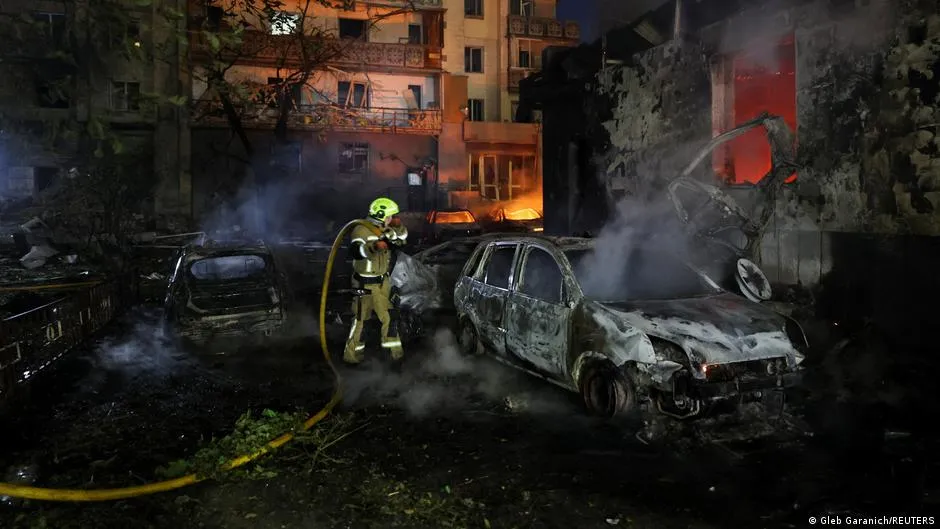
Russia carried out its latest missile attack on Kyiv, using the highest number of ballistic missiles of the war so far. The strike triggered fires across the Ukrainian capital and left several people injured, raising immediate risk for critical infrastructure and regional stability.
Russia’s latest missile attack on Kyiv used the highest number of ballistic missiles of the war so far, and the city felt it immediately. Fires broke out across the Ukrainian capital after the strike, while several people were injured in Kyiv.
That headline detail matters because it signals not just intensity, but scale. A “highest number of ballistic missiles” framing suggests a broad, coordinated push rather than a limited probing action. In executive terms, it is the difference between an incident and an operational pattern. When an attacker ramps up the number of ballistic munitions deployed, you should expect cascading impacts: emergency response load, damage to utilities and facilities, and longer downtime for anything that depends on stable electricity, transport, and communications.
For decision-makers watching from outside the immediate blast radius, this kind of escalation tends to ripple through markets and systems even when those markets are not directly hit. Kyiv’s experience is part of a broader operational reality: as missile campaigns become larger and more frequent, risk modeling for supply chains, insurance, logistics routes, and continuity planning becomes less theoretical. Even if your company is headquartered elsewhere, counterparties, contractors, and critical inputs can be affected through disruptions in the region, changes in routing, or simply higher cost of risk.
There is also a compliance and governance angle, especially for firms with exposure to the region through goods, services, or financial arrangements. In environments where conflict-driven disruptions intensify, boards increasingly face questions about sanctions risk, export controls, and the documentation needed to prove lawful activity. While the source is focused on the attack itself, the operational reality is that missile strikes do not pause regulatory complexity. They can compress timelines for decisions, force faster revisions to controls, and heighten the importance of audit trails.
Second-order effects show up in energy and critical infrastructure planning too. Fires breaking out across Kyiv after a missile attack are not just a humanitarian headline. Fires can damage power distribution, industrial facilities, and building stock. That can turn a short-term event into a longer-term reliability problem, which in turn can impact manufacturing schedules, construction timelines, and the delivery of public services. For executives, the question becomes how quickly organizations can restore baseline operations when the underlying infrastructure is stressed.
It is also worth noting how the specific mention of “ballistic missiles” frames the threat profile. Ballistic munitions differ from other categories of strike capability in how they are used and how they challenge defensive posture. When the attack uses the highest number of ballistic missiles of the war so far, it implies an attempt to overwhelm or stress defenses at scale. Even without getting into technical details, the operational takeaway is clear: higher volume strikes tend to increase uncertainty and reduce the margin for error for emergency services, utilities, and incident management.
Finally, there is the strategic stake for peers who manage risk, allocate capital, and oversee resilience. When a campaign reaches a new intensity marker, as described here, it can influence how governments and institutions adjust budgets, procurement, and civil defense priorities. Companies that serve those sectors or depend on those systems often find that “tempo” matters as much as “magnitude.” If missile attacks generate repeated fires and injuries across Kyiv, the broader region’s stability horizon shortens, and decision cycles get faster, not slower.
In short: Russia used the highest number of ballistic missiles of the war so far in its latest attack on Kyiv, and the result was immediate fires across the city and several injuries. For executives, the event is a reminder that escalation is an operational risk multiplier, not an isolated news moment. The board-level challenge is to translate these real-world shocks into resilience plans you can execute under pressure.
This story's Key Insights and Take-aways are locked.
Create a free account to unlock Executive Actions for one credit.
Register to UnlockAlways free for Executives Club members. Join the Club
More in Politics

LA County: DOJ's 20,000 'noncitizen' voter list is 'unreliable,' includes U.S.-born
Preliminary review by Los Angeles County election officials finds errors in the federal list, raising the stakes for voter roll integrity ahead of November.

Trump's $1.5B Pentagon chip investment lands in North Carolina
A $1.5 billion defense infusion for North Carolina chipmaking signals a new era of Pentagon-backed reshoring - here's what it means for the industry.

Nigeria confirms first Ebola case in Abuja, a woman just off a Uganda flight
Health Minister Muhammad Ali Pate says the patient flew in from Uganda, putting Africa's latest outbreak on Nigeria's doorstep.