
S&P 500's Record Highs Mask a Two-Stock Market: Microsoft and Nvidia
The index's rally is dangerously narrow, and a stumble in either tech giant could unwind the entire bull run.

The S&P 500's recent record highs have been driven almost entirely by Microsoft and Nvidia, leaving the rest of the market lagging. For investors, this concentration risk means a pullback in either stock could drag the entire index down, and passive funds are especially exposed.
The S&P 500 keeps hitting new highs, but look under the hood and you'll see a market that's not as healthy as the headline number suggests. The rally is being carried by just two stocks: Microsoft and Nvidia. Together, they've accounted for a disproportionate share of the index's gains in recent months, while the other 498 companies have contributed far less. This is not a broad-based bull market; it's a two-stock show, and that should worry anyone with money in index funds.
How lopsided is it? According to recent data from S&P Dow Jones Indices, Microsoft and Nvidia together now represent a combined weight of roughly 14% of the S&P 500. That's a record level of concentration for any two stocks in the index's history. More striking is their contribution to the index's total return: in the first half of this year, the two tech giants are estimated to have generated more than half of the S&P 500's gains. The rest of the market, from industrials to consumer staples to healthcare, has been treading water or barely moving. The index is up, but the average stock is flat.
The reason for this outsized performance is the artificial intelligence boom. Nvidia has become the poster child for AI, with its graphics processing units powering the data centers that train large language models. Microsoft, meanwhile, has embedded AI across its product suite, from Azure cloud services to Office 365, and its partnership with OpenAI has made it the default platform for enterprise AI adoption. Investors are betting that these two companies will capture a massive share of the AI-driven productivity gains, and they're paying up for that bet. Nvidia's stock has more than tripled in the past year, and Microsoft's market cap has crossed $3 trillion. The market is effectively saying that the future of the economy runs through these two firms.
But that concentration creates a serious risk. If either company hits a snag - a disappointing earnings report, a regulatory crackdown, a slowdown in AI spending - the entire index could tumble. Because they carry so much weight, a 10% drop in Nvidia would shave roughly 1.5% off the S&P 500, even if every other stock is flat. That's a lot of eggs in one basket, and it's a basket that's already priced for perfection. Valuation multiples for both stocks are stretched relative to their historical averages, and any hint that growth is slowing could trigger a sharp repricing.
Passive investors are the most exposed. Index funds and ETFs that track the S&P 500 have become the default choice for retirement savers, and they automatically buy more of Microsoft and Nvidia as their market caps grow. This creates a feedback loop: the more these stocks rise, the more money flows into them, pushing their weights even higher. But when the tide turns, the same mechanism works in reverse. A sell-off in either stock would force index funds to sell, amplifying the decline. The very diversification that index funds are supposed to provide is being undermined by the concentration at the top.
This isn't the first time the market has seen such narrow leadership. In the late 1990s, a handful of tech stocks - Cisco, Microsoft, Intel, and a few others - drove the S&P 500 to record highs before the dot-com bubble burst. When those stocks collapsed, the index lost nearly half its value over the next two years. The current situation is different in some ways: Microsoft and Nvidia are highly profitable, with strong cash flows and dominant market positions, unlike many of the unprofitable dot-com startups. But the valuation risk is similar. The market is paying a premium for growth that may not materialize as quickly as expected, and if AI adoption disappoints, the correction could be brutal.
What should investors watch? First, earnings season. Both companies report quarterly results, and any guidance that falls short of the sky-high expectations could trigger a sell-off. Second, regulatory scrutiny. Microsoft's $13 billion investment in OpenAI has already drawn attention from antitrust regulators, and Nvidia's dominance in AI chips is being investigated in multiple jurisdictions. Third, the broader economy. If interest rates stay higher for longer, that could pressure the valuations of high-growth stocks, and these two are the highest of all. A rotation into value stocks or international markets would also signal that the market is broadening out - or that the AI trade is unwinding.
For executives and boards, the lesson is clear: don't mistake the index's performance for the health of the economy or your own sector. The S&P 500's record highs are a mirage for most companies. If you're in a non-tech industry, your stock is likely not participating in the rally, and your investors may be wondering why. The concentration risk also has implications for corporate strategy: if you're relying on Microsoft or Nvidia as customers or partners, a downturn in their fortunes could hit your revenue. Diversification isn't just a portfolio concept; it's a business resilience strategy. The two-stock market is a reminder that when everyone is piling into the same trade, the exit door gets crowded.
This story's Key Insights and Take-aways are locked.
Create a free account to unlock Executive Actions for one credit.
Register to UnlockAlways free for Executives Club members. Join the Club
More in Business
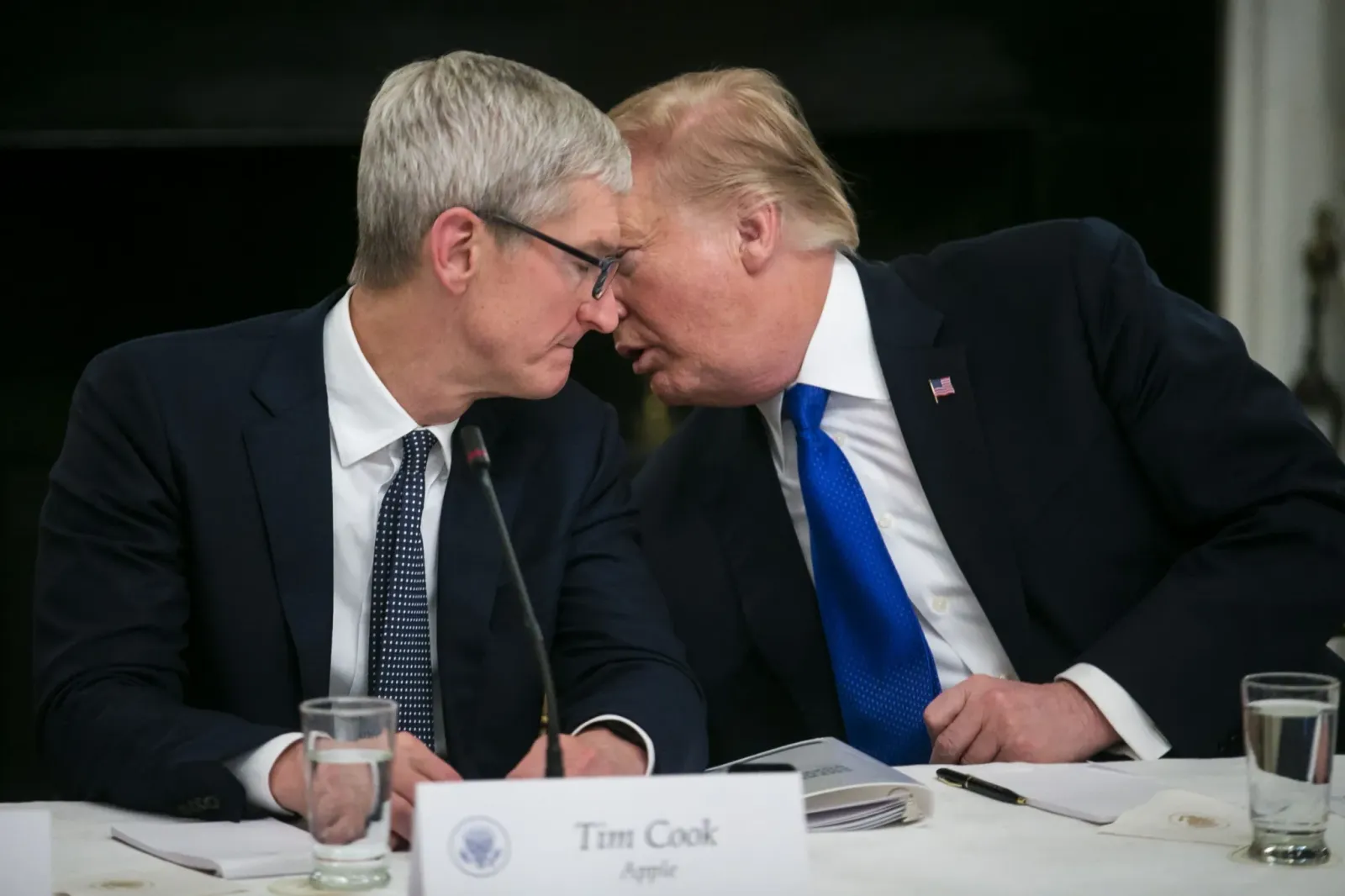
Tim Cook steps down as Apple CEO, stays on as chair with $45M equity
The 'Trump whisperer' keeps his White House and Beijing access as Apple navigates tariffs and a $4.6 trillion market cap.
Snowflake shares surge as AI data demand crushes estimates, lifting full-year forecast
Stocks jumped on stronger-than-expected guidance, signaling enterprise AI workloads are accelerating faster than Wall Street priced in.
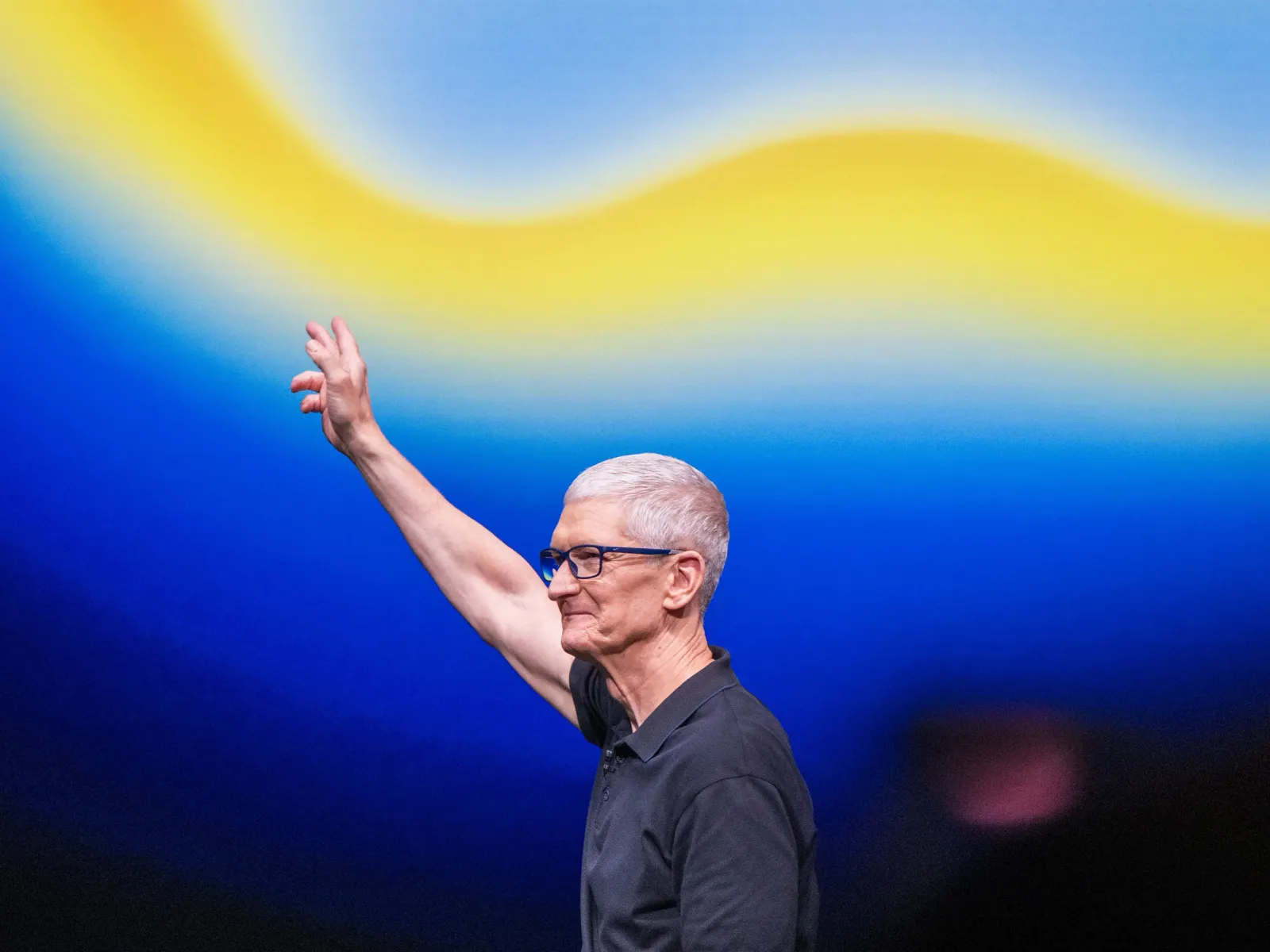
Tim Cook's 15-year Apple CEO run ends: 3 lessons for any successor
After 15 years, Tim Cook hands Apple to John Ternus - here's how he turned a $350B company into a $4.6T juggernaut.