
Saudi Finance Minister's G20 Warning: Resilient Economy, Rising Risks
Al-Jadaan tells G20 peers the global economy can absorb shocks, but new fault lines are forming - here's what executives should watch.

Saudi Finance Minister Mohammed Al-Jadaan told G20 counterparts the global economy remains resilient but has grown more vulnerable to risks. The warning signals that finance chiefs see a narrower margin for error, with implications for corporate planning and risk management.
Saudi Arabia's Finance Minister Mohammed Al-Jadaan delivered a carefully balanced warning to the world's top economic officials: the global economy is resilient, but it has become more vulnerable to risks. Speaking at the G20 finance ministers and central bank governors meeting, Al-Jadaan acknowledged that growth has held up through recent shocks, while signaling that the buffer protecting that growth is thinner than it appears.
The statement is significant because Al-Jadaan is not just any finance minister. He leads the financial policy of the world's largest oil exporter and a G20 member with influence across both developed and emerging economies. His choice of words - resilient but more vulnerable - suggests that finance chiefs are preparing for a period in which unexpected events could have outsized consequences.
For executives, the distinction between resilience and vulnerability is not academic. A resilient economy can absorb a shock and keep moving. A vulnerable one can absorb the same shock and tip into recession. Al-Jadaan's framing implies that the global economy is in the second category: strong enough to avoid collapse under normal conditions, but exposed to sudden shifts in inflation, interest rates, energy prices, or geopolitical tensions. That means the cost of being wrong about the outlook is rising.
The risks on the table at G20 meetings have multiplied in recent years. Central banks in the United States, Europe, and elsewhere have pushed interest rates to levels not seen in years to fight inflation, which has raised borrowing costs for governments and companies alike. Trade restrictions and industrial policies have contributed to fragmented global supply chains. Geopolitical conflicts continue to disrupt energy and food markets. And many emerging economies are carrying debt loads that become harder to service when the dollar strengthens or growth slows.
Al-Jadaan's comments come at a moment when the global economy is showing genuine strength in some areas. Labor markets have remained tight, corporate balance sheets have held up, and consumers have kept spending. But that strength is uneven. Some sectors and regions are thriving while others are struggling with high financing costs and weak demand. The vulnerability Al-Jadaan refers to may be the gap between the aggregate numbers and the experience of individual companies and countries.
For CFOs and treasurers, the practical takeaway is to stress-test plans against a wider range of outcomes. If the global economy is more vulnerable, then a single event - a new tariff, a sudden rate hike, a supply disruption - could have a larger impact than it would have a few years ago. Companies should review their exposure to currency swings, refinancing needs, and concentrated supply chains. The cost of hedging may be worth paying when the margin for error is thin.
The G20 meeting itself is part of the response. Finance ministers and central bank governors use these gatherings to coordinate policy, share assessments, and signal their intentions to markets. Al-Jadaan's public assessment is a signal that the official consensus is shifting from "the economy is strong" to "the economy is strong, but be careful." That shift matters for anyone making investment decisions, because it affects how governments will respond to the next crisis - and how much support they will be willing to provide.
For business leaders, the message is clear: resilience is not a guarantee. The global economy has proven it can withstand a lot, but the next shock may test it in new ways. Al-Jadaan's warning is an invitation to look beyond the headline growth numbers and prepare for the risks that are building underneath. The companies that thrive in the coming years will be those that treat vulnerability as a planning assumption, not an afterthought.
This story's Key Insights and Take-aways are locked.
Create a free account to unlock Executive Actions for one credit.
Register to UnlockAlways free for Executives Club members. Join the Club
More in Business
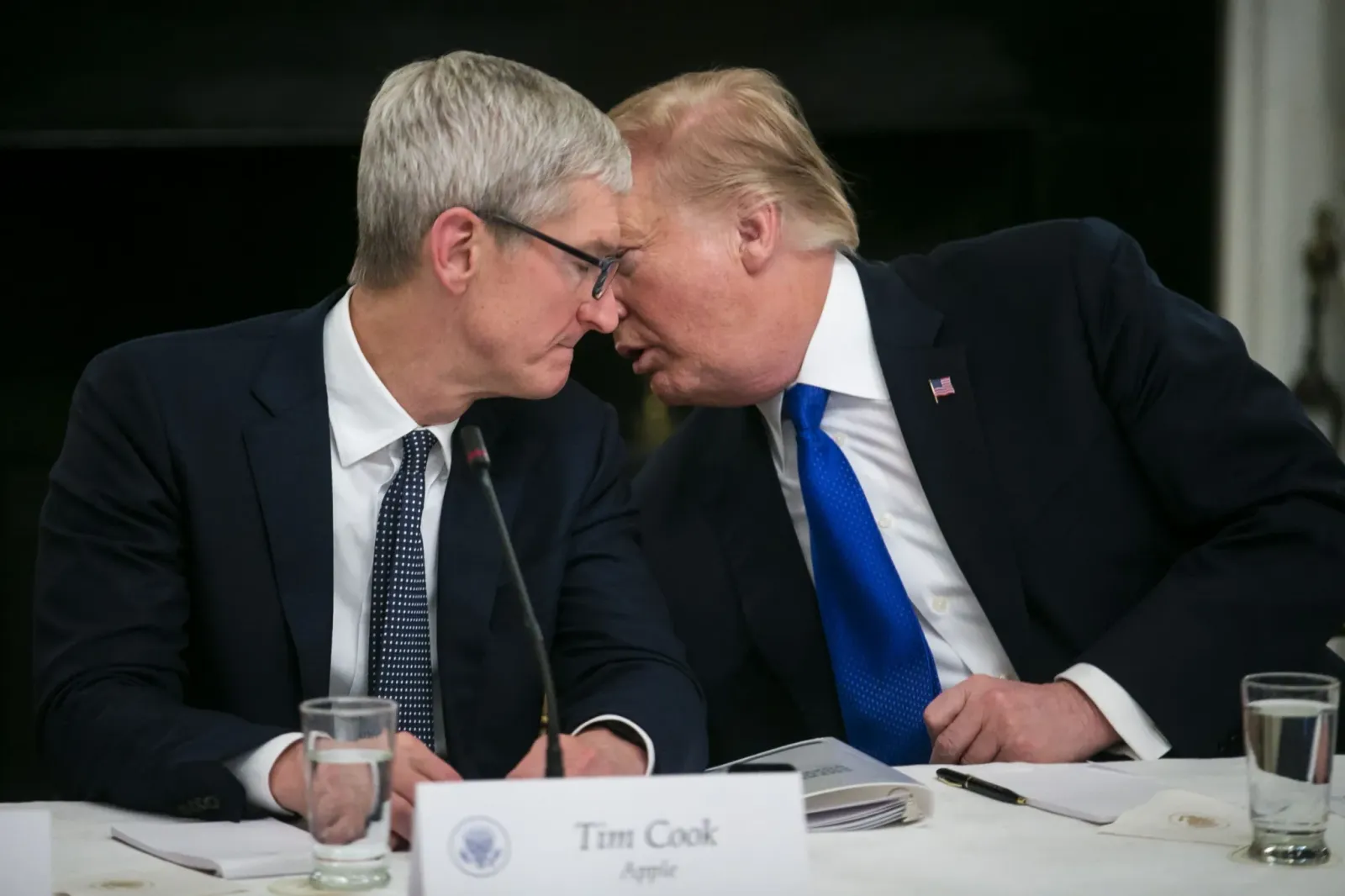
Tim Cook steps down as Apple CEO, stays on as chair with $45M equity
The 'Trump whisperer' keeps his White House and Beijing access as Apple navigates tariffs and a $4.6 trillion market cap.

Snowflake shares surge as AI data demand crushes estimates, lifting full-year forecast
Stocks jumped on stronger-than-expected guidance, signaling enterprise AI workloads are accelerating faster than Wall Street priced in.
Tim Cook's 15-year Apple CEO run ends: 3 lessons for any successor
After 15 years, Tim Cook hands Apple to John Ternus - here's how he turned a $350B company into a $4.6T juggernaut.