
Saudi Lifetime drama Unidentified debuts June 19, 2026, with a murder mystery that drags
Haifaa al-Mansour brings women-forward genre storytelling to Lifetime, but the whodunnit feels underpowered.
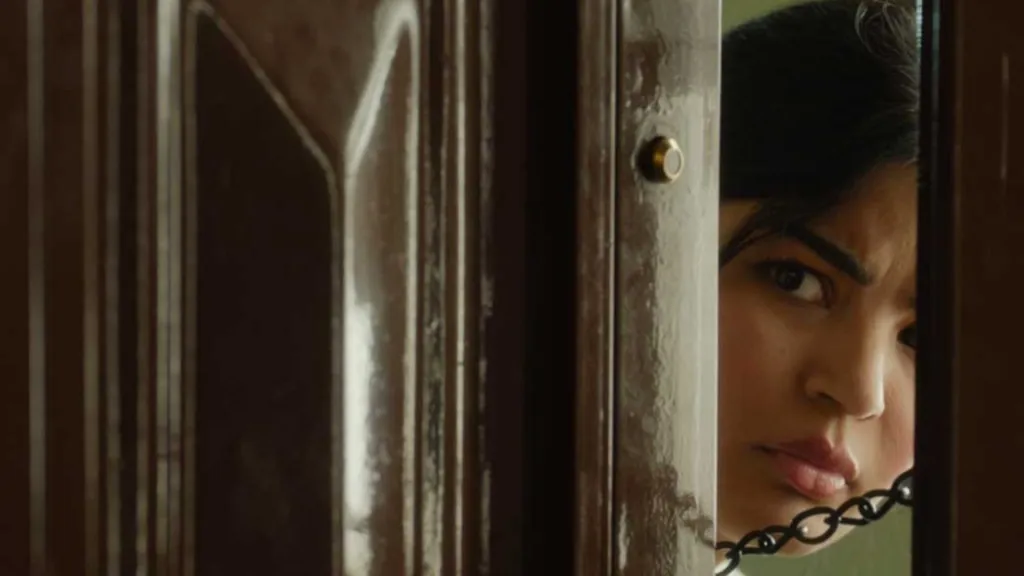
Haifaa al-Mansour directs and co-writes (with Brad Niemann) the Saudi thriller Unidentified, starring Mila Al Zahrani and Shafi al-Harthi, releasing June 19, 2026. For executives and content leaders, it signals how Saudi talent is entering global TV turf, while also showing the risks of premise without narrative payoff.
Saudi Arabia is breaking into Lifetime with Unidentified, and the release date is June 19, 2026. The hook, at least on paper, is a familiar but freshly localized one: a woman-driven murder-mystery where cultural specificity is supposed to sharpen the investigation, not smother it.
In Unidentified, Nawal Al Saffan (Mila Al Zahrani) works as a secretary, constantly syncing with a “true crime makeup” influencer while digitizing files at the police station. When her boss, Shafi al-Harthi, taps her to examine the newly discovered body of a teen Jane Doe found in the desert, the film positions her knowledge as the missing ingredient that male-dominated police work lacks. The setup wants to be more than a case file. It wants to be a commentary on how women navigate secrecy imposed by conservative custom and tradition in Saudi Arabia. The problem is that, according to the review, the mystery stays “stakeless” and the investigation never really cashes in on the social tension it gestures toward.
To understand why this matters beyond one TV-movie slot, zoom out to the broader Saudi film landscape the A.V. Club points to. The same year Saudi production ambitions are courting Hollywood-scale talent, including Rise of the Planet of the Apes director Rupert Wyatt, the country is also scaling global-ready genre content aimed at mainstream audiences. Desert Warrior is framed as an attempt at a Hollywood-style tentpole rooted in Saudi history. Unidentified, meanwhile, is described as a Lifetime original: “a broad, morbid, hokey episode of Law & Order: Riyadh.” In other words, Saudi media is not just exporting stories. It is testing where genre fits in existing international brands and viewing habits.
The choice of creative leadership is part of that test. Haifaa al-Mansour, noted as Saudi Arabia’s first and still most notable female director, is the film’s director and also co-writer (with her husband Brad Niemann). That matters because the premise is built on an angle that theoretically plays to her lane: women’s lives shaped by conservative norms and the underestimation women face in male-dominated systems. The review says the cultural lens is present, but any insight is “mired in stiff drama and undercooked mystery.” Instead of turning Nawal’s media habits into a distinct investigative edge, the film allegedly tells us key parts of her life directly to the audience and lets the plot happen to her, not for her.
There is also a tension between narrative mechanics and symbolic stakes. Nawal’s case begins with a teen found dead, run down by a car, a detail the review flags as a charged symbol because Saudi women got the right to drive less than a decade ago. That symbolism is real in the way genre uses specific objects and rules to sharpen meaning. But the investigation, as described, does not grow teeth. As Nawal tries to identify who the dead girl is and who might have killed her, her interest appears less like personal obsession and more like obligation. The film’s own attempts to make her a convincing lead, including moments like chatting with a “coy high schooler” or enduring a string of dull nightmares, are described as insufficiently gripping.
The review also calls out how the film’s tone compares to other “made-for-TV schlockers.” It specifically mentions melodramatic, style-light Hallmark and Lifetime flavor, where a self-consciously feminine world is coated in soapier storytelling rather than tension that holds. Supporting characters are described as operating in a wary adjacent world to cops dismissing deaths of young girls as “family-committed honor killings.” The review credits the setting with offering glimpses of condescension and danger in the sun-bleached capital city, but says Unidentified never uses that angle to make the investigation as tense as the situation warrants. Even when the film reaches a third-act pivot, pushing further into campy, confused daytime TV territory, it still cannot overcome a “thrill-free whodunnit” that makes audiences nod off.
For executives, boards, and investors, the second-order lesson is not “avoid female leads” or “avoid Saudi settings.” The lesson is about pipeline discipline: a strong premise, especially one rooted in a culturally specific investigative angle, still needs narrative propulsion. If a genre entry wants to borrow the cognitive dissonance and observational bite of content creators like Bailey Sarian, the storytelling must deliver a comparable intensity, not just a thematic nod. Unidentified, as reviewed, undermines whatever social message al-Mansour might have offered about the way women live and die in modern Saudi Arabia because it does not actually escalate the stakes inside the mystery.
So the strategic question for leaders watching this space is simple: will Saudi global-bound originals treat the culture-forward setup as the core engine, or as garnish on an otherwise familiar procedural. Unidentified is a clear signal that Saudi talent is willing to bring women-forward genre storytelling onto global TV networks. But it is also a warning that if the “Law & Order” skeleton stays soft, the audience will not stay for the cultural seasoning alone.
This story's Key Insights and Take-aways are locked.
Create a free account to unlock Executive Actions for one credit.
Register to UnlockAlways free for Executives Club members. Join the Club
More in Entertainment

Commodore’s Christian Simpson restarts the retro PC brand, then launches flip phones
After reviving the Commodore 64 with modern tweaks, Commodore is taking the retro look into flip-phone territory.

Asia Argento wins Locarno’s Life Achievement Award, praised by Giona A. Nazzaro
The Locarno festival honors Asia Argento with a Life Achievement Award, spotlighting her film career risks and reinvention.

Blair Partnership wins exclusive global role to revive The Wombles franchise
A consolidated IP setup and a new exclusive representative point to fresh movies, TV series, and broader expansion plans.