
Seth Meyers says Trump was “genuinely asking” about Iran, not kidding
The Late Night host argues Trump’s snark came off like a real request for secret proof about the war.

Seth Meyers, host of NBC’s Late Night and “A Closer Look,” said President Trump was “genuinely asking” a reporter if she knew something he did not about Iran’s war. For decision-makers, the moment underscores how political messaging around conflict can turn into a credibility and policy risk.
President Trump sassed a reporter this week by asking if she knew something he did not about Iran and then repeating the same pointed question several times when she tried to press him. Seth Meyers does not think the president was actually kidding. During Meyers’ “A Closer Look” segment, he framed Trump’s exchange as less sarcasm and more a genuine attempt to fish for information, even if it was delivered with a jokey, performative edge.
Here is the core of what Meyers reacted to. In a conversation with press at the White House, a reporter told Trump that “there are no signs that Iran is ready to stop fighting,” and asked what the plan is to end the war, pointing to the fact that Trump says it has already ended multiple times. Trump responded by challenging the reporter’s premise: how would she know there are no signs? Then he quipped, “What, do you know something that I don’t know?” When the reporter pushed further, Trump repeated that snarky question a few more times.
That is where Meyers makes his move. He tells viewers, “I don’t think he’s being sarcastic. I think he’s genuinely asking.” Then Meyers put on his Trump impression and leaned into the joke to underline the risk: “‘You know something I don’t know? And if you do, would you be willing to whisper it in my ear, or, barring that, write it down on a tiny piece of folded-up paper that I can read later and then pretend I knew it the whole time? Do you?!’” The punchline is comedy, but the subtext is serious: the administration’s public confidence around the status of the conflict is getting stress-tested in real time by questions that cannot be hand-waved.
Meyers then targeted the broader pattern he sees in how Trump talks about the war being over, or at least about Iran wanting to meet “desperately to try and end it.” He jokes using an extended, absurdly cinematic story about a “gift” from Iran: a “beautiful wooden horse.” In Meyers’ telling, “We wheeled it right in it. The horse came up to me, big horse, strong horse, tears pouring from his wooden eyes down onto his wooden snout, and then a tiny little voice from inside his belly said to me, ‘There’s nobody in here!’ And I said, ‘It’s so true!’” It is obviously parody, but it is also a way of communicating something executives should recognize instinctively: when messaging shifts between certainty and improvisation, the credibility gap grows.
So what does this have to do with people who run companies, sit on boards, or allocate capital? The link is that geopolitical messaging is not just theatre. It shapes expectations across markets and institutions, from risk models and insurance underwriting to supply chain decisions and policy risk assessments. If officials publicly suggest the conflict is essentially over, then walk that back or muddle it through repeated snarky “do you know something I don’t” questions, observers have to factor in uncertainty and volatility. That uncertainty tends to cost money indirectly, through higher risk premiums, slower contracting cycles, and more cautious enterprise planning.
There is also a regulatory and compliance angle, even when the story sounds like late-night TV. In conflict settings, governments and regulators frequently lean harder on export controls, sanctions enforcement, know-your-customer diligence, and anti-circumvention monitoring. Those rules do not change because a joke landed well on broadcast. But enforcement posture and policy clarity often do matter, and the kind of public inconsistency Meyers highlighted can make it harder for compliance teams to calibrate decisions with confidence.
And there is the media process itself. The reporter’s opening claim in the segment is straightforward: “there are no signs that Iran is ready to stop fighting.” The reporter then asks what the plan is to end the war, especially given that Trump has said it has already ended multiple times. That is the friction point: questions that demand a specific strategy are met with a question that suggests missing private knowledge. Whether or not you buy Meyers’ interpretation, his framing points to a second-order issue executives understand from crisis communications: if your public narrative repeatedly requires the audience to assume “inside info,” stakeholders will eventually stop trusting the channel and start demanding proof.
For boards and C-suite leaders, the takeaway is not “watch Seth Meyers.” It is “watch the feedback loop between public statements, operational reality, and institutional trust.” When a president’s remarks about a war’s status are challenged immediately by reporters, the response style can become part of how the world reads the situation. That can affect everything from how counterparties price geopolitical risk to how regulators interpret intent in areas like sanctions compliance. In short, the story is comedic on its surface, but it points at a serious pattern: credibility is operational capital.
The good news, if there is any, is that these patterns are visible. They show up in press exchanges, in the way questions are answered or dodged, and in how confident claims meet the hard edge of “how would you know?” For leaders in neighboring roles, that is the signal to tighten assumptions and scenario planning. Because when the conflict narrative wobbles, the rest of the ecosystem has to do the wobble work.
This story's Key Insights and Take-aways are locked.
Create a free account to unlock Executive Actions for one credit.
Register to UnlockAlways free for Executives Club members. Join the Club
More in Politics
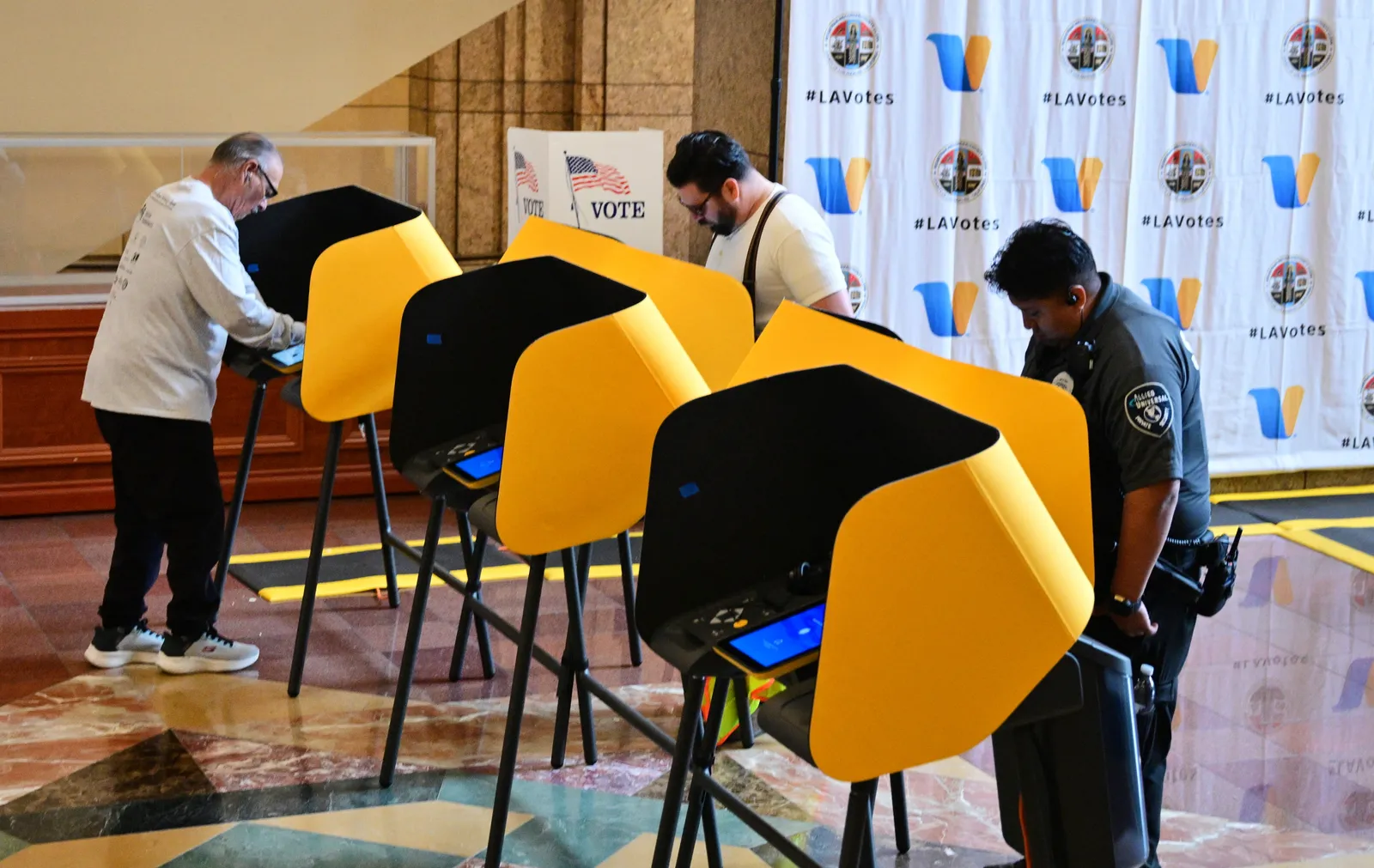
LA County: DOJ's 20,000 'noncitizen' voter list is 'unreliable,' includes U.S.-born
Preliminary review by Los Angeles County election officials finds errors in the federal list, raising the stakes for voter roll integrity ahead of November.
Trump's $1.5B Pentagon chip investment lands in North Carolina
A $1.5 billion defense infusion for North Carolina chipmaking signals a new era of Pentagon-backed reshoring - here's what it means for the industry.
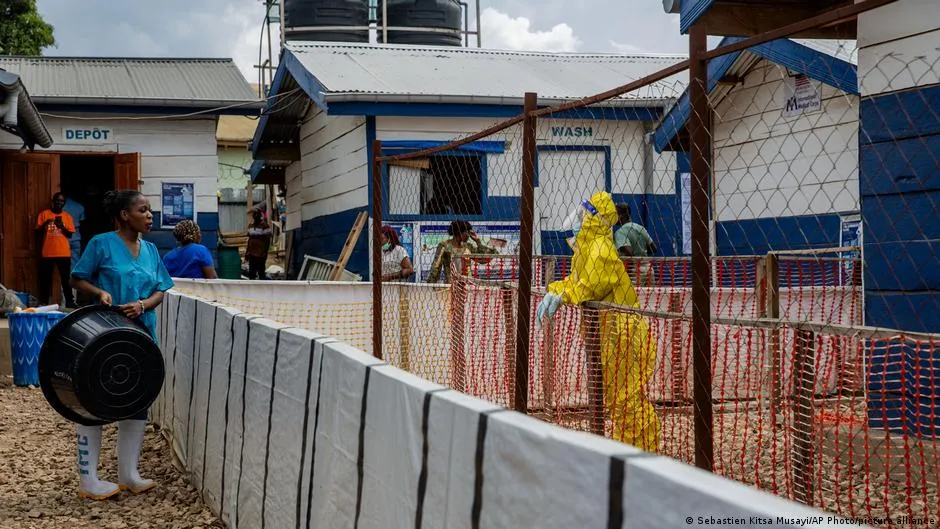
Nigeria confirms first Ebola case in Abuja, a woman just off a Uganda flight
Health Minister Muhammad Ali Pate says the patient flew in from Uganda, putting Africa's latest outbreak on Nigeria's doorstep.