
Skyroot Aerospace launches Vikram-1, aiming to shake up India's rocket market ambitions
India's first space-tech unicorn puts its first major climb in the books. Here is what that means for investors and operators.
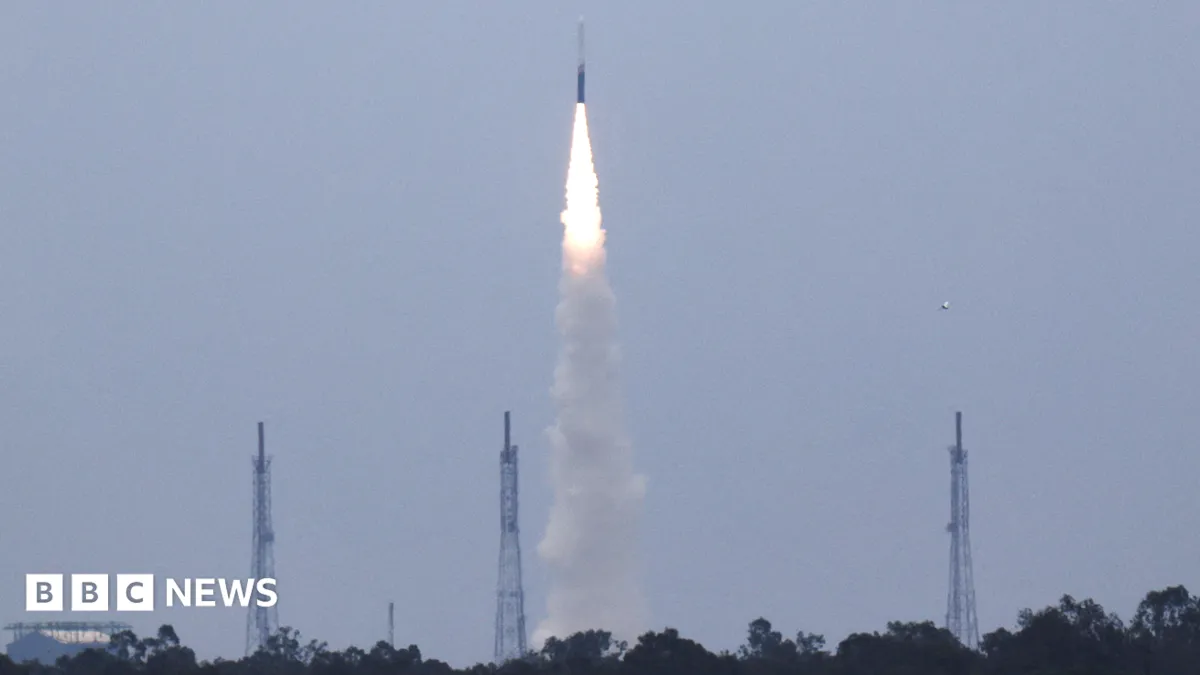
Skyroot Aerospace, described as India's first space-tech unicorn, successfully launched Vikram-1 on Saturday. For decision-makers, the launch is a signal that India's private space pipeline is moving from hype to hardware.
Skyroot Aerospace has successfully launched Vikram-1, marking a concrete milestone for India's fast-growing private space scene. Saturday's liftoff is not just another rocket headline. It is proof that a company positioned as India's first space-tech unicorn can take a vehicle from development into an actual flight attempt, which is where credibility gets priced.
That is why this matters to executives. In space, the gap between “almost” and “it flew” is where money either accelerates or disappears. A successful launch creates evidence for future funding rounds, partnerships, and government conversations, because it turns a technical plan into an observable outcome. Skyroot's Vikram-1 launch gives the market a datapoint to underwrite the next steps in capacity, reliability, and mission cadence.
To understand the stakes, it helps to zoom out on what is changing in India. For decades, launches and space capabilities were dominated by a smaller set of government-linked players and tightly controlled infrastructure. The current wave of private companies is pushing toward a different model: commercial spacecraft, technology demonstrations, and in some cases dedicated launch services that can be scheduled like other industrial activities. That shift is hard. It requires engineering competence, supply chain discipline, and the ability to survive testing failures without losing the plot or the balance sheet.
In this kind of market, “unicorn” is more than a label. It is a shorthand investors use for a company that has convinced capital markets it can grow fast enough to justify a premium valuation. But valuations do not live in pitch decks. They live in recurring outcomes: more launches, successful payload delivery, improved performance, and clear paths to contracts. By getting Vikram-1 off the pad on Saturday, Skyroot moved from the narrative stage into the outcome stage, where skeptics either get silenced or proven right.
There is also a regulatory and governance layer that executives should keep in mind. Launch vehicles and space operations typically involve licensing, safety requirements, and mission oversight, even when companies are privately owned. The details vary by country and mission profile, but the core issue is consistent: regulators want credible safety cases, traceable processes, and responsible range management. A successful launch helps demonstrate that the operator can coordinate the complex chain of permissions and safety checks required to fly.
Second-order, those approvals can compound. When a regulator and other stakeholders see a company execute a mission successfully, it can reduce uncertainty for future attempts, making it easier to plan timelines and scale operations. That can be the difference between a company that can only afford one high-cost trial and one that can iterate like a normal industrial business.
Now, connect the dots to the broader competitive landscape. India has multiple private aerospace ambitions in motion, and each successful flight raises the competitive bar. Prospective customers looking for launch, tech demos, or mission partnerships will increasingly compare providers not just on price or promises, but on demonstrated launch capability. For investors sitting on boards, this shifts diligence from “potential” to “performance” and “track record,” which tends to reshape how capital is allocated across the sector.
The strategic implication is simple: Skyroot's Vikram-1 success is a credibility upgrade for a company that wants to transform India's space ambitions. In a market where execution risk is the central problem, a real launch attempt is an unlock. It gives Skyroot leverage for future missions and gives the wider ecosystem a reason to believe that private space in India can move at pace without waiting for someone else to prove the model first.
This story's Key Insights and Take-aways are locked.
Create a free account to unlock Executive Actions for one credit.
Register to UnlockAlways free for Executives Club members. Join the Club
More in Science

2026 Nikon Small World Winners Reveal the Hidden Machinery of Everyday Life
A mycologist's frozen Edinburgh garden became the backdrop for vivid views inside cells, a reminder of what advanced imaging now makes visible to researchers and the industries built on biology.

Study: 1 in 4 depression cases may be a body-clock problem, not a chemical one
A 10,000-person study finds standard antidepressants often fail these patients, but melatonin and morning sunlight may hit the real root cause.

Start-Up Says A.I. Designed a Virus to Attack One Patient's Superbug
If the claim holds up, personalized phage therapy could become a new frontline weapon against antibiotic resistance - but proof is far from final.