
Slayblade hits Steam Next Fest with a Wu Tang top part and risky “illegal” battles
The Beyblade-like roguelike demo is live now, and it reveals how far nostalgia can be pushed in gameplay.
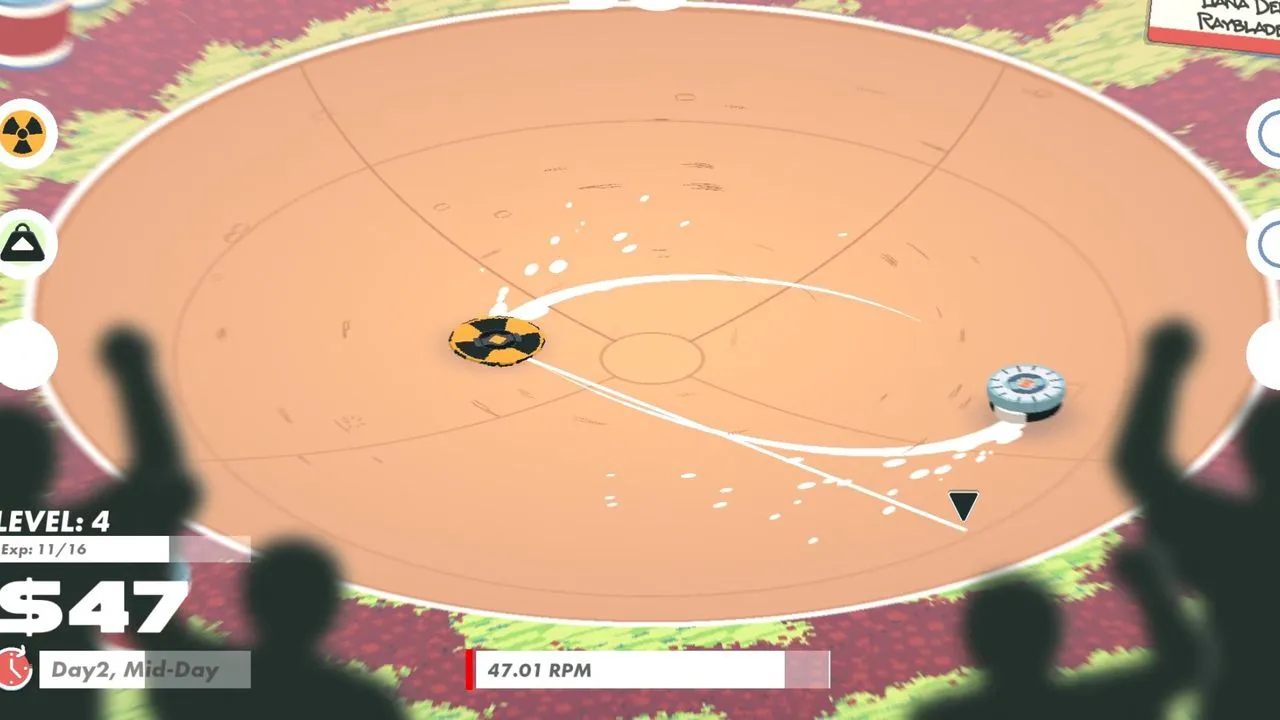
Slayblade, a Beyblade-inspired roguelike, is playable via a demo at this month’s Steam Next Fest. For decision-makers watching new indie pipelines, it is a clear signal that nostalgia-driven mechanics can still convert into tangible player interest.
A second Beyblade-inspired roguelike just dropped into Steam Next Fest, and Slayblade is leaning so hard into Y2K that it literally includes a Wu Tang logo on one of its battle top components. The demo is available now, with no release date announced, but the early build already shows a distinct approach: turn those childhood “battle top” fantasies into a structured run built around parts, power-ups, and increasingly chaotic encounters.
You play as a nameless Slayblade battler chasing the Slayblade World Championship title, which the game frames as the key to learning why your father disappeared after inventing perpetual motion Slayblade technology that “would have solved the energy crisis.” The pitch is goofy on purpose, but the loop underneath is what matters for anyone tracking how games attract and retain audiences. Runs are days-long, centered on skating between cash prize Slayblade battles, then exchanging winnings for top parts and tournament entries. You can also mow lawns for extra money and experience, or you can take on “illegal,” high-risk Slayblade battles. The source does not clarify what makes a battle “illegal,” but the structure is clear: the game offers both safe progression and faster, riskier paths.
This is a notable moment in the gaming meta because it is not just another skins-and-slogans nostalgia cash-in. The article explicitly contrasts Slayblade with From the Top, another Beyblade-like roguelike mentioned from January, describing From the Top as darker, while Slayblade leans even harder into Y2K nostalgia with an airy Toonami-core soundtrack, pixelated overworld sprites, and chunky pseudo-Beyblade designs. That matters commercially because nostalgia works best when it is paired with a gameplay system that players can learn quickly and optimize deeply. Slayblade tries to do that through part stats and triggered effects, not merely visual imitation.
Mechanically, Slayblade divides parts into top heads, bodies, and tips, each with attributes and effects. There is also a weight stat that affects impact, handling, and momentum, which is the kind of simple, legible tuning that helps new players feel agency fast. The more interesting layer is the active effect on each part, which triggers when you fling your top into a “power up cube” during a match. The combinations can get potent in ways that invite experimentation, not just repetition.
The Wu Tang logo example is a perfect illustration of how the demo sells the idea of build crafting. That logo halves the time until the next power up cube appears when triggered. On its own, the effect might sound like a minor pacing tweak. Pair it with a Buster body that summons a spin-draining ghost to chase your opponent when you collect a cube, and suddenly cube frequency becomes an engine for crowding the arena with vampiric phantoms that can quickly leave the other top lifeless. This is exactly how roguelikes maintain interest: the random or semi-random parts you find should create new “strategic stories” each run, where one advantage enables another.
The article also describes a landmine play and a counterintuitive arena change. In one run, the author matched a Slayblade body that placed a landmine in the arena with a “Flat Earth” tip that flattened the typically bowl-shaped arena into a level plane. When opponents slid into the explosives, there was nothing keeping them from immediately skittering out of bounds, resulting in an easy victory. That detail underscores the game’s willingness to make physics-like changes part of the tactical toolbox, even if the names and framing are intentionally absurd.
For decision-makers, the demo’s constraints are just as important as its highlights. The Next Fest build is described as fairly short and rough around the edges: the available part selection is not particularly deep, each run abruptly cuts off when you reach the point you would enter your initial Slayblade tournament, and there is placeholder art and menu text that will need another pass. In addition, the demo limits the player’s arc, which can impact how well steam metrics translate into long-term retention. Still, as an early playtest, it functions as a proof of concept, and it is on Steam now.
From a second-order perspective, this signals something beyond Slayblade itself. Indies and small teams are still finding ways to compete in the crowded Steam ecosystem by packaging a familiar childhood fantasy inside an optimizer-friendly loop: parts, stats, cube-driven triggers, and risk-reward choices like the “illegal,” high-risk battles. For investors, publishers, and platform-watchers, the question is not whether nostalgia exists. It is whether systems like this can keep players learning and experimenting after the initial “no way, Wu Tang on a Beyblade” moment wears off. Slayblade does not have a release date yet, but its Steam Next Fest presence suggests it is trying to win the early conversion battle, and that is a strategic lever everyone in the pipeline is watching.
This story's Key Insights and Take-aways are locked.
Create a free account to unlock Executive Actions for one credit.
Register to UnlockAlways free for Executives Club members. Join the Club
More in Entertainment

Marjane Satrapi dies at 56, and Saudi culture pushes formal arts development
The death of Persepolis creator Marjane Satrapi at 56 coincides with a Saudi Ministry-Royal College of Art push to grow talent.
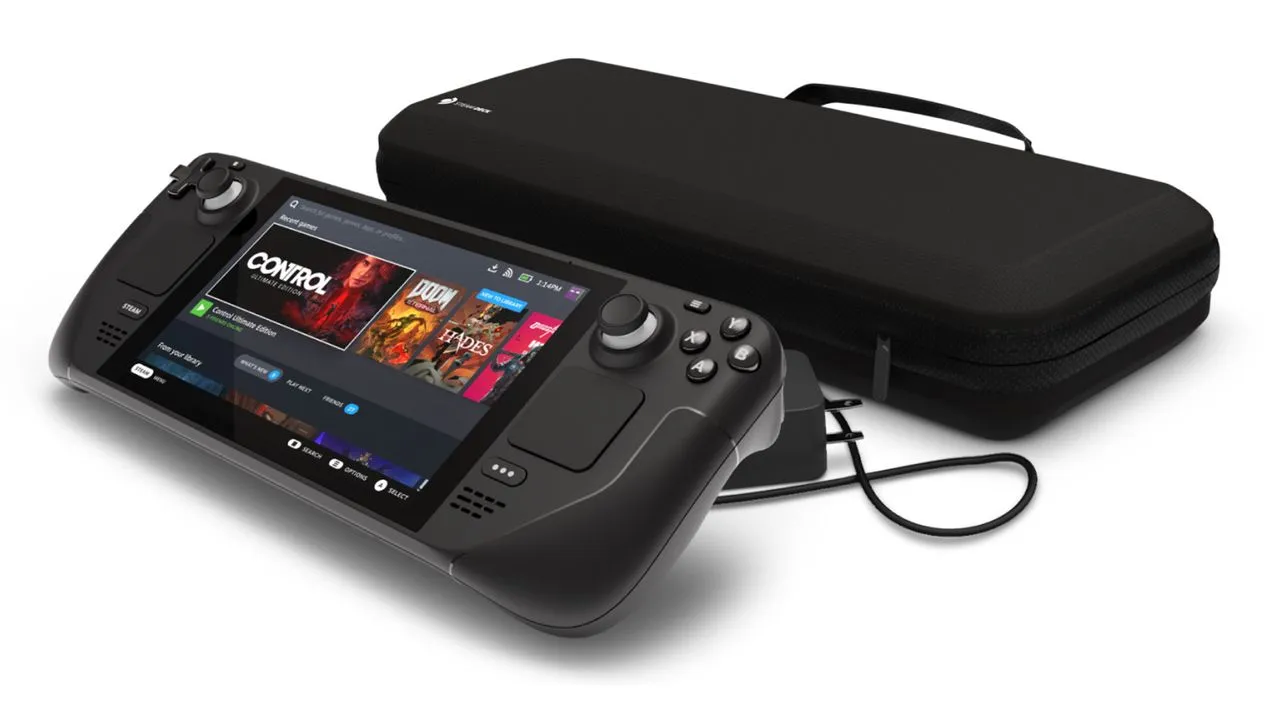
Valve sent a free Steam Deck case after a newborn’s vomit ruined his original
The case wasn’t a product demo. It was customer service that treats retention like a core feature.
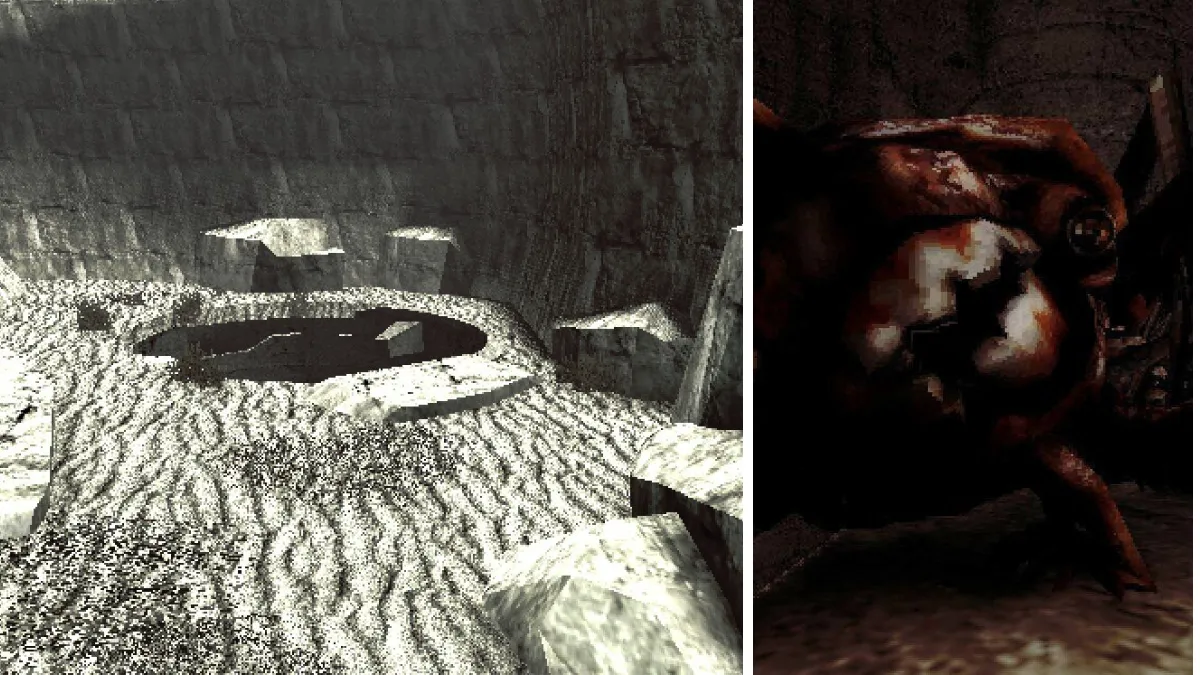
Idols of Ash turns 2 hours of eerie descent into grappling-hook hell
A $3 Steam hit uses a grappling hook to plunge you into a pit, then throws in a centipede panic test.