
SpaceX stock jumps 11% after its biggest IPO ever, setting off an OpenAI and Anthropic wave
The largest IPO debut for Elon Musk's rocket company is now the market signal investors and regulators will watch next.
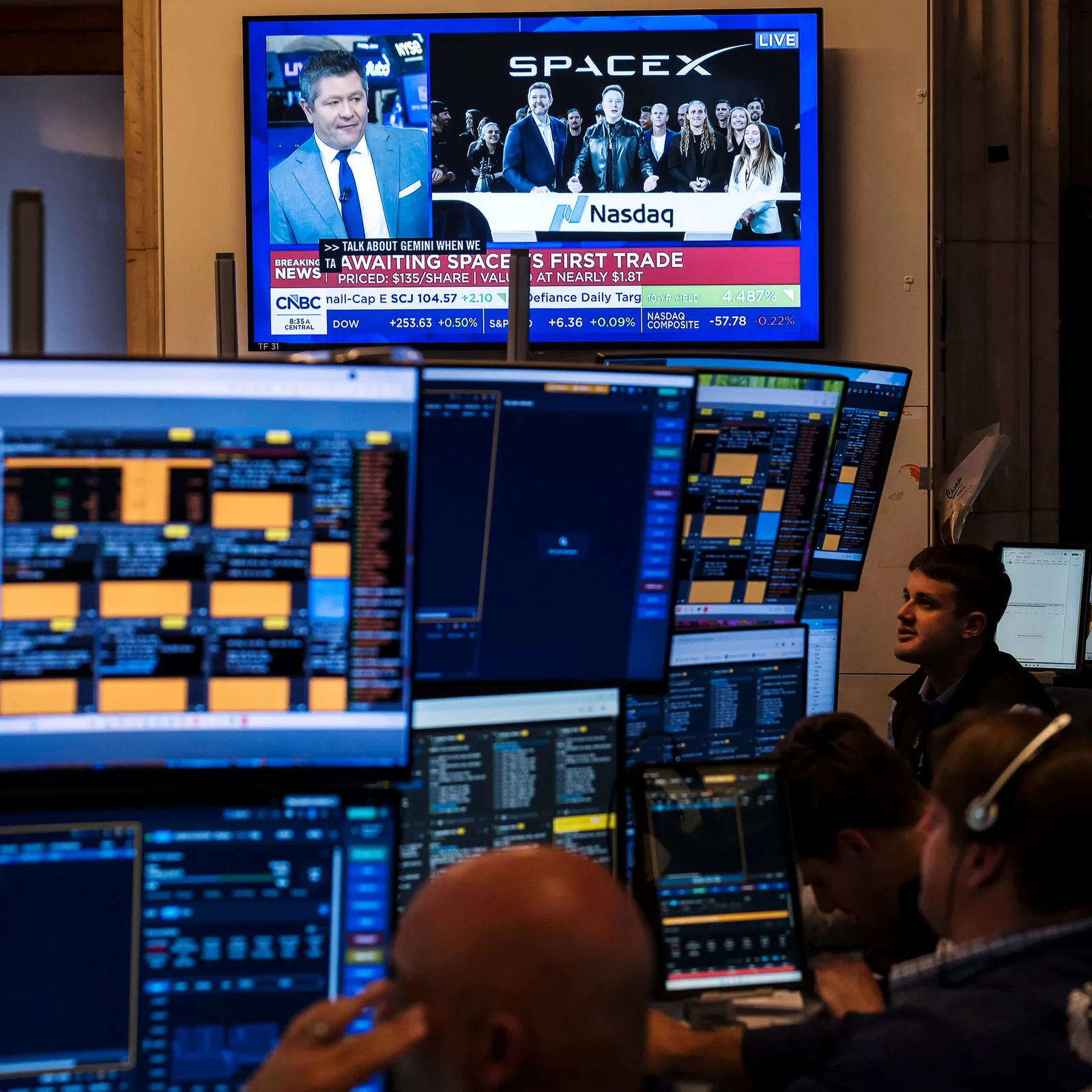
SpaceX launched the blockbuster stock market debut led by Elon Musk's rocket company, with shares rising 11%. The immediate consequence is a likely surge of enormous offerings ahead, including those from OpenAI and Anthropic.
SpaceX just posted a headline number investors cannot ignore: its stock rose 11% in what the New York Times described as the largest IPO ever. That is not just a feel-good moment for Elon Musk's rocket company. In public markets, an opening-day move on this scale functions like a clearance sale on uncertainty. It tells the market that at least one mega-company can go from private to public and still get a strong reception.
Why does that matter beyond the SpaceX ticker? Because the Times frames this debut as paving the way for a wave of enormous offerings that are coming from OpenAI and Anthropic. In other words, SpaceX is not only a standalone story. It is a precedent being priced in real time. If the biggest IPO ever can rise 11% on debut, then the market is handing a template to other high-stakes companies that are now likely to face fresh pressure from investors, employees, and would-be acquirers who want liquidity and visibility.
To understand the second-order effects, it helps to remember what IPOs actually do for the parties involved. For founders and early stakeholders, public listing can convert years of value creation into tradable equity. For boards, it can be a way to formalize capital structure and create a market-tested valuation that supporters can point to in future fundraising rounds, debt negotiations, or strategic partnerships. And for investors, it shifts a company from private valuation games to public-market discipline, where sentiment can change daily but information is more standardized.
The “largest IPO ever” qualifier adds more fuel to that mix. Big transactions draw attention from institutional investors, analysts, regulators, and index managers, and they tend to attract more than just money. They attract scrutiny. Public markets require ongoing reporting, governance norms, and a higher bar for disclosure. When a company with the visibility of SpaceX succeeds on debut, it reduces perceived friction for other companies considering the same path. Even if those companies are in very different sectors, the mechanical question is similar: Will public investors pay, and will the process hold up under attention?
Now add the fact that the next names on the map are OpenAI and Anthropic. The Times is specifically connecting SpaceX’s debut to a “wave” of enormous offerings coming from these firms. That linkage matters for decision-makers because it suggests timing and momentum. IPO planning is often a long runway exercise, shaped by market windows, investor appetite, and regulatory comfort. When the market sees a giant opening-day pop, it can compress timelines. Executives at other fast-moving companies do not just watch performance. They watch the signaling effect, and they watch what kinds of valuations the market will accept.
Regulatory background is the other reason this story is bigger than rockets. In the US, the IPO process is steeped in disclosure requirements and ongoing compliance. While the source here does not describe specific regulatory actions tied to SpaceX, the implication is structural: if the largest IPO ever successfully clears the public-market gauntlet, it can make the pathway feel more predictable for other would-be issuers. For companies like OpenAI and Anthropic, that predictability is not trivial. Their scale, influence, and investor interest typically mean they will be heavily scrutinized once they step into public view.
Finally, there is the strategic stake for everyone watching from the same boardroom ecosystem. If you are a CEO, CFO, or board member at a high-growth company, SpaceX’s 11% jump becomes a benchmark for what the market is willing to reward at the moment of conversion to public trading. If you are an investor, it is a reminder that IPOs are not only liquidity events but also sentiment events. And if you are a founder or executive team thinking about how and when to go public, the Times is telling you to pay attention to the domino effect: one mega-debut can turn into a market narrative that draws the next class of offers into the same window.
This story's Key Insights and Take-aways are locked.
Create a free account to unlock Executive Actions for one credit.
Register to UnlockAlways free for Executives Club members. Join the Club
More in Business

SpaceX’s Nasdaq debut instantly makes it a $2 trillion-scale market cap contender
A historic IPO leapvaults SpaceX into U.S. mega-cap territory, despite tiny revenue scale versus tech giants.

Mena construction CPMI slips 12% in April 2026, but execution momentum rebounds to 1.01
GlobalData’s April CPMI shows resilience masking pre-execution caution, with conflict risk surfacing unevenly by country and sector.

De Beers backs GIA’s 30% Tracr stake to fight lab-grown diamonds
A new traceability system aims to lock down provenance as lab-grown pricing pressure reshapes natural diamond demand.