
Steam Next Fest: Order of the Sinking Star drops a demo bigger than many paid puzzle games
Jonathan Blow’s ambitious puzzle project lets players try it Monday, June 15, via a free Steam Next Fest demo.

Order of the Sinking Star, from Thekla and featuring Jonathan Blow, launches a free Steam Next Fest demo on Monday, June 15. For decision-makers, it is a concrete signal that major puzzle IP is betting on playable marketing to convert festival attention into demand.
Jonathan Blow may be the name people recognize, but Thekla’s Order of the Sinking Star is the one doing the pitching. On Monday, June 15, the team releases a free Steam Next Fest demo that it says is “bigger than most entire paid puzzle games.” The point is simple and immediate: players do not have to take anyone’s word for how big this puzzle experience is. They can download the demo and find out for themselves.
And the demo claim is not just marketing fluff. According to the developer, the Steam Next Fest version provides a much better sense of how the “ambitious puzzle game” actually works, and the source also frames this as more than a typical festival slice. The writer notes that they saw “just a small taste” of it at Summer Game Fest, walking away impressed by how it “plays like a celebration of an entire puzzle sub-genre.” In other words, the game is positioning itself to be understood through play, not a trailer.
Now, Zoom out for a second and look at what is changing in the way games get discovered and evaluated. Steam Next Fest is basically a massive trial funnel. Instead of asking players to gamble on a purchase based on a few minutes of footage, developers can put a playable product in front of a wide audience for free. That matters for puzzle games especially, because the genre often depends on pacing, clarity of mechanics, and the player’s willingness to learn a system. A demo can answer the big question faster: does the game reward curiosity, or does it confuse you and waste your time?
This is also a moment where brand and authority meet scale. Jonathan Blow’s name is explicitly described as “on the tin,” but the article emphasizes he is “just one small piece of an enormous puzzle.” That phrasing is more than poetic. It is a reminder that outcomes like a large demo are usually team-driven, not star-driven. For studios and boards, that is a governance and execution signal: ambitious projects are still being built by broader groups, even when a celebrated creator is the public face.
The article also calls the demo release an “unfortunate rain-cloud” to have hanging over the project. That language is doing real work. It implies there is some kind of concern or skepticism around the project, even as the team believes it has something special. In practical terms, demos can serve as a pressure valve. When expectations are high and doubts linger, letting players experience the game directly can cut through speculation. If the demo really is “bigger than most entire paid puzzle games,” then it is not merely a taste, it is a test of whether the experience holds up over a meaningful stretch.
For anyone making decisions in adjacent categories, there is a second-order lesson here: festival demos are not only about engagement metrics, they are about reducing uncertainty in the market. Puzzle games can be hard to sell because the value is often in the interaction, not the spectacle. A larger playable segment lowers the perceived risk for new players. It can also influence how communities talk about a game. When players spend time inside a system, they tend to compare notes with other players. That can turn a one-off festival moment into a longer conversation on Steam.
There is also a structural incentive for Steam developers. Steam’s discovery engine and user behavior tend to reward something that looks like a genuine product, not a shallow sampler. A demo framed as a full experience can lead to higher retention within the demo window, more wishlist momentum, and better-informed player reviews later. The source does not spell out the numbers, but it does make the mechanism clear: players get a “free Steam Next Fest demo,” and the team is aiming to communicate scope through gameplay.
Finally, consider how this affects the strategic stakes for people trying to understand the puzzle market. The writer describes the game as playing like “a celebration of an entire puzzle sub-genre,” and frames Summer Game Fest impressions as evidence that the concept can land. If Order of the Sinking Star can convert that early excitement into sustained player interest, it reinforces a broader thesis: the next wave of puzzle hits may come from developers who bet on playable proof at scale. Boards, investors, and operators watching category health should treat this as a live experiment in customer validation.
So the headline’s promise is answered immediately by the timing and the format. Monday, June 15 brings a free Steam Next Fest demo, with a stated claim that it is “bigger than most entire paid puzzle games.” And based on the description of how it plays, the demo is meant to show you not just what the game is, but how it feels to explore its puzzle ideas for real.
This story's Key Insights and Take-aways are locked.
Create a free account to unlock Executive Actions for one credit.
Register to UnlockAlways free for Executives Club members. Join the Club
More in Entertainment

Peacock rolls out vertical video feed this month and adds Bravo microdramas
A new vertical feed lands this month, paired with Bravo microdramas, as streaming pushes harder into mobile-first viewing habits.

Gorillaz lock 22 guest performers for Tottenham stadium debut, led by Johnny Marr and Yasiin Bey
A first-ever stadium headline for Gorillaz in London comes with a stacked guest list tied to new album collaborations.
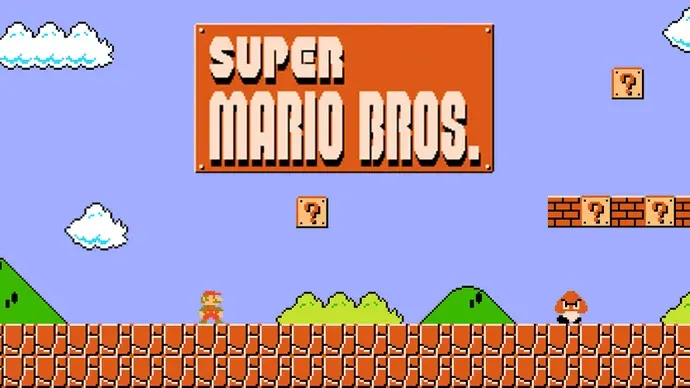
Super Mario Bros. copy sells for $3m, setting a new auction record
A rare preserved cartridge clears $3 million at auction, reshaping how execs think about collectibles as assets.