
Tour de France shortens final stage after firefighters redeploy from race security
Wildfires near Bordeaux trigger a security swap that cuts Sunday’s last stage, with knock-on effects for organizers and sponsors.

Race security personnel assigned to the Tour de France have been redeployed to help contain major blazes near Bordeaux. The immediate consequence is that Sunday's final stage is shortened.
The Tour de France’s final chapter on Sunday got abruptly rewritten: the event will have a shortened last stage because security staff were redeployed to help contain major wildfires near Bordeaux. This is not a weather inconvenience that can be rebranded as “delays.” It is an operational hard pivot, where public safety overrides the race schedule.
At the center of the change is the security apparatus that was originally assigned to the race. Those personnel have now been shifted to wildfire containment efforts near Bordeaux, and that resource move directly reduces Sunday’s final stage. In other words, the “why” is simple and the “what changes” is concrete: fewer security resources where the race expects them, so the race course itself is shortened.
That may sound like an isolated logistics story, but it lands in a wider reality executives in sports and large events know well: the moment public emergencies escalate, event risk management becomes triage. Organizers typically plan around predictable hazards like crowd movement, communications coverage, medical response, and crowd control. Wildfires are different. They can change routes, visibility, evacuation needs, and the ability of teams and staff to safely access staging areas. Even if a race could technically roll forward, it may not be worth it when the same staff pool can do more immediate good elsewhere.
This is also a reminder that security is not just a “cost center” in mega-events. It is capacity. When the security personnel assigned to the Tour are redeployed, the event loses manpower for the kinds of tasks that keep movement safe for riders, staff, media, and spectators. Reducing the final stage is a way to shrink exposure: fewer kilometers, fewer segments of route requiring coverage, and less complexity for contingencies. That is why a schedule adjustment like this can become the difference between “we proceed” and “we proceed safely.”
For decision-makers, the interesting part is the secondary ripple. Sponsors and partners care about more than branding time. They care about predictable delivery: broadcast windows, sponsor activations, and on-site experiences that are designed around a full-stage run. Shortening a stage can compress exposure and alter the storyline that viewers tune in for. Even without any change to core sponsorship terms, the business team still has to think about how altered race length affects deliverables, viewer metrics, and reputational risk if audiences feel the event got truncated for reasons that are not clearly communicated.
There is also the question of governance. Major sports properties usually operate with tight coordination among event leadership, security contractors, local authorities, and contingency planners. A wildfire near Bordeaux is a local emergency with national visibility. In those moments, the race is not operating like a stand-alone brand. It is functioning inside a broader emergency response ecosystem. Redeploying race security to help contain major blazes implies that authorities or incident command structures determined that those resources would be better used on the ground rather than on race protection.
From a regulatory and compliance angle, this is the kind of decision that executives should expect when emergency conditions deteriorate. Public safety obligations tend to trump contractual or operational preferences. Even when event operators are not the direct responders, they still have duties to support safe conduct and coordinate with authorities. If fire conditions affect access and safety, event leaders generally need to show they acted prudently, not stubbornly. A shortened stage is a practical mitigation that aligns with that philosophy.
Zoom out to the second-order implications for similar roles across sports, entertainment, and mass participation events. Boards and senior executives should treat this as a live case study in resilience planning. The plan has to include not only what happens if the weather turns, but what happens if human resources must be reassigned. When the constraint is people, not infrastructure, your “business continuity” becomes a question of scalable operational reductions. Shorten the stage. Tighten the perimeter. Reorder staffing. Communicate fast. That pattern is exactly what Sunday’s shortened final stage reflects.
Finally, there is the reputational calculus. The Tour de France is built on intensity and endurance, but it is also built on credibility. If the public sees that security resources were redeployed to help contain major wildfires near Bordeaux, the story changes from “the race was disrupted” to “the race stepped back for emergency response.” That is not marketing copy. It is the reality created by the decision already made. For executives watching from other properties, the lesson is that the fastest path to long-term trust is aligning operational decisions with the highest-stakes obligation in the room: protecting lives when wildfires escalate.
This story's Key Insights and Take-aways are locked.
Create a free account to unlock Executive Actions for one credit.
Register to UnlockAlways free for Executives Club members. Join the Club
More in Politics

LA County: DOJ's 20,000 'noncitizen' voter list is 'unreliable,' includes U.S.-born
Preliminary review by Los Angeles County election officials finds errors in the federal list, raising the stakes for voter roll integrity ahead of November.

Trump's $1.5B Pentagon chip investment lands in North Carolina
A $1.5 billion defense infusion for North Carolina chipmaking signals a new era of Pentagon-backed reshoring - here's what it means for the industry.
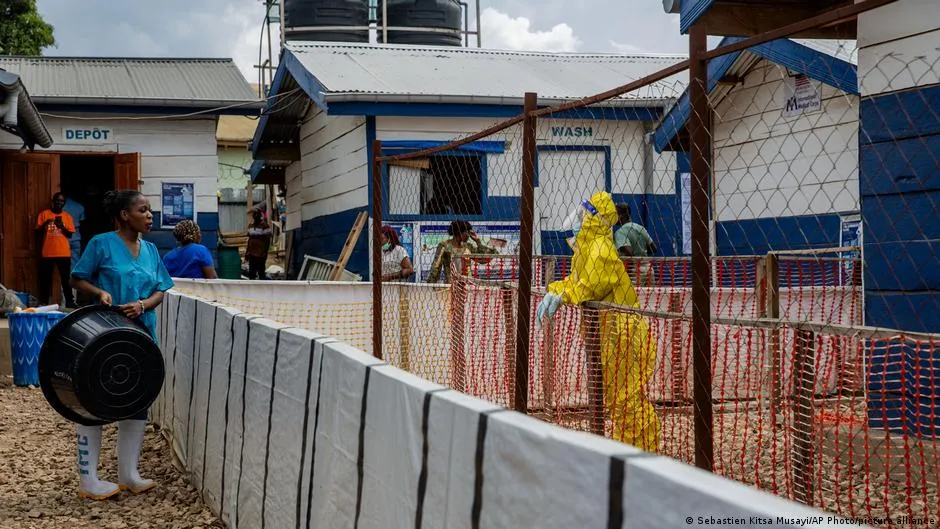
Nigeria confirms first Ebola case in Abuja, a woman just off a Uganda flight
Health Minister Muhammad Ali Pate says the patient flew in from Uganda, putting Africa's latest outbreak on Nigeria's doorstep.