
Trump meets Iraq's new PM as Iran-allied militias promise disarmament, but doubts linger
The US- Iraq talks hinge on whether pledged gun-drops are real, and whether it can shift the US-Iran war calculus.
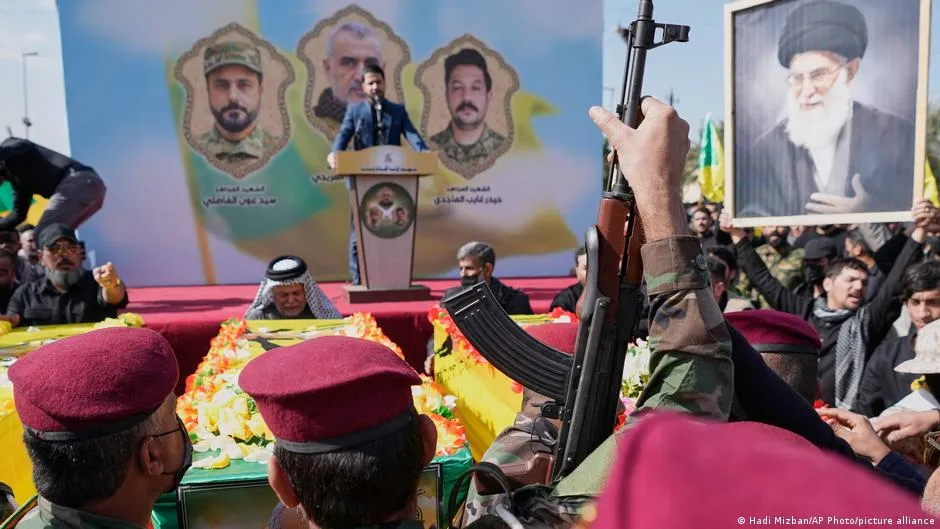
Donald Trump is expected to meet Iraq's new PM, with disarming Iran-allied militias in Iraq likely on the agenda. For decision-makers, the key consequence is whether any disarmament holds up in practice and meaningfully alters US-Iran war dynamics.
Donald Trump meets Iraq's new PM today, and the likely headline on the agenda is disarming Iran-allied militias in Iraq. Some of those militias have already pledged to give up their guns. The pressing question is whether those pledges are more than a political signal, and whether disarmament would actually influence the broader US-Iran war.
This is not a “nice-to-have” diplomatic talking point. In Iraq, militia control has been intertwined with power, security, and leverage. If disarming is genuine, it can change how armed groups operate day-to-day, and it can also change how the United States assesses risk and escalation. If it is not, the pledges may still buy time politically, but they can also harden mistrust. That matters because the US-Iran war is not fought only with traditional battle lines. It is shaped by networks, retaliatory capacity, and the political room that armed groups think they have.
For executives and operators watching from the sidelines, here is the economic and operational subtext: security de-escalation or escalation rarely stays in the diplomacy track. When armed actors are credibly disarmed, it can reduce friction around movement, logistics, and critical infrastructure. When disarmament stalls, uncertainty tends to spread quickly, because companies in high-risk environments plan for worst-case scenarios. That means costs rise, insurance and security budgets grow, and project timelines get squeezed. Even if your organization is not in Iraq directly, the ripple effects can show up in energy markets, shipping risk models, and regional investment appetite.
There is also a regulatory and institutional angle, even if today’s meeting is political. Disarmament is only as solid as the mechanisms that follow pledges. In practical terms, that means monitoring, verification, enforcement, and who controls the security transition. If militias pledge to give up weapons without clear, enforceable steps, the incentive is to keep capabilities “just in case” while benefiting from political legitimacy in the meantime. That is a classic problem in security transitions: everyone wants the upside of stability, but armed groups are built around maintaining leverage. In a context where the United States and Iran are already in a hostile strategic relationship, armed actors can calculate that they may need those capabilities later.
The second-order question is how such a development influences the US-Iran war. The source frames this as “will it influence” the war, which points to a causality chain rather than a ceremonial outcome. Disarming Iran-allied militias could reduce the frequency or intensity of incidents that the US may attribute to Iranian-backed networks from Iraq. It could also limit the ability of those groups to respond quickly to provocations. But disarmament is unlikely to be a single switch. Even if some fighters comply, others may resist, splinter, or rebrand their capabilities. The result can be partial change rather than total transformation, which still affects the calculus, but in messy ways.
There is one more layer that decision-makers tend to understand intuitively: timing and credibility. Today’s meeting matters because it sets expectations at a moment when a new Iraqi leadership is in view. If Trump and Iraq’s new PM treat militia disarmament as a near-term priority, that can increase pressure on militias to show progress. Yet pressure can also produce performative compliance, where the form changes faster than the substance. Boards and senior teams in any sector that deals with risk and compliance recognize the same dynamic: a promise without measurable verification is not a risk solution, it is a press release.
So the stake for people who care about geopolitics and its downstream effects is this: pledged disarmament can be either a genuine security pivot or a tactical pause. The source asks whether disarmament is likely, and whether it will influence the US-Iran war. In other words, it is not enough to know that guns are being discussed. The real question is whether the pledge translates into enforceable security outcomes that alter incentives for armed actors and shift how the United States and Iran respond to each other. For executives, that is the difference between a region that can stabilize enough for planning and one that keeps forcing constant contingency mode.
This story's Key Insights and Take-aways are locked.
Create a free account to unlock Executive Actions for one credit.
Register to UnlockAlways free for Executives Club members. Join the Club
More in Politics

LA County: DOJ's 20,000 'noncitizen' voter list is 'unreliable,' includes U.S.-born
Preliminary review by Los Angeles County election officials finds errors in the federal list, raising the stakes for voter roll integrity ahead of November.

Trump's $1.5B Pentagon chip investment lands in North Carolina
A $1.5 billion defense infusion for North Carolina chipmaking signals a new era of Pentagon-backed reshoring - here's what it means for the industry.

Nigeria confirms first Ebola case in Abuja, a woman just off a Uganda flight
Health Minister Muhammad Ali Pate says the patient flew in from Uganda, putting Africa's latest outbreak on Nigeria's doorstep.