
Trump pledges the US will help Lebanon as he hosts Joseph Aoun in Washington
The July 20 meeting happens while Lebanon moves to disarm Hezbollah and pressure Israel’s presence in the region.
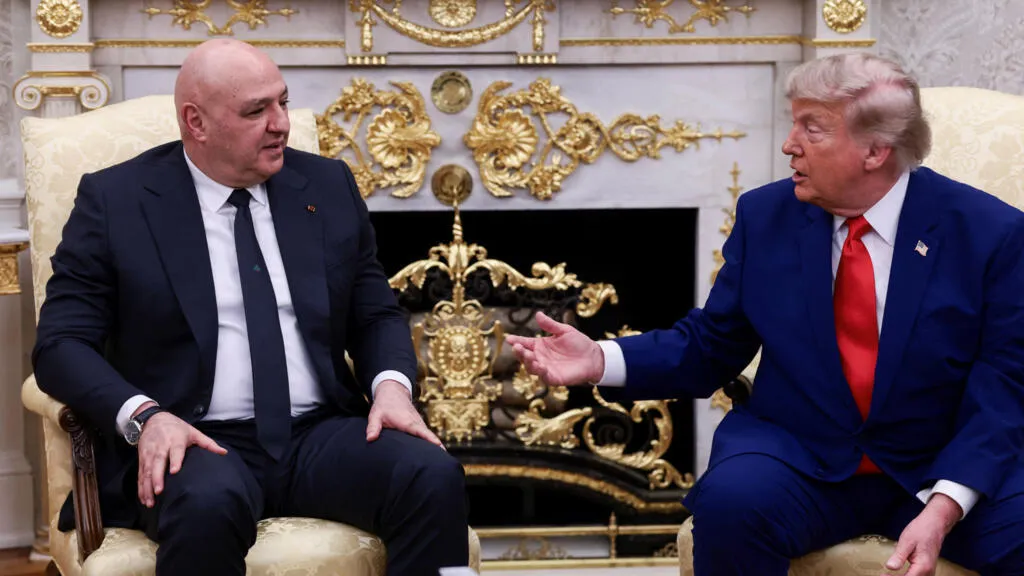
On July 20, US President Donald Trump hosted Lebanon’s President Joseph Aoun for their first-ever meeting in the White House. The leaders’ “will help” message lands amid Lebanon’s army taking over pilot safe zones in South Lebanon as the government faces pressure to disarm Hezbollah and to get Israel to leave the region.
Donald Trump hosted Lebanon’s President Joseph Aoun at the White House on July 20, and told the press that the US “will help” Lebanon. For anyone tracking US influence in the Middle East, that phrasing matters because it signals continued engagement just as Lebanon’s internal and external pressures spike. This was their first-ever meeting, so it also functioned as a reset point, not a routine diplomatic stop.
The timing is the story underneath the symbolism. According to the report, the Lebanon army is taking over “pilot safe zones” in South Lebanon, while pressure builds on the Lebanese government to disarm Hezbollah. At the same time, the government is also trying to get Israel to leave the region. In other words, the July 20 meeting is not happening in a vacuum. It is happening while the ground is shifting in South Lebanon and while Lebanon is trying to change the security equation inside its borders.
To understand why decision-makers beyond diplomacy should care, zoom out for a second. In situations like this, “help” can mean different things depending on who is holding the pen in Washington and who is trying to comply in Beirut. Even when the statement stays broad, it creates expectations. Governments often treat public signaling as a form of commitment, and other actors in the system react to it quickly. For businesses and funds with exposure to the region, that can translate into a faster repricing of risk, not necessarily because deals were signed, but because policy trajectories look more plausible.
There is also a regulatory and governance dimension here, even if the article is focused on high-level meetings. The report frames a key political objective: disarm Hezbollah. That is not a small internal reform item. It is a core security and sovereignty issue, and it implies a restructuring of power. When armed groups sit at the center of a national security landscape, disarmament efforts usually ripple through domestic institutions, enforcement capacity, and political legitimacy. Lebanon’s attempt to consolidate control through army-led safe zones in South Lebanon fits that logic, at least from the government’s perspective.
Now add the Israel factor, which the report names directly: Lebanon seeks to get Israel to leave the region. That matters because cross-border security issues can turn operational changes on one side into escalation pressures on the other. If safe zones are being taken over, the definitions of control, movement, and enforcement become sharper. Those are the kinds of details that can drive compliance behavior, affect humanitarian flows, and shape how international partners decide what they will support and how quickly.
In such environments, the US hosting Aoun is also a message to multiple audiences at once. The White House setting is a statement of seriousness, but the “first-ever meeting” aspect signals that the relationship is being elevated to a level where public promises carry more weight. And when Trump frames the US role as “will help,” it creates a focal point that Lebanon can point to as it faces domestic pressure. That is second-order important: public statements become bargaining chips. They can influence internal debates over whether the government should push harder on disarmament, whether the army can expand control, and how much risk leaders are willing to take.
For executives and board members, especially those operating in sectors sensitive to geopolitics such as logistics, insurance, energy, telecom, and cross-border finance, this is the type of update that changes contingency planning. Not because the article lists new funding, but because it ties together three moving parts: a major US-Lebanon diplomatic moment, an army-led shift in South Lebanon’s “pilot safe zones,” and a political push to disarm Hezbollah and to address Israel’s presence. When those align, uncertainty often compresses into decision windows. When uncertainty compresses, capital and resources move, and so do risks.
This story's Key Insights and Take-aways are locked.
Create a free account to unlock Executive Actions for one credit.
Register to UnlockAlways free for Executives Club members. Join the Club
More in Politics

LA County: DOJ's 20,000 'noncitizen' voter list is 'unreliable,' includes U.S.-born
Preliminary review by Los Angeles County election officials finds errors in the federal list, raising the stakes for voter roll integrity ahead of November.

Trump's $1.5B Pentagon chip investment lands in North Carolina
A $1.5 billion defense infusion for North Carolina chipmaking signals a new era of Pentagon-backed reshoring - here's what it means for the industry.

Nigeria confirms first Ebola case in Abuja, a woman just off a Uganda flight
Health Minister Muhammad Ali Pate says the patient flew in from Uganda, putting Africa's latest outbreak on Nigeria's doorstep.