
Trump rejected nearly 6,000 clemency bids, granting fewer than 20 on July 3
A hoped-for pardon wave for the 250th birthday fizzled fast, leaving boards and political teams to recalibrate.

President Trump rejected nearly 6,000 clemency applications despite expectations for a pardon wave tied to the country's 250th birthday. The July 3 outcome delivered fewer than 20 pardons, forcing decision-makers to rethink timing and leverage around clemency requests.
The math behind the hoped-for pardon wave is stark: President Trump rejected nearly 6,000 clemency applications, yet on July 3 he granted fewer than 20 pardons. That gap between expectation and execution is exactly the kind of signal legal and political teams cannot ignore, especially when the calendar is doing the heavy lifting.
The context matters. Expectations had been raised for a raft of pardons connected to the country’s 250th birthday, a milestone that naturally inflames optimism. But when the president’s July 3 decision came back with fewer than 20 pardons, it effectively punctured the assumption that a single high-visibility moment would translate into broad clemency. For anyone tracking clemency as a policy lever, that is the headline in plain English: timing did not deliver scale.
To understand why this matters beyond headlines, zoom out to how clemency timelines usually get treated. Clemency is not a routine court process, and it is not something parties can reliably “schedule” the way they might a hearing or a filing. Instead, requests live in a zone of political discretion where internal and external incentives both matter. When expectations spike around a milestone, applicants, advocates, and legal teams often operate on a “window” theory: more attention, more bandwidth, more political willingness to make concessions.
This time, the July 3 number suggests the window was narrower than many hoped. “Fewer than 20” is not a technicality here, it is a scale problem. If you are advising individuals or organizations that have been preparing for a possible pardon wave, you cannot treat clemency like a predictable release valve. You have to plan for the possibility that the milestone produces symbolic steps rather than broad grants.
For decision-makers, the second-order effect is straightforward: expectations that were built to justify urgency get reset. Teams that spent political capital, legal effort, or reputational energy targeting a specific date now face a new reality. If nearly 6,000 applications were rejected and the high-profile moment yielded fewer than 20 pardons, then future clemency efforts may require a different strategy, either in timing or in how requests are framed and prioritized.
There is also a governance angle worth noting. Boards and executive leadership teams typically think in terms of risk management and compliance, but clemency sits adjacent to that ecosystem. Even when a pardon is granted for individual cases, it can ripple into organizational decisions, including how companies assess legal exposure, how they communicate with stakeholders, and how they handle ongoing reputational considerations. If clemency arrives less than expected, the incentives to maintain contingency plans remain. In other words: the decision does not just change outcomes for applicants, it affects how institutions plan around regulatory and legal uncertainty.
Finally, there is the political signaling piece. When expectations rise sharply and then do not materialize, discretion does not look like a one-time opening. It looks like a boundary. That can shape how future applications are managed by counsel and advocates. It can also affect how observers interpret subsequent clemency actions, because the credibility of a “pardon wave” narrative takes a hit when the president grants fewer than 20 pardons on the date that was supposed to deliver momentum.
So the strategic stakes for executives and boards are not that they are directly involved in individual clemency cases. The stakes are that they are operating in a world where legal outcomes can hinge on political calendars, and where the gap between expectation and delivery can be measurable. When nearly 6,000 applications are rejected and fewer than 20 pardons are granted on July 3, everyone who lives by planning has to update their models. That is what this moment changes: the rules of urgency get rewritten, and the runway for a “wave” looks shorter than it sounded.
This story's Key Insights and Take-aways are locked.
Create a free account to unlock Executive Actions for one credit.
Register to UnlockAlways free for Executives Club members. Join the Club
More in Politics
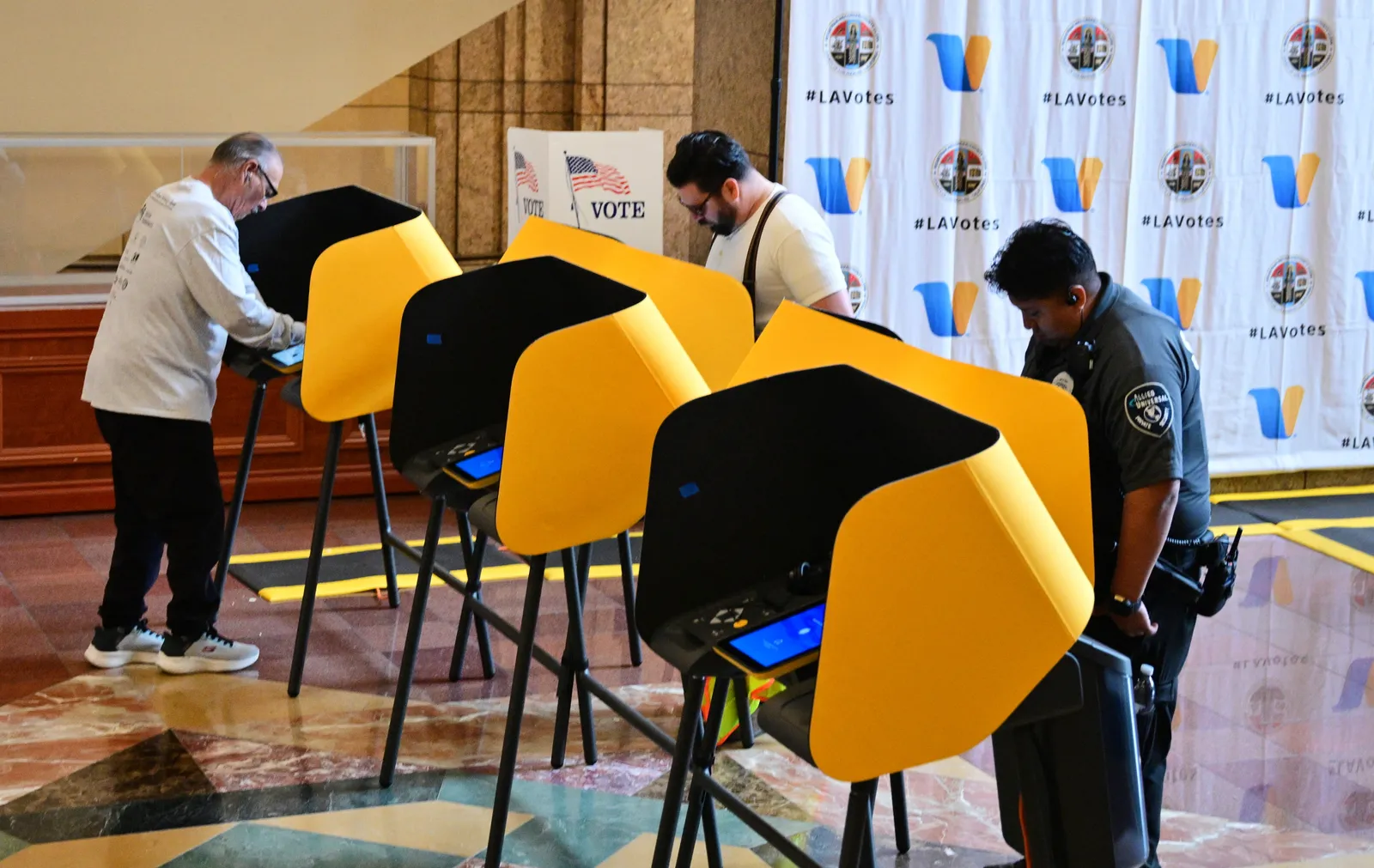
LA County: DOJ's 20,000 'noncitizen' voter list is 'unreliable,' includes U.S.-born
Preliminary review by Los Angeles County election officials finds errors in the federal list, raising the stakes for voter roll integrity ahead of November.
Trump's $1.5B Pentagon chip investment lands in North Carolina
A $1.5 billion defense infusion for North Carolina chipmaking signals a new era of Pentagon-backed reshoring - here's what it means for the industry.

Nigeria confirms first Ebola case in Abuja, a woman just off a Uganda flight
Health Minister Muhammad Ali Pate says the patient flew in from Uganda, putting Africa's latest outbreak on Nigeria's doorstep.