

Trump reverses ICE traffic-stop pause after MAGA backlash over two fatal shootings
The president tells ICE officers to ignore a late-Monday memo halting most vehicle stops, undoing Homeland’s freeze.
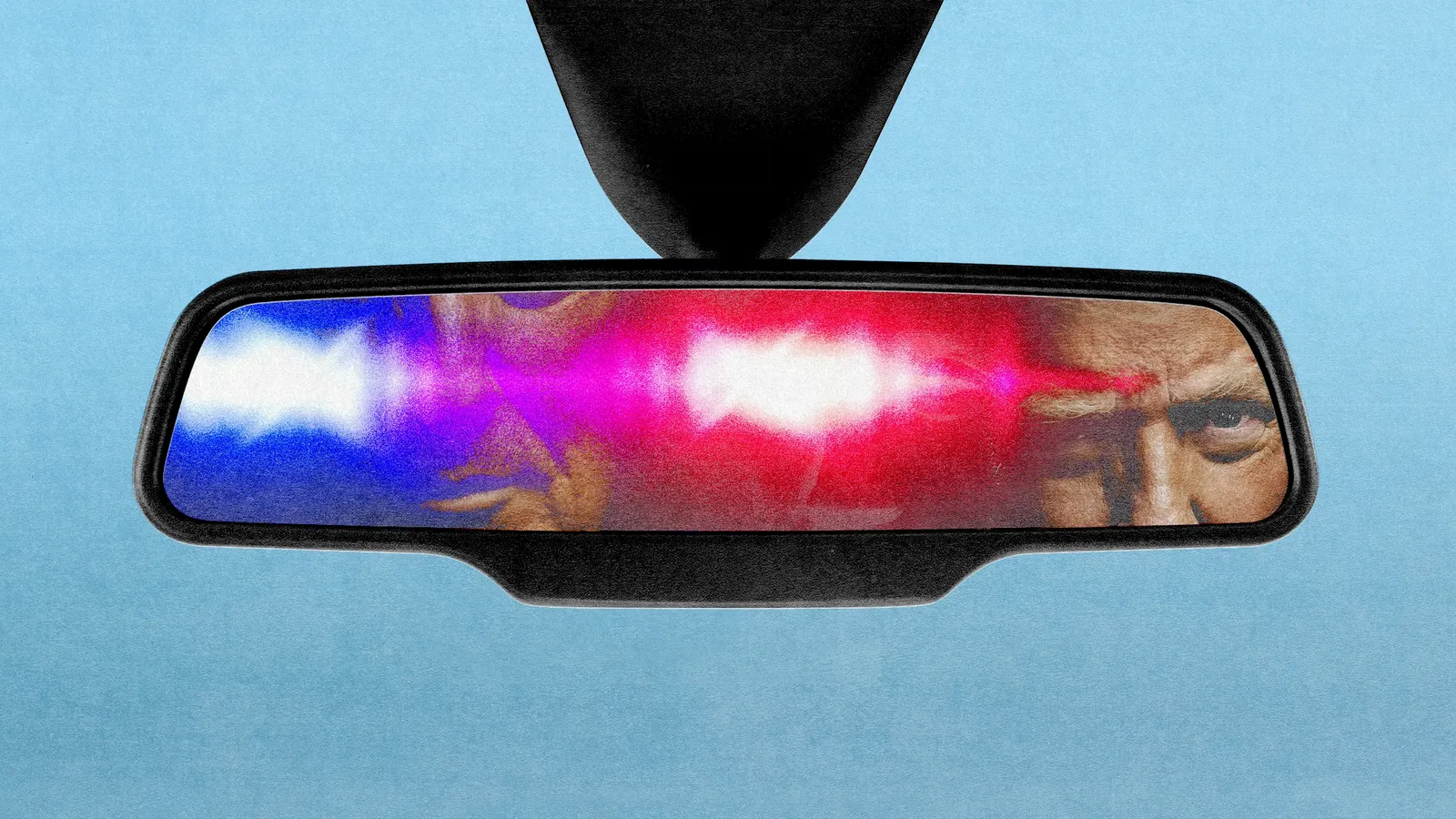
President Trump overruled an internal ICE directive that had suspended most vehicle stops after two ICE-related deaths, including Joan Sebastian Guerrero in Maine and Lorenzo Salgado Araujo in Texas. The reversal forces DHS and ICE leaders back into the vehicle-stop tactic just as training and de-escalation concerns remain unresolved.
President Trump has told ICE officers to ignore a memo issued barely a day earlier that told them to suspend most vehicle stops. His counter-order is blunt, too: “We CANNOT give up one of I.C.E.’s most important and effective Crime Fighting tools, THE TRAFFIC STOP!” he wrote on Truth Social, adding that if ICE stops using traffic stops, “we are playing right into the criminal’s hands.”
The quick pivot matters because the pause was not a vague policy shift. It was a freeze that had come late Monday on orders from Homeland Security Secretary Markwayne Mullin, and it followed public outcry after two fatal shootings by ICE officers in less than a week. Mullin had spoken with Senator Susan Collins of Maine after an ICE officer fatally shot 26-year-old Joan Sebastian Guerrero, a delivery driver from Colombia, in Biddeford. Six days earlier, another ICE officer in Texas killed Lorenzo Salgado Araujo, a construction contractor from Mexico who’d been living in the United States for 35 years. Neither man had criminal records according to publicly available sources, and neither was the target of the stop that led to their death.
So how did Trump go from “pause” to “traffic stops are the tool” almost immediately? The Atlantic reports that the president overruled his own administration after furious pushback from his MAGA base, including criticism from figures like Tomi Lahren, former Border Patrol Commander Greg Bovino, and Steve Bannon. One official described the “final straw” as the cable-news segments Trump watched this morning, plus negative coverage from right-wing media. Trump, according to officials, concluded that ICE abandoning traffic stops would “make them all look weak.”
What makes this more than a political mood swing is the internal mechanics. The freeze had been directed under DHS, and officials said it was highly unlikely Mullin would have allowed the initial order to go out without White House approval. “Not a chance,” one DHS official told The Atlantic, describing it as a “Three-ring circus.” A senior administration official, however, denied White House sign-off in advance and said Trump hadn’t known about it.
The mismatch between those accounts is where second-order consequences start. When a policy memo and a presidential Truth Social post contradict each other in public within 24 hours, the operational risk does not disappear. In fact, it tends to concentrate on the front line: officers who have been briefed on one approach, then asked to shift back. As senior ICE officials told The Atlantic, officers aren’t getting enough training in how to conduct vehicle stops and safely de-escalate confrontations when drivers don’t obey commands. That training gap matters because the legal and practical standard for when deadly force is allowed is not elastic.
The article anchors that point in Tennessee v. Garner, a 1985 Supreme Court decision establishing that police cannot use lethal force on a suspect for disobeying commands or attempting to flee. The rule, in plain terms: officers need to articulate a well-reasoned fear of imminent harm to police or the public. Aggressive acceleration toward an officer can qualify as a threat, but a driver trying to swerve around officers to escape would not, by itself, meet that threshold. That legal framing matters for executives and boards in adjacent sectors (risk, compliance, insurance, security services, government contracting), because it clarifies what “training and de-escalation” is really doing: reducing the chance that an encounter escalates into a lethal-force moment that is later contested.
There is also the politics-on-a-timer angle. Mullin took over DHS in March, two months after U.S. citizens were killed by immigration officers in Minneapolis. The administration, according to the report, had pulled back on its most aggressive immigration-enforcement actions after those January killings, and since then key MAGA voices have urged a return to more forceful tactics to restore the base’s faith. Some officials, including “border czar” Tom Homan, have promoted an intensifying deportation push. Meanwhile, some in the West Wing worried privately about violent incidents becoming politically damaging. The new deaths revived those fears.
And the policy lever the administration is pulling keeps traffic stops in the center of the system. In recent weeks, the administration ramped up ICE arrests to nearly 2,000 a day, doubling the pace of this spring. ICE officers have come to rely on traffic stops to grab people as they leave for work in the morning because arrests carried out inside homes typically require warrants from a judge. Now, with the vehicle-stop pause effectively reversed, those stops likely resume, which could sustain higher arrest numbers while also increasing the number of high-stakes encounters where training quality and de-escalation skills matter.
Finally, there is the management and accountability story inside DHS and ICE. The backlash over the pause caught some in the White House off guard. After Trump’s Truth Social post, Mullin posted a statement to social media that lacked instruction and did not directly address Trump’s countermand. In that statement, Mullin said the department’s top goal “is to keep our officers safe and get criminals OFF our streets,” and that it “remind[s] illegal aliens attempting to evade arrest is dangerous.” As of this afternoon, ICE had not formally issued new orders reversing the vehicle-stop memo, according to officials The Atlantic spoke with. Yet Trump’s post supplies an immediate mandate.
For decision-makers, the takeaway is not partisan. It is about how fast operational policy can flip when media, base incentives, and institutional risk collide. For peers who oversee regulated enforcement, frontline safety, or high-liability processes, this is the uncomfortable reminder: when a system depends on split-second field judgments, policy uncertainty and training gaps are not abstractions. They are the conditions under which the next fatal incident happens, and the conditions under which leadership earns or loses control of the narrative.
This story's Key Insights and Take-aways are locked.
Create a free account to unlock Executive Actions for one credit.
Register to UnlockAlways free for Executives Club members. Join the Club
More in Politics
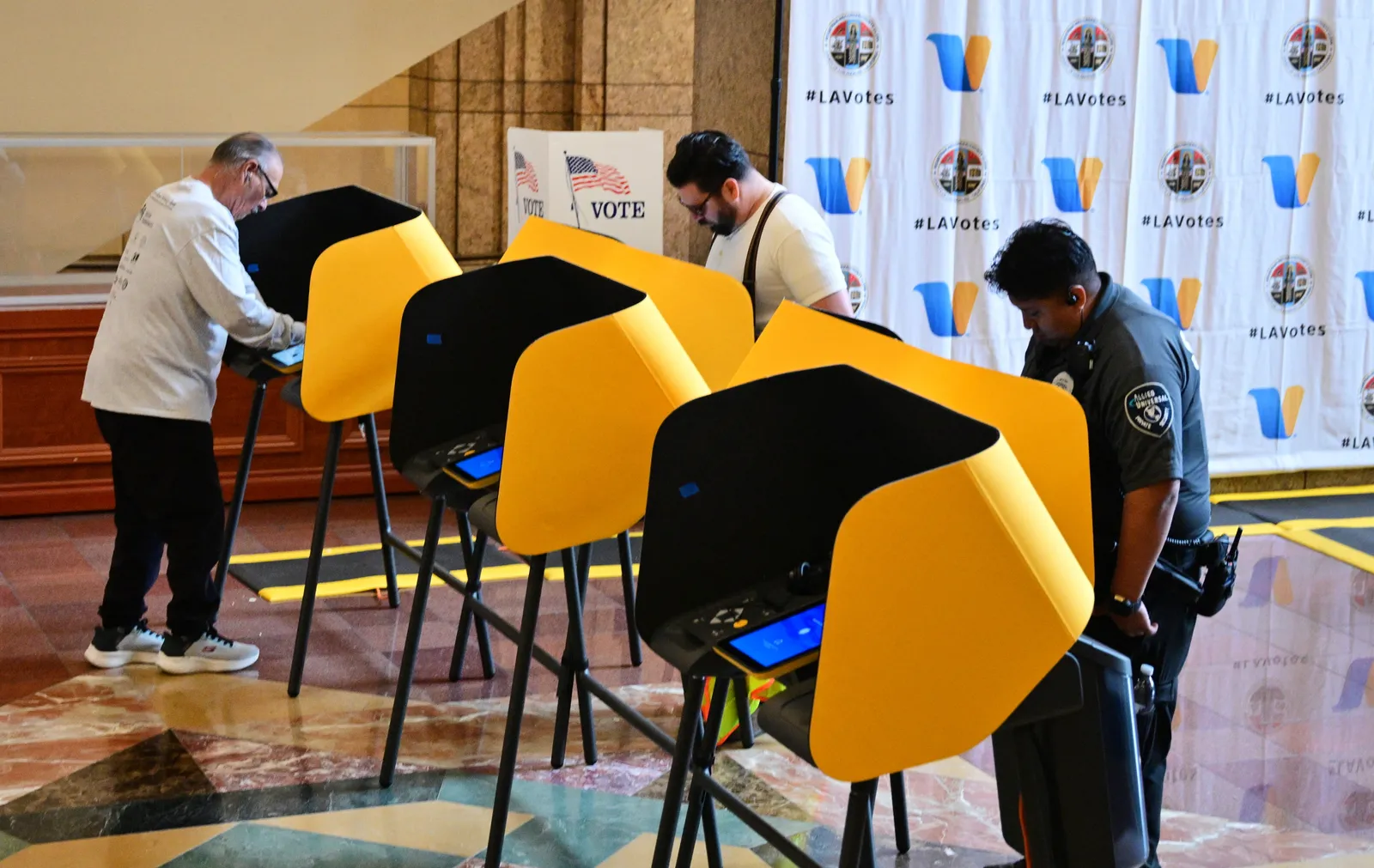
LA County: DOJ's 20,000 'noncitizen' voter list is 'unreliable,' includes U.S.-born
Preliminary review by Los Angeles County election officials finds errors in the federal list, raising the stakes for voter roll integrity ahead of November.
Trump's $1.5B Pentagon chip investment lands in North Carolina
A $1.5 billion defense infusion for North Carolina chipmaking signals a new era of Pentagon-backed reshoring - here's what it means for the industry.

Nigeria confirms first Ebola case in Abuja, a woman just off a Uganda flight
Health Minister Muhammad Ali Pate says the patient flew in from Uganda, putting Africa's latest outbreak on Nigeria's doorstep.