

Trump tells U.S. firms to skip Canadian goods, credits tariffs for auto revival
President Trump doubled down on tariffs, telling U.S. businesses to stop importing Canadian goods and crediting his trade policy for reviving Ford and GM.

President Trump said Sunday on Truth Social that U.S. businesses should not import Canadian goods, arguing his tariffs 'revived, and indeed saved' the American automobile industry, citing profits at Ford and GM. The statement escalates trade tensions and signals continued pressure on cross-border commerce, forcing executives to reassess supply chains and pricing strategies.
President Trump on Sunday issued a blunt directive to U.S. businesses: stop importing Canadian goods. In a post on Truth Social, Trump said his tariffs 'revived, and indeed saved' the American automobile industry, pointing to profits at Ford, General Motors, and other U.S. carmakers as evidence. The remarks come amid ongoing trade tensions between the U.S. and Canada, with Trump repeatedly threatening tariffs on Canadian products. His latest comments signal that the administration is not backing down from its protectionist stance, even as businesses grapple with higher input costs and supply chain disruptions.
Trump's claim about the auto industry is a central pillar of his trade agenda. He has long argued that tariffs on imported vehicles and parts would boost domestic manufacturing. Ford and GM have indeed reported strong profits in recent quarters, though analysts attribute some of that to pricing power and consumer demand rather than tariffs alone. Still, the president's framing resonates with his base, which sees tariffs as a way to protect American jobs.
For U.S. companies that rely on Canadian inputs, the directive is a warning. Many manufacturers, including automakers, have integrated supply chains across the border. A complete halt to Canadian imports would be disruptive, forcing firms to find alternative sources or absorb higher costs. Some may pass those costs to consumers, potentially fueling inflation. The auto industry, in particular, depends on Canadian parts for assembly, and any sudden shift could ripple through production schedules.
The statement also underscores the fragility of the U.S.-Canada trade relationship. The two countries are each other's largest trading partners, with billions in goods crossing the border daily. Trump's tariffs have already prompted retaliatory measures from Canada, and his latest comments could escalate the dispute further. Canadian officials have signaled they will respond firmly, potentially targeting U.S. agricultural exports or manufactured goods, which would hit American farmers and factory workers.
Business groups have warned that tariffs hurt competitiveness and raise prices. The U.S. Chamber of Commerce has repeatedly called for a negotiated resolution, arguing that trade barriers ultimately harm consumers and workers. However, Trump appears unmoved, doubling down on his 'America First' rhetoric. For executives, the uncertainty is the biggest challenge, making long-term planning difficult. Companies are already factoring in potential tariff hikes, but the lack of clarity on policy direction complicates investment decisions.
For decision-makers, the takeaway is clear: the trade environment remains volatile. Companies should diversify their supply chains, explore domestic alternatives, and prepare for potential tariff hikes. Those that adapt quickly may gain a competitive edge, while those that rely heavily on Canadian imports could face margin pressure. The auto industry's profits may be cited as a win, but the broader economy feels the strain, as higher costs trickle down to consumers and small businesses.
Trump's latest statement is more than a political jab; it's a signal of policy direction. As the 2024 election approaches, trade will remain a flashpoint. Businesses must navigate this landscape carefully, balancing cost, compliance, and consumer expectations. The president's insistence on tariffs may resonate politically, but the economic reality is more complex. For now, the message to U.S. businesses is unambiguous: prepare for a world where Canadian goods are no longer a default option.
This story's Key Insights and Take-aways are locked.
Create a free account to unlock Executive Actions for one credit.
Register to UnlockAlways free for Executives Club members. Join the Club
More in Business
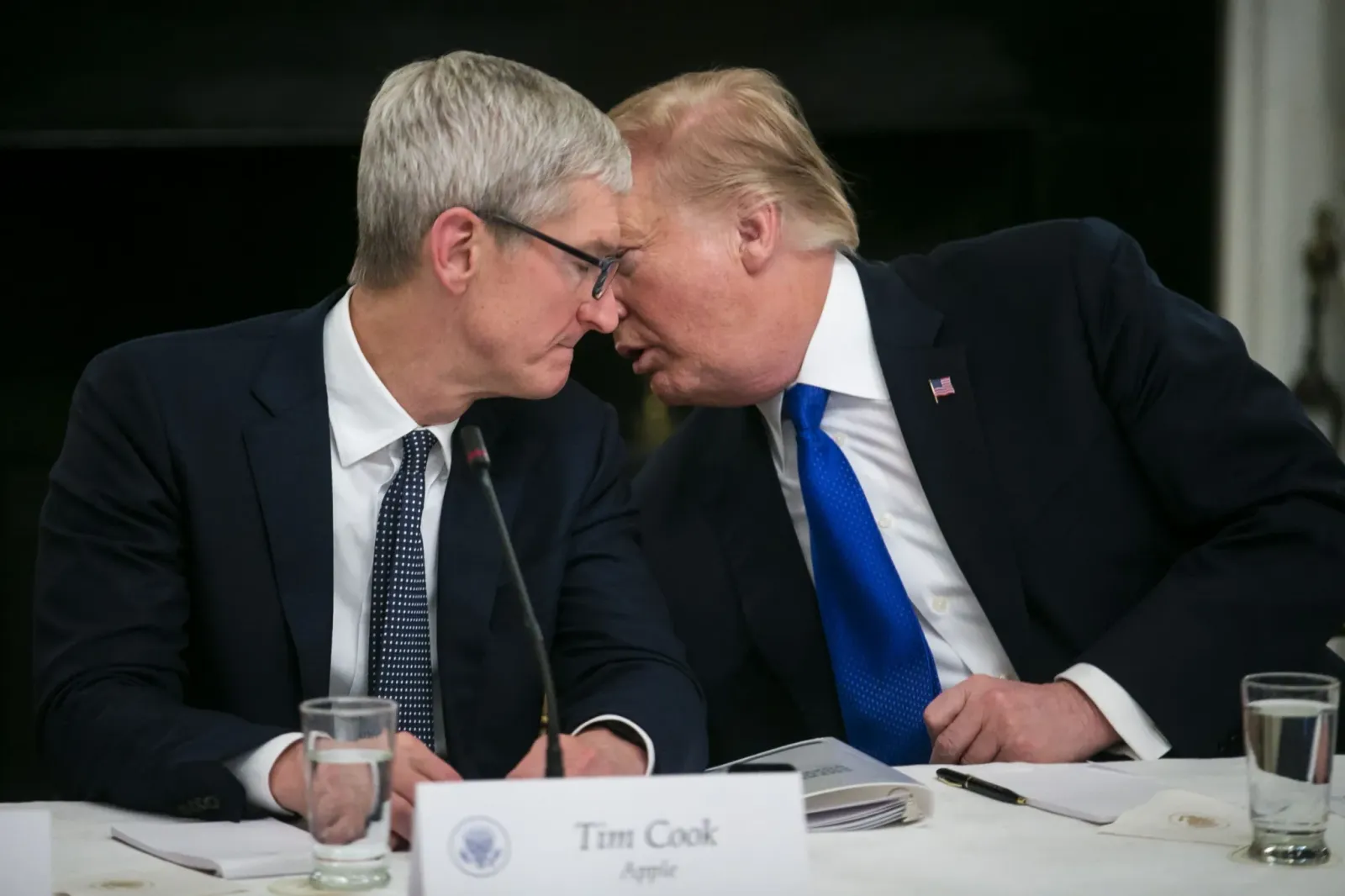
Tim Cook steps down as Apple CEO, stays on as chair with $45M equity
The 'Trump whisperer' keeps his White House and Beijing access as Apple navigates tariffs and a $4.6 trillion market cap.

Snowflake shares surge as AI data demand crushes estimates, lifting full-year forecast
Stocks jumped on stronger-than-expected guidance, signaling enterprise AI workloads are accelerating faster than Wall Street priced in.

Tim Cook's 15-year Apple CEO run ends: 3 lessons for any successor
After 15 years, Tim Cook hands Apple to John Ternus - here's how he turned a $350B company into a $4.6T juggernaut.