
UAE pairs 5.2GW solar with 19GWh batteries to run half a million homes overnight
A giant storage build in the desert is showing how renewables can survive the hours the sun disappears.
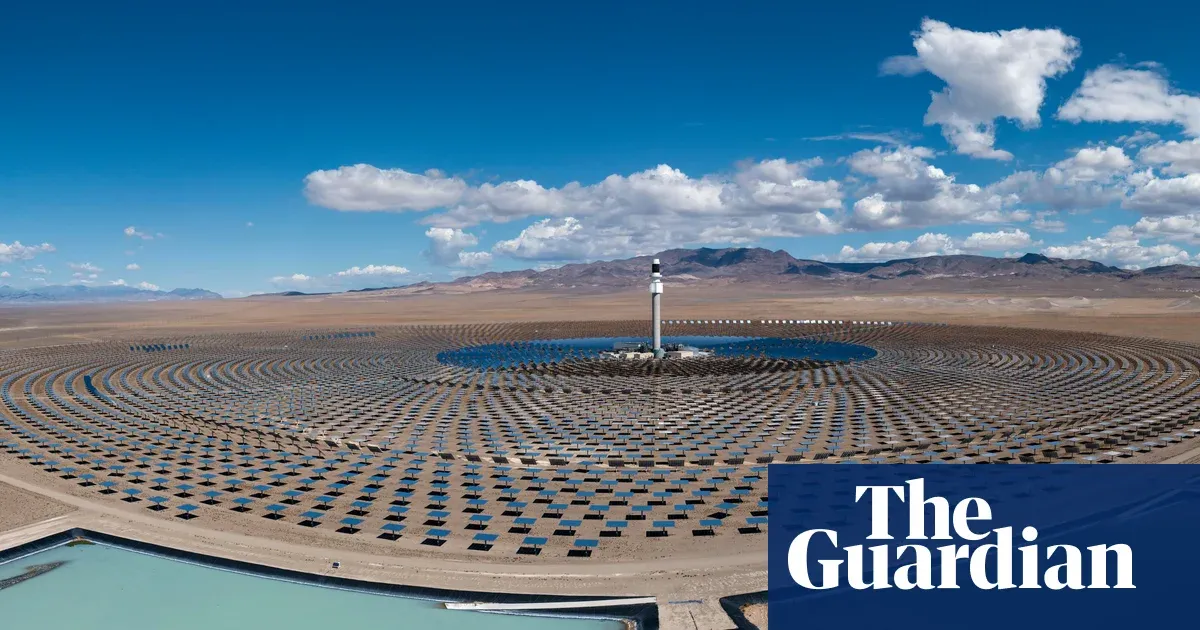
In the United Arab Emirates, a sprawling clean energy project combines 5.2GW of solar power capacity with 19GWh of battery storage. The effort is designed to let solar power run through the night, powering the equivalent of half a million homes.
In the deserts of the United Arab Emirates, developers are assembling a clean energy system that tackles the problem everyone runs into with renewables: what happens after sunset. The project blends 5.2GW of solar power capacity with 19GWh of battery storage, and it is meant to keep solar-generated electricity flowing through the night. The stated result is solar power that can power the equivalent of half a million homes overnight.
Put the scale in your mental calculator: this plan covers an area roughly the size of 12,600 football fields. And it already frames the UAE as a leader in turning solar plus storage from pilot projects into a fully engineered nighttime supply. If you are a decision-maker watching the renewable transition, the message is simple. It is not enough to have generation. You need storage that can move power across time, not just across geography.
This is why the project’s battery piece matters as much as its solar build. Solar output is inherently daytime-heavy, and the system operator only cares that demand is met in real time. Battery storage is the bridge. In effect, it takes energy produced when the sun is strongest and releases it later, when grids still need reliable power. On the economics side, that reliability changes how renewables compete: storage can reduce the operational “gap” that often forces grids to fall back on other sources when solar production drops.
Zoom out to where this is happening elsewhere, because the same pressure point is showing up globally. The story notes developments “from Nevada to Manchester,” indicating that the industry is experimenting with different approaches to clean energy’s biggest constraint. Solar plus storage is one track. Molten salt and other “weird” concepts are another direction that keeps coming up in discussions about longer-duration storage. The underlying theme across regions is the same: the grid needs flexible energy, and flexibility is expensive if you only plan for daytime generation.
For executives and boards, the UAE scale matters because it signals what the market is willing to pay for when storage stops being a science project and becomes an infrastructure asset. 19GWh is not a rounding error. It is a number that implies planning for large energy shifting and a willingness to invest in the control systems, safety design, and operational strategy required for batteries to act like grid power, not experimental add-ons.
There is also a governance and regulatory angle hiding in the background, even when the story stays focused on the build. Projects that can deliver dependable nighttime supply have a stronger case in regulatory and policy frameworks that aim to decarbonize while keeping the lights on. When regulators and utilities evaluate proposals, they do not just ask, “How clean is it?” They ask, “Can it meet demand at all hours and at all times of year?” A project designed to provide nighttime equivalents to half a million homes is directly answering that question.
Second-order implications show up in procurement and financing too. As storage capacity grows, grid operators and developers can structure contracts around predictable performance across day and night, which can change revenue certainty and risk allocation. That, in turn, affects capital costs and how investors underwrite long-lived assets. If storage can reliably smooth the variability that comes with renewables, the entire ecosystem can move from “generation-first thinking” to “system-first thinking.” In practice, that means more attention on storage duration, dispatch strategy, and how quickly projects can scale from one site to the next.
So what should leaders take from this? Whether you are building, funding, or regulating clean power, the UAE example is a reminder that the most consequential advances are often the unglamorous ones. This is not just adding solar panels. It is coupling a very large solar capacity, 5.2GW, with a very large storage capacity, 19GWh, on a site whose footprint is roughly 12,600 football fields. That combination is what enables the headline promise: solar that can power the equivalent of half a million homes through the night.
This story's Key Insights and Take-aways are locked.
Create a free account to unlock Executive Actions for one credit.
Register to UnlockAlways free for Executives Club members. Join the Club
More in Science
2026 Nikon Small World Winners Reveal the Hidden Machinery of Everyday Life
A mycologist's frozen Edinburgh garden became the backdrop for vivid views inside cells, a reminder of what advanced imaging now makes visible to researchers and the industries built on biology.

Study: 1 in 4 depression cases may be a body-clock problem, not a chemical one
A 10,000-person study finds standard antidepressants often fail these patients, but melatonin and morning sunlight may hit the real root cause.

Start-Up Says A.I. Designed a Virus to Attack One Patient's Superbug
If the claim holds up, personalized phage therapy could become a new frontline weapon against antibiotic resistance - but proof is far from final.