
Uber and Wayve Begin Robotaxi Tests in London - The Real Reason They're Doing It Now
The ride-hailing giant and a British AI upstart are entering a major autonomous market. Here's the strategy behind the test and what it signals for the industry's global rollout.
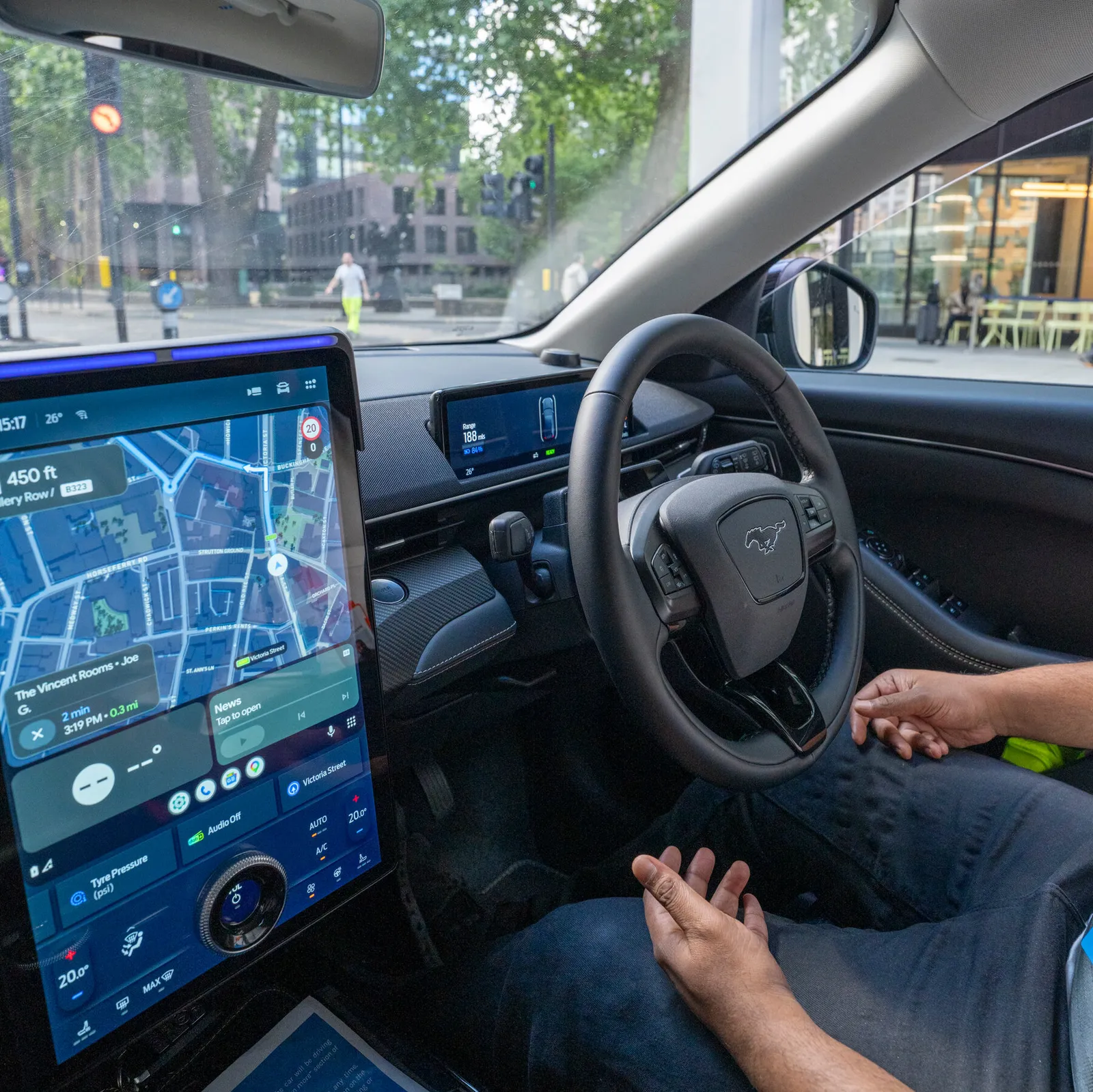
Uber and UK-based Wayve have started testing autonomous vehicles in London, one of the world's largest ride-hailing markets. The move reflects a coordinated push to gain regulatory and operational footholds in Europe, reshaping competitive dynamics for autonomy-focused companies worldwide.
Uber and the British start-up Wayve have quietly flipped the switch on autonomous vehicle testing in London, inserting themselves into one of the globe's most competitive ride-hailing arenas. The New York Times reports that the two companies are now running self-driving cars in a market long seen as a goldmine of revenue but a minefield of regulation. For Uber, this isn't a publicity stunt - it's a calculated step to prove that its platform can be the operating system for driverless mobility, not just a network of human contractors. For Wayve, a London-born startup with roots in deep learning, it's a home-field test of technology that has attracted billions in venture funding but has yet to achieve commercial-scale validation outside controlled environments.
The timing is anything but random. The UK has become one of the most permissive testing grounds for autonomous vehicles in Europe, with regulators actively courting innovation to cement London as a global hub for mobility tech. Dense traffic, narrow streets, roundabouts, and unpredictable pedestrians make the city an unforgiving laboratory - a gauntlet that could expose weaknesses in perception algorithms or decision-making systems. By starting tests now, Uber and Wayve are signaling they're ready for the toughest exam, not just the easy passes. That's a deliberate contrast to American rivals like Waymo, which has focused on sun-belt cities with wider roads, or Cruise, which has faced regulatory setbacks. For Uber, the London test is also a way to reclaim narrative momentum in a sector where it was once a pioneer, then stumbled during a high-profile fatal crash in 2018.
The partnership itself is telling. Uber isn't building its own self-driving stack from scratch anymore - it tried that and shelved it after the accident. Instead, it's positioning itself as the distribution layer, plugging in third-party autonomy providers like Wayve. This mirrors its strategy in the US, where it has partnered with Waymo and others to offer driverless rides through its app. London, however, is a different beast: it's Uber's largest European market, and the city has historically pushed back on the company, even revoking its license in 2017 and 2019 before court battles reinstated it. By teaming up with a British firm like Wayve, Uber may be seeking a more diplomatic path through the regulatory maze - a local face, literally and figuratively, to smooth negotiations with Transport for London and the broader government.
Wayve, meanwhile, is no small fry. The startup has raised significant capital from investors like SoftBank and Microsoft, and its engineering team has consistently touted an end-to-end machine-learning approach that eschews traditional rule-based programming. By testing in London, Wayve gets to prove its technology in the most complex urban environment it has yet attempted - a far cry from the suburban loops it's used for earlier trials. Success here would not only bolster its valuation but also give it a competitive edge over rivals like Mobileye or Aurora, who may struggle to adapt to such dense, chaotic streets. The stakes are high: a failure could spook investors and validate critics who argue that pure AI isn't ready for prime-time metropolitan driving.
Beyond the two companies, this test carries broader implications for the autonomous vehicle industry. London has long been considered a bellwether for adoption because of its strict safety standards, environmental rules, and vocal public. If Uber and Wayve can navigate the UK's regulatory framework and win public trust, it could open the floodgates for scaled deployments across Europe. That would put pressure on legacy automakers and tech giants to accelerate their own programs or risk being left behind in a region that's fiercely protective of its data and infrastructure. It also signals a shift in strategy: autonomy isn't just about replacing drivers; it's about integrating into existing ride-hailing ecosystems that already have users, payment systems, and local knowledge.
For executives watching these developments, the playbook is clear. Companies that treat autonomy as a stand-alone product will likely struggle against those that embed it into established mobility platforms. Uber is betting that its brand and reach can transform Wayve's technology into a must-have feature, similar to how Netflix distributed original content to disrupt traditional TV. Meanwhile, regulators in other major cities are likely to notice London's approach. If the UK can attract two high-profile players without sacrificing safety, other governments may follow suit - creating a virtuous cycle of innovation and investment. On the flip side, any high-profile mishap in London could set the entire sector back years, reinforcing the fear that robotaxis are perpetually five years away.
The next few months will be critical. Uber and Wayve will need to demonstrate not only technical reliability but also public acceptance. Londoners are famously skeptical of corporate disruption - Uber itself has faced protests from taxi drivers and internal challenges to its labor practices. The test phase will be closely scrutinized, and any accident or regulatory hiccup could poison the well for years. Yet if these trials go smoothly, they could serve as a template for cautious, localized expansion - proving that autonomy can work in the hardest conditions and still be economically viable. For decision-makers in adjacent industries - fleet operators, logistics providers, even insurers - the rollout in London is a signal to start preparing for a future where human drivers are no longer the default assumption. The question isn't whether autonomous vehicles will arrive; it's how quickly they'll spread once they've conquered the toughest streets.
This story's Key Insights and Take-aways are locked.
Create a free account to unlock Executive Actions for one credit.
Register to UnlockAlways free for Executives Club members. Join the Club
More in Business

Tim Cook steps down as Apple CEO, stays on as chair with $45M equity
The 'Trump whisperer' keeps his White House and Beijing access as Apple navigates tariffs and a $4.6 trillion market cap.
Snowflake shares surge as AI data demand crushes estimates, lifting full-year forecast
Stocks jumped on stronger-than-expected guidance, signaling enterprise AI workloads are accelerating faster than Wall Street priced in.
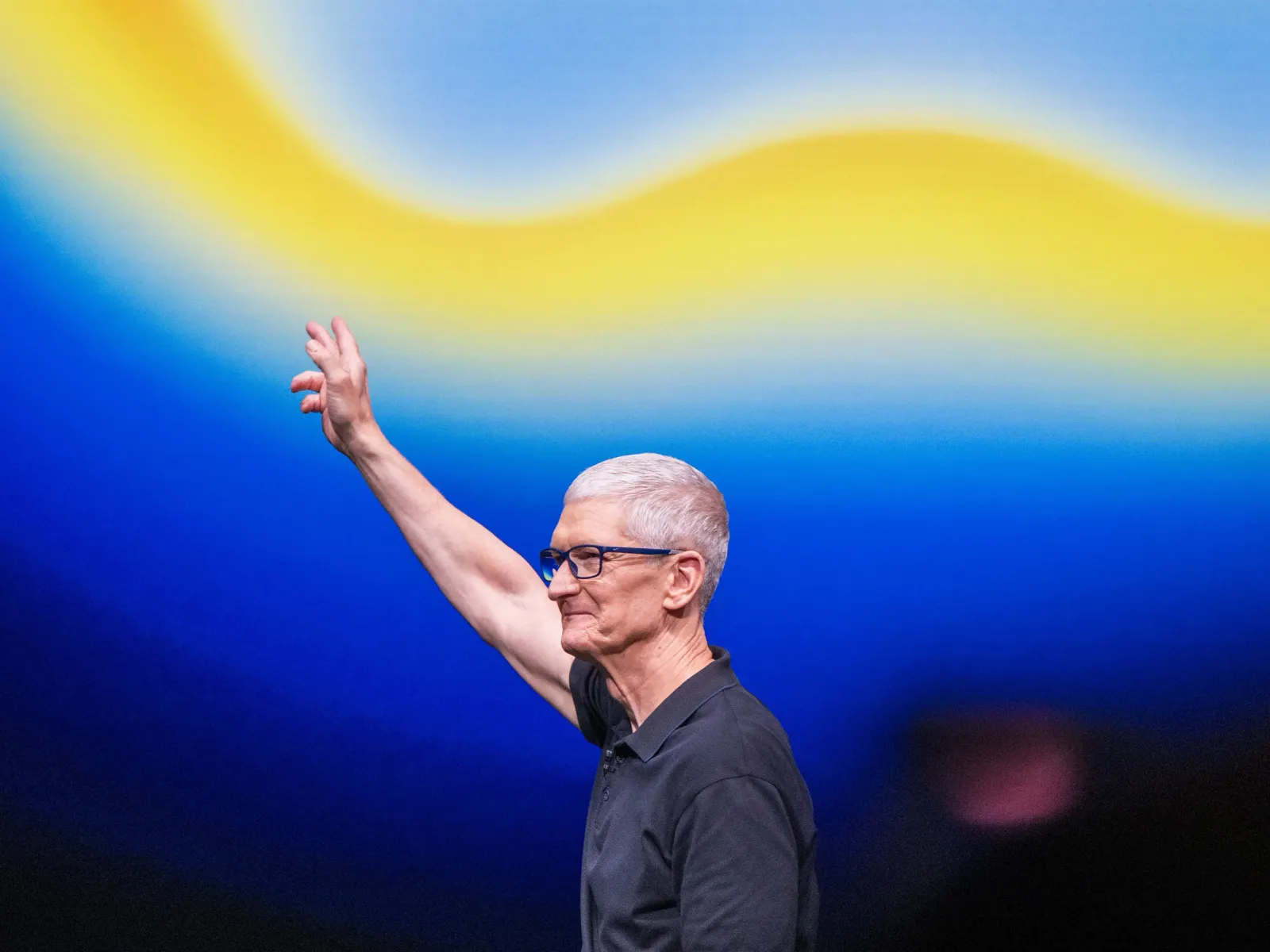
Tim Cook's 15-year Apple CEO run ends: 3 lessons for any successor
After 15 years, Tim Cook hands Apple to John Ternus - here's how he turned a $350B company into a $4.6T juggernaut.