

UN reports 144 dead or missing off Mauritania as two children survive
A week of sinking boats off Mauritania left 144 people unaccounted for, with survivors losing everyone from Gambia.
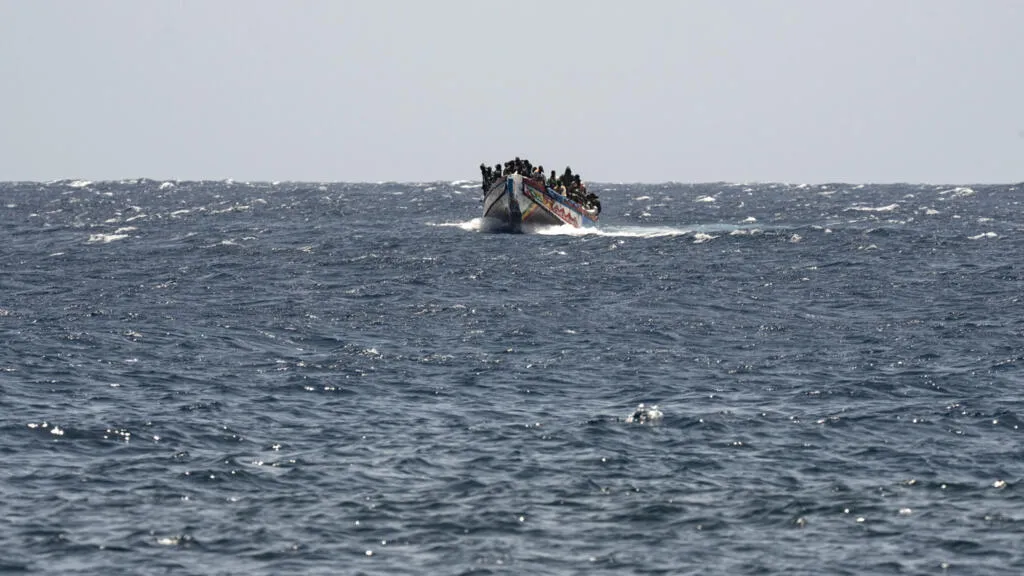
The UN refugee agency said Tuesday that 144 migrants and refugees were reported dead or missing after “tragic maritime incidents” off the coast of Mauritania last week. For decision-makers, the case highlights how border policy, rescue capacity, and partner coordination can translate into life-or-death outcomes fast.
The UN refugee agency said Tuesday that 144 migrants and refugees were reported dead or missing after “tragic maritime incidents” off the coast of Mauritania last week. Two children who were brought safely ashore from one of the sinking boats had lost all of their families during the journey from Gambia.
That combination matters: a confirmed loss toll of 144, plus survivor accounts that underscore how entire family units can disappear on the route before anyone in Europe or North America even hears the story. The UN is not talking about a near miss. It is describing fatalities and missing persons from maritime crossings, and it is doing so with just enough detail to show the stakes are not abstract.
For executives who are not used to thinking about search and rescue operations, the lesson is still operational. Maritime migration risk is shaped by geography, timing, and the ability of governments and humanitarian partners to detect and respond to boats in distress. When ships go down, the window for intervention can shrink to minutes. The UNs framing of “tragic maritime incidents” off Mauritania makes clear that these are not isolated mishaps, but events clustered around the realities of irregular maritime travel.
Mauritania sits along a dangerous corridor. People leaving from or transiting through Gambia often do so on routes where boats are crowded, conditions can deteriorate quickly, and help is not guaranteed. The UNs mention that the two children were brought safely ashore, but lost all of their families during the journey from Gambia, is a blunt reminder of what “survival” looks like in practice: it can mean one or two children left behind, with no parents, siblings, or guardians to fall back on.
This is where second-order implications kick in for decision-makers. After an incident, the hardest work often starts on land: identifying victims, coordinating with origin and transit countries, and providing protection and care to survivors. Two children surviving a sinking boat does not close the case. It opens new obligations, from immediate safeguarding to longer-term documentation and family tracing. In many jurisdictions, those steps involve multiple agencies and legal systems, which can slow down urgently needed support.
There is also a regulatory and governance angle that boardrooms should not ignore. Humanitarian actors typically coordinate with governments under frameworks that dictate who leads, who shares information, and how data about missing persons is handled. When the UN reports “dead or missing” numbers, it is effectively signaling that the situation is beyond the scope of a single local response. That can pull in diplomatic coordination, asylum and refugee processing capacity, and international logistics for verification and assistance.
At the same time, the incentives are not always aligned. Authorities responsible for maritime borders may focus on enforcement and deterrence, while humanitarian organizations focus on rescue, protection, and post-incident care. The outcome depends on whether the system treats incident response as a shared priority or as a handoff between institutions. In the real world, drowning is indifferent to internal politics, but survivor support is not.
For peers in adjacent sectors, this is not just a humanitarian story. It is a stress test of how institutions handle cross-border crises. Companies and investors with exposure to logistics, shipping, maritime tech, or government contracting can find that their partners and customers are judged by response time, coordination quality, and transparency after major incidents. Even if your organization is not involved in migration policy directly, the networks you rely on often extend into the same operational web.
The strategic stake is simple: if systems fail at sea, the consequences do not end when boats reach shore. The UNs report of 144 dead or missing off Mauritania, paired with two children arriving without any remaining family from Gambia, shows how quickly tragedy becomes a long-term protection and accountability challenge. For executives and boards watching risk, this is a reminder that public crises can translate into legal, reputational, and operational pressure long after the initial news cycle.
This story's Key Insights and Take-aways are locked.
Create a free account to unlock Executive Actions for one credit.
Register to UnlockAlways free for Executives Club members. Join the Club
More in Politics

LA County: DOJ's 20,000 'noncitizen' voter list is 'unreliable,' includes U.S.-born
Preliminary review by Los Angeles County election officials finds errors in the federal list, raising the stakes for voter roll integrity ahead of November.

Trump's $1.5B Pentagon chip investment lands in North Carolina
A $1.5 billion defense infusion for North Carolina chipmaking signals a new era of Pentagon-backed reshoring - here's what it means for the industry.

Nigeria confirms first Ebola case in Abuja, a woman just off a Uganda flight
Health Minister Muhammad Ali Pate says the patient flew in from Uganda, putting Africa's latest outbreak on Nigeria's doorstep.