
US fires 10th consecutive strike on Iran to reopen Hormuz, diplomats warn of escalation
Even as diplomats push de-escalation, Iran says it is in “full-scale war” after more US aerial action.
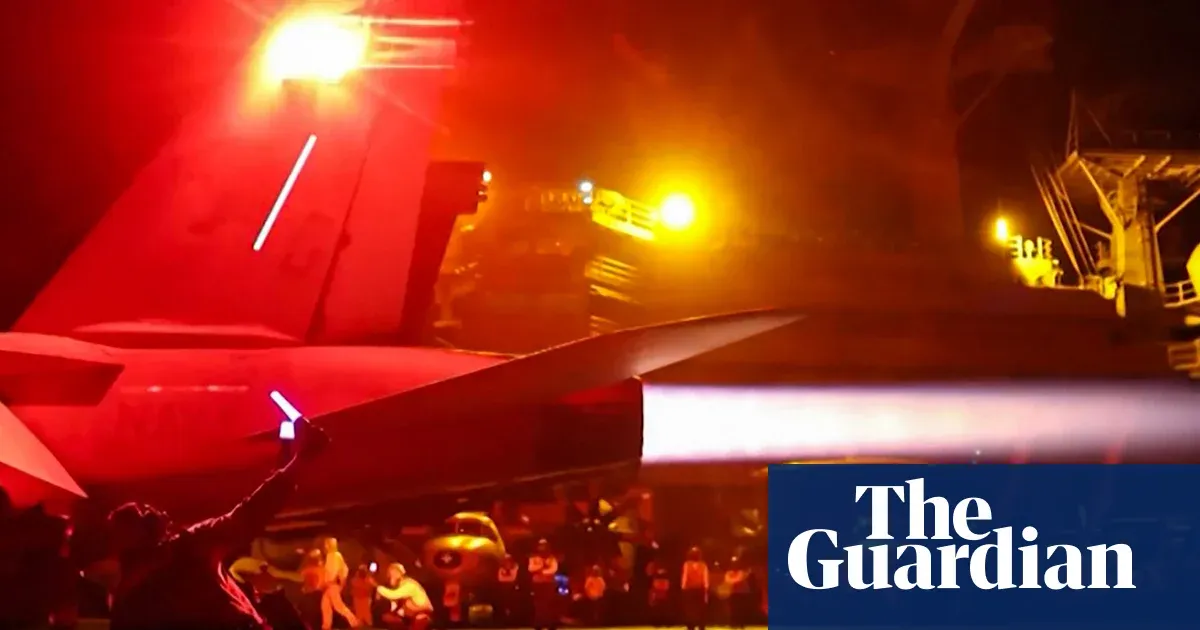
The US military launched its 10th consecutive round of strikes on Iran, aiming to force the reopening of the strait of Hormuz. Iran's president said the country is in a “full-scale war,” even as diplomats said talks to de-escalate were continuing.
The US military says it has launched its 10th consecutive round of strikes on Iran to force the reopening of the strait of Hormuz, according to the report. Earlier on Monday, Iran’s president responded by saying Iran is in a “full-scale war,” after the US expanded its aerial campaign and Tehran struck Washington’s Gulf allies. The headline-to-headline contradiction here matters: strikes are escalating, but diplomats are still talking, which is exactly the kind of split-screen executives should track when national security risk starts to hit global markets.
At the center of this cycle is Hormuz, the strategic chokepoint that matters for energy flows. The US is using sustained military pressure, not a one-off message, and it is framing the objective as reopening the strait of Hormuz. Iran, meanwhile, is escalating in language and signaling, with the president describing the situation as “full-scale war” after retaliatory actions tied to Washington’s Gulf allies. Put plainly: one side is trying to move the timeline toward a specific operational outcome, while the other is trying to move the political and security stakes toward totalization.
Diplomats, according to the report, say de-escalation talks continue even while this month of military pressure keeps unfolding. That detail is not just diplomatic wallpaper. When talks run alongside strikes, companies that operate in logistics, shipping, energy, insurance, and supply chains often find that the risk does not stay confined to the headlines. Even if officials are pursuing de-escalation in parallel, markets can price in worst-case scenarios because the operational reality changes daily: routes, port access, charter rates, and contract terms can move faster than negotiations.
There is also a regulatory and compliance angle that boards sometimes underestimate in crises like this. When military actions involve countries and allies across a region, sanctions exposure and trade-screening burdens typically expand. The report describes an expanded US aerial campaign and strikes involving Washington’s Gulf allies, and that kind of operational escalation tends to trigger more scrutiny of transactions, payments, and counterparty risk. For finance leaders, that means more attention on sanctions screening, KYC refreshes, and contract force majeure analysis, especially for any firm with exposure to maritime lanes connected to the strait of Hormuz.
The strategic logic on both sides is shaped by incentives that executives will recognize even outside geopolitics: credibility and leverage. The US launch of a 10th consecutive round of strikes suggests a willingness to sustain pressure rather than pause at the first sign of diplomacy. Iran’s president calling the situation “full-scale war” suggests an intent to deter or at least harden the political posture, particularly after Tehran struck Washington’s Gulf allies. When both sides signal maximum stakes, it reduces the room for quiet off-ramps, which can lengthen market uncertainty.
Second-order effects for decision-makers show up in capital allocation and risk appetite. If shipping and energy distribution face disruption, firms with tight margins can see volatility hit working capital immediately, through freight and inventory costs. Boards may also need to revisit hedging strategies and the assumptions behind energy and transportation forecasts. Even if diplomats say de-escalation talks are continuing, the report’s sequence suggests the near-term path is still defined by kinetic actions, not a rapid diplomatic settlement.
For investors and operators with regional exposure, the most important takeaway is timing: de-escalation talks can be genuine, and strikes can still be ongoing. That combination creates a moving-risk environment where the “resolution” is not a switch, it is a spectrum. Executives who wait for a clean ceasefire signal may be late, while those who act too aggressively on worst-case assumptions can also misallocate resources. The goal is to treat diplomacy as a variable, not a finish line.
In practical boardroom terms, the story is a reminder that national security decisions directly influence global systems executives manage every day: energy supply and price expectations, maritime access and shipping costs, and the compliance overhead needed to keep transactions viable. With the US military pursuing a specific objective around the reopening of the strait of Hormuz and Iran’s president declaring “full-scale war,” the stake for peers is simple: plan for volatility, stress-test the operational chain, and keep risk management aligned with the reality that escalation and talks can coexist.
This story's Key Insights and Take-aways are locked.
Create a free account to unlock Executive Actions for one credit.
Register to UnlockAlways free for Executives Club members. Join the Club
More in Politics

LA County: DOJ's 20,000 'noncitizen' voter list is 'unreliable,' includes U.S.-born
Preliminary review by Los Angeles County election officials finds errors in the federal list, raising the stakes for voter roll integrity ahead of November.

Trump's $1.5B Pentagon chip investment lands in North Carolina
A $1.5 billion defense infusion for North Carolina chipmaking signals a new era of Pentagon-backed reshoring - here's what it means for the industry.

Nigeria confirms first Ebola case in Abuja, a woman just off a Uganda flight
Health Minister Muhammad Ali Pate says the patient flew in from Uganda, putting Africa's latest outbreak on Nigeria's doorstep.