

US pulls troops from Nigeria after IS leader’s death, then redraws the anti-terror playbook
Deutsche Welle reports the exit looks like redefinition, not retreat, reshaping how Washington targets terrorism across Africa.
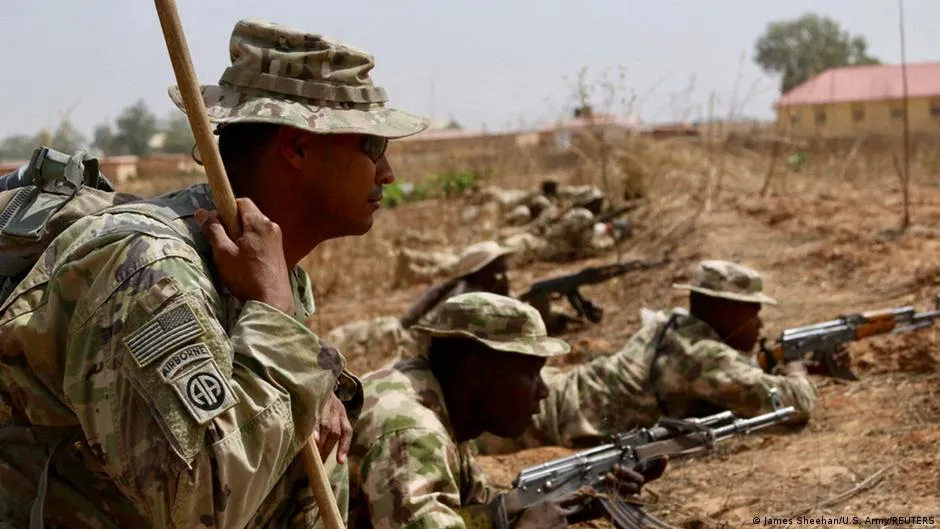
The US withdrawal of troops from Nigeria follows the killing of an
The US withdrawal of troops from Nigeria after the killing of an “Islamic State” leader may be less about leaving Africa and more about redefining how Washington fights terrorism on the continent, Deutsche Welle reports. In other words, it is a repositioning move, not a disengagement. The troop pullback is the visible headline, but the real story is what it signals about the US counter-terror strategy.
Why does this matter right now? Because when Washington changes its approach, it changes the risk map for governments, contractors, intelligence partners, and regional security institutions. A troop presence is not just manpower, it is a set of relationships, information pipelines, and operational patterns. If those patterns shift, the downstream effects can show up in everything from local security budgets to how international firms price geopolitical risk. For decision-makers, the question becomes: is the US stepping away, or is it switching methods while staying engaged?
Deutsche Welle’s framing pushes you toward the second interpretation. The withdrawal “may be less about leaving Africa than redefining how Washington fights terrorism on the continent.” That wording is important. It suggests the US is not simply retreating from a geographic theater. Instead, it is likely recalibrating tactics in response to evolving threats and operational realities, particularly around the groups commonly discussed under the “Islamic State” umbrella.
In practice, strategy shifts like this often come with a different allocation of resources. Troops are one tool. Intelligence cooperation, partner training, surveillance support, and targeted operations can be other tools that leave fewer footprints but still keep pressure on militants. From a board-level view, this distinction matters because it affects who carries the burden on the ground. If troop numbers fall, host nations and local security ecosystems may need to plug capability gaps, which can influence procurement priorities and donor engagement.
There is also a governance angle. Counter-terror policy does not live in a vacuum. It is tied to oversight, legal authorities, and interagency processes, as well as to what partner governments are willing and able to do. A troop drawdown after a high-profile leadership event, like the killing of an IS leader, can function as a signal that the immediate objective was achieved, or that the threat posture has changed enough to adjust force posture. Either way, it tells regional stakeholders that Washington is calibrating engagement to threat dynamics rather than time horizons.
For companies and investors with exposure to Africa’s security, logistics, or infrastructure-adjacent sectors, these signals can ripple into risk assessment models. Lower visible troop presence can reduce certain types of day-to-day protection contracts, but it can also raise demand for alternative services, including cybersecurity for disrupted networks, private security support, or compliance consulting for sanctions and counter-terror financing controls. The key is that “less visible” does not mean “less consequential.” If the US is redefining how it fights terrorism, then it may be shifting where it seeks leverage and how quickly it expects partners to respond.
This is where second-order effects get interesting. Strategy changes can also alter the bargaining power between the US and regional partners. If Washington leans more on partner capabilities, those partners may seek stronger terms, more training, or clearer pathways for coordination. If Washington leans more on intelligence and targeted actions, it may increase the value of local data flows and institutional trust. For boards, the implication is straightforward: security and compliance are not siloed. A change in US posture can intersect with contract structures, due diligence expectations, and the operating environment for cross-border business.
So what should leaders take away from Deutsche Welle’s report? The troop withdrawal tied to the killing of an “Islamic State” leader might look like a pullout, but the deeper meaning appears to be a strategic reset for fighting terrorism across Africa. For executives in security-adjacent industries, for investors tracking political risk, and for governments trying to plan budgets and partnerships, the stake is timing and clarity. If Washington is repositioning rather than retreating, then the operational environment remains dynamic. You do not get an “end” to the story, you get a change in the rules of engagement. And when the rules change, whoever prepared for the next version wins.
This story's Key Insights and Take-aways are locked.
Create a free account to unlock Executive Actions for one credit.
Register to UnlockAlways free for Executives Club members. Join the Club
More in Politics

LA County: DOJ's 20,000 'noncitizen' voter list is 'unreliable,' includes U.S.-born
Preliminary review by Los Angeles County election officials finds errors in the federal list, raising the stakes for voter roll integrity ahead of November.

Trump's $1.5B Pentagon chip investment lands in North Carolina
A $1.5 billion defense infusion for North Carolina chipmaking signals a new era of Pentagon-backed reshoring - here's what it means for the industry.

Nigeria confirms first Ebola case in Abuja, a woman just off a Uganda flight
Health Minister Muhammad Ali Pate says the patient flew in from Uganda, putting Africa's latest outbreak on Nigeria's doorstep.