
Yen's rise to 155 reignites carry-trade reversal speculation
A stronger yen is threatening the cheap-funding trade that global investors have leaned on for years - here's what an unwind would hit first.
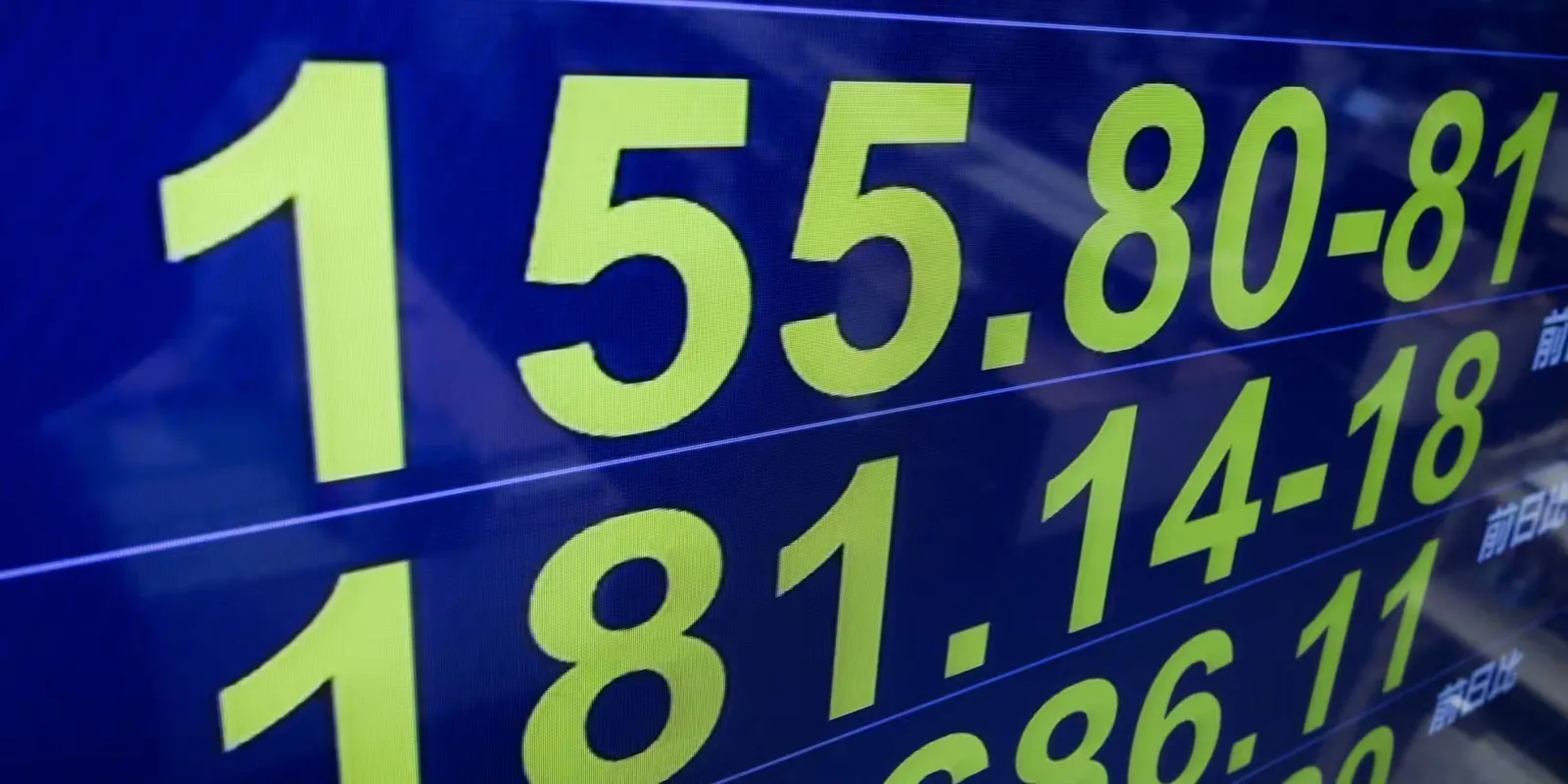
The yen has strengthened to the 155 range against the dollar, fueling speculation that the global yen carry trade is beginning to reverse. For decision-makers, an unwinding of this trade would tighten funding conditions, pressure risk assets, and force a repricing of currency-sensitive portfolios.
The yen has pushed into the 155 range against the dollar, and Nikkei Asia reports that speculation is building around a reversal of the yen carry trade. The carry trade is a straightforward but powerful strategy: investors borrow yen at ultra-low interest rates, convert it into higher-yielding currencies or assets, and pocket the spread. As long as the yen stays weak and calm, the trade quietly prints money. But when the yen strengthens, those borrowed liabilities become more expensive to service, and investors scramble to buy back yen and close positions - a forced unwind that can amplify the currency's move and send shockwaves through global markets.
The 155 level is significant because it marks a fresh multi-decade low for the yen's recent weakness, and the psychological threshold is now drawing attention. Speculation of a carry-trade reversal has its roots in a simple math problem: the gap between Japanese interest rates and those in the US and Europe has been the engine of the trade. That gap, though still wide, is narrowing as markets anticipate that the Bank of Japan will eventually normalize policy while the Federal Reserve and other central banks begin cutting rates. Any shift in that dynamic makes the yen more attractive to hold and less attractive to borrow, and a move through 155 is being read by some as the first tremor of a bigger reversal.
For context, the yen has been the world's favorite funding currency for decades because Japan has maintained ultra-loose monetary policy, even as other major economies tightened aggressively to fight inflation. This created a durable yield differential that encouraged massive borrowing in yen, often by hedge funds, asset managers, and even multinational corporations. Historically, carry-trade unwinds have not been gentle: when the yen spikes, it tends to do so violently and in a compressed period, as leveraged players are forced to cover simultaneously. The most cited precedent is October 1998, when a sudden yen surge contributed to the collapse of Long-Term Capital Management - a reminder that this trade can become systemic.
The immediate consequences of a reversal would be felt in a few distinct places. First, risk assets: carry trades often fund purchases of equities, emerging-market bonds, and other higher-volatility instruments. When investors have to liquidate those positions to repay yen loans, global stock markets can come under pressure. Second, emerging-market currencies: the yen carry trade frequently fuels flows into high-yielding currencies like the Mexican peso, Brazilian real, or Indian rupee. A yen rally typically forces those currencies to give back gains, which can create sudden volatility for companies with cross-border exposure. Third, Japanese exporters: a stronger yen erodes the overseas earnings of Toyota, Sony, and the rest of the country's export machine, which is why the Nikkei often dips whenever the currency firms.
For executives and founders, the key question is not whether the yen rises or falls, but whether the move becomes disorderly. A gradual drift to 150 or even 145 would be manageable and likely welcomed by Japanese policymakers, who have historically preferred a weaker yen to support exports. A sharp, disorderly spike, however, would squeeze anyone running leveraged funding in yen, force margin calls, and raise the cost of rolling over dollar-denominated or yen-denominated debt. Companies with significant yen financing - or with suppliers and operations in Japan - should be stress-testing their balance sheets against a yen rally of 5% to 10% from current levels.
The broader market context amplifies the stakes. The dollar itself is under pressure as US inflation cools and markets price in rate cuts, which takes away the main counterweight to yen strength. Meanwhile, Japan's own inflation has remained above the Bank of Japan's target for well over a year, increasing pressure on policymakers to abandon negative rates or at least signal a path toward policy normalization. Any such signal could be the trigger that turns speculation into reality. The 155 level is not a line in the sand, but it is a marker that investors are watching - and when a crowded trade reaches a watched threshold, the risk of a cascade rises.
The strategic takeaway for CFOs, treasurers, and founders with international exposure is to treat the yen as a live risk rather than a sideshow. That means reviewing the currency composition of debt, evaluating natural hedges like sales in yen, and ensuring that any derivative positions are properly collateralized. For investors, the yen carry trade reversal is a classic example of a consensus trade that can unwind faster than anyone expects. The window for cheap yen funding may not be closing today, but the market is now pricing in that it will close eventually - and the last few players through the door tend to pay the highest price.
This story's Key Insights and Take-aways are locked.
Create a free account to unlock Executive Actions for one credit.
Register to UnlockAlways free for Executives Club members. Join the Club
More in Business

Tim Cook steps down as Apple CEO, stays on as chair with $45M equity
The 'Trump whisperer' keeps his White House and Beijing access as Apple navigates tariffs and a $4.6 trillion market cap.

Snowflake shares surge as AI data demand crushes estimates, lifting full-year forecast
Stocks jumped on stronger-than-expected guidance, signaling enterprise AI workloads are accelerating faster than Wall Street priced in.

Tim Cook's 15-year Apple CEO run ends: 3 lessons for any successor
After 15 years, Tim Cook hands Apple to John Ternus - here's how he turned a $350B company into a $4.6T juggernaut.