

Z.ai reveals Ox Alpha was its GLM-5.3-Flash, sparking 13M views
The mystery model that topped OpenRouter for days was a disguised preview from Z.ai, and the win is being celebrated as a milestone for Chinese AI chips.

Z.ai revealed that its anonymous Ox Alpha model was a preview of its new GLM-5.3-Flash, which ran on domestic Chinese AI chips. The revelation has energized Chinese internet users and signals a growing confidence in homegrown AI infrastructure.
Z.ai claimed ownership of the mysterious Ox Alpha model on Wednesday, revealing that it had been a free-to-use preview of its new GLM-5.3-Flash. The announcement sent Chinese social media into a frenzy, with a hashtag about the reveal racking up more than 13 million views in under 24 hours and ranking among the top 20 hot topics on Weibo by Thursday noon. For days, the model had appeared on OpenRouter and OpenCode on August 20 with no lab claiming it, sparking spirited debates online about which AI powerhouse had quietly dropped it. Z.ai's blog post ended the speculation: "Before release, we tested GLM-5.3-Flash anonymously as ox-alpha on OpenCode and OpenRouter to gather user feedback," the company wrote. "It quickly became the most popular model of the week - with all of this traffic served on Chinese AI chips." That last detail - the domestic chip angle - is what turned a routine model release into a national moment of pride. Chinese internet users flooded Weibo with praise, with one user in Beijing calling the model "amazing" for delivering strong performance at a low cost, and another in Chongqing declaring that Ox Alpha's significance shows Chinese open-source models have taken another step forward in the global developer market. A user from Sichuan lauded Z.ai for using domestically produced chips, arguing that the example proves Chinese chips can efficiently support large-scale AI use. Another poster from the same province simply called the model "ridiculously cheap." The enthusiasm is not confined to China. Stripe CEO Patrick Collison said on X that he tried the model and found it "very impressive," adding a rare US executive endorsement to the chorus. The mystery itself had already become a meme: over the weekend, Weibo users nicknamed the model "Niu Lai," after a Chinese animated movie released in August that sparked a wave of internet memes. The cow reference in the original headline - "The cow comes home" - plays on that nickname, and now the cow has a home. GLM-5.3-Flash is the latest Chinese AI model to make a splash beyond China's borders, but it is far from the only one. Moonshot AI launched Kimi K3 in July, an open-weight model that rivals the capabilities of models from OpenAI and Anthropic at a lower cost. Alibaba released its latest Qwen3.8-Flash-Next model on Wednesday, an efficiency-focused, open-weight model that promises lower training and inference costs. Weibo users have historically heaped praise on Chinese AI labs making breakthroughs in the West - when Kimi K3 had its moment in July, users called Moonshot AI's founder Yang Zhilin a "millennial genius," with some even commenting on his youthful "baby face." The pattern is clear: Chinese AI labs are not just competing on model quality; they are increasingly competing on cost efficiency and hardware independence. Z.ai's decision to test GLM-5.3-Flash anonymously on Western platforms was a clever marketing move, but it also served a practical purpose - gathering real-world feedback from global developers before an official launch. The fact that the model became the most popular of the week while running on Chinese chips is a signal that the country's AI supply chain is maturing faster than many Western observers expected. For executives and investors watching the AI landscape, the Ox Alpha episode is a reminder that the competitive frontier is no longer just about who has the best model, but who can deploy it at scale with the lowest cost and the most resilient infrastructure. Z.ai's move shows that Chinese labs are willing to use Western platforms as testing grounds, and that domestic chips can handle the load. The strategic stakes are clear: as open-weight models from China continue to gain traction globally, Western AI companies and their chip suppliers will face mounting pressure on both price and performance. The cow has come home, and it is grazing on Chinese silicon.
This story's Key Insights and Take-aways are locked.
Create a free account to unlock Executive Actions for one credit.
Register to UnlockAlways free for Executives Club members. Join the Club
More in Business

Tim Cook steps down as Apple CEO, stays on as chair with $45M equity
The 'Trump whisperer' keeps his White House and Beijing access as Apple navigates tariffs and a $4.6 trillion market cap.
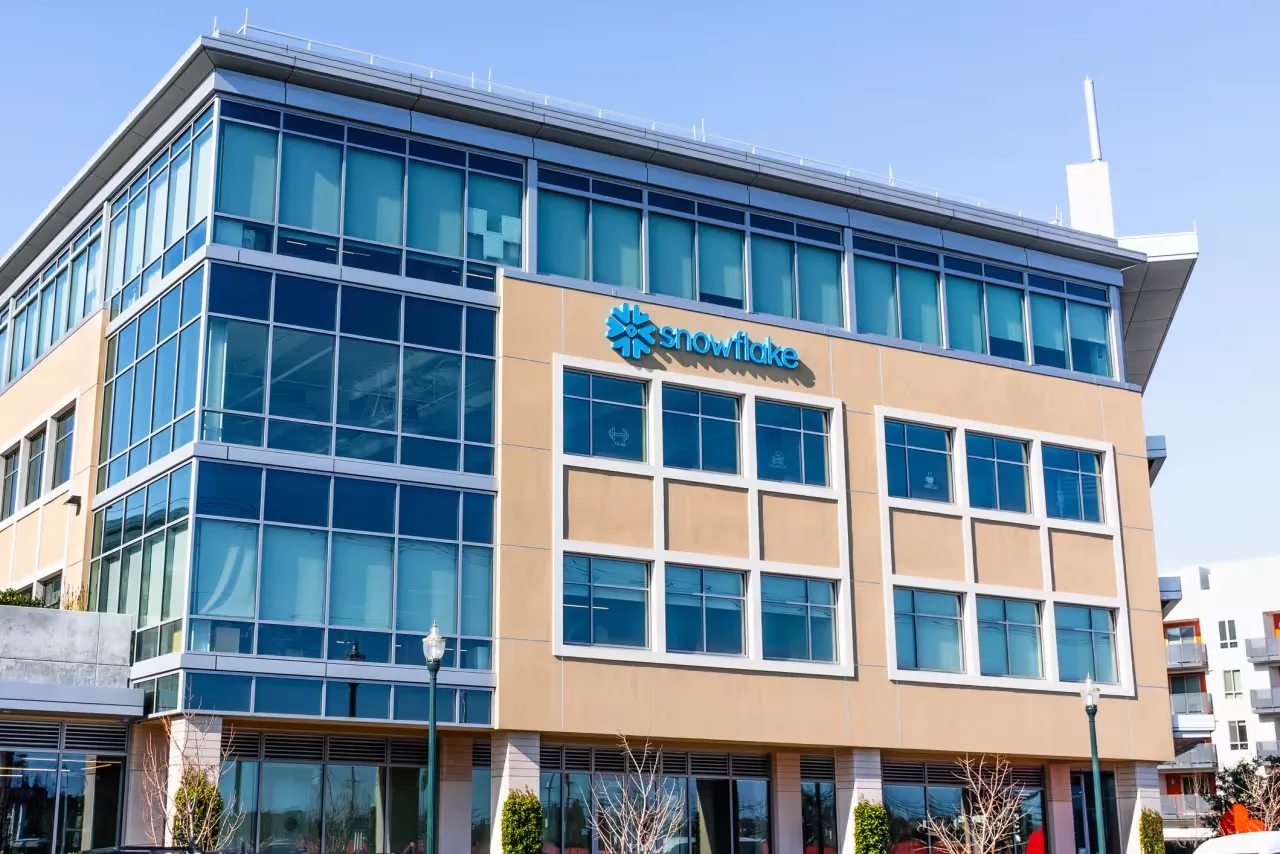
Snowflake shares surge as AI data demand crushes estimates, lifting full-year forecast
Stocks jumped on stronger-than-expected guidance, signaling enterprise AI workloads are accelerating faster than Wall Street priced in.

Tim Cook's 15-year Apple CEO run ends: 3 lessons for any successor
After 15 years, Tim Cook hands Apple to John Ternus - here's how he turned a $350B company into a $4.6T juggernaut.