
Zelenskyy names 43-year-old Mykhailo Drapatyi commander in chief after Fedorov ouster
Front-line troops think his tech-minded, listen-first style can speed reforms they say cost lives under old command.
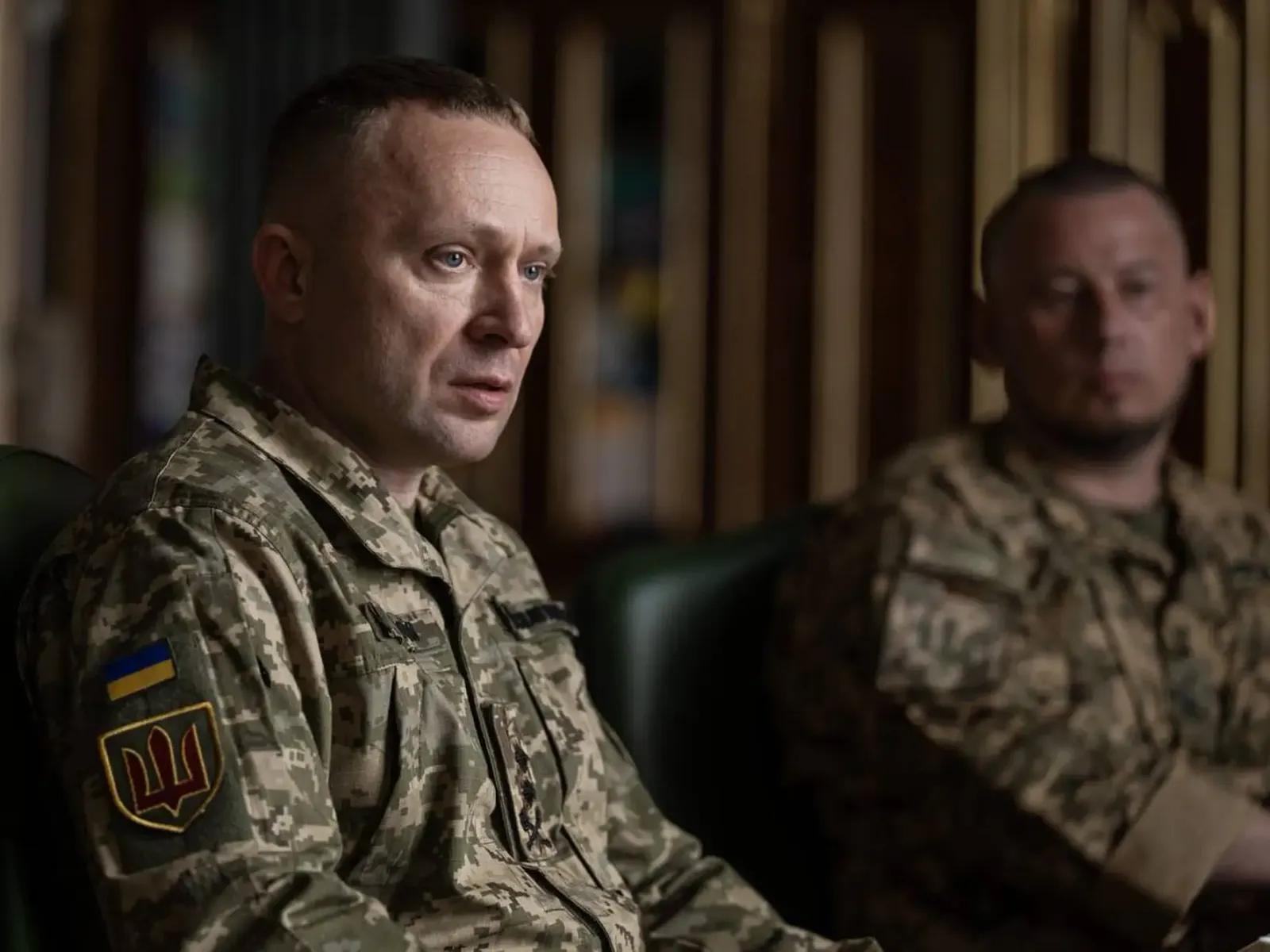
Ukrainian President Volodymyr Zelenskyy appointed 43-year-old Brig. Gen. Mykhailo Drapatyi commander in chief on Tuesday, replacing Oleksandr Syrskyi. Ukrainian troops say the change follows shock removal of reformist defense minister Mykhailo Fedorov and could accelerate pro-tech, battlefield-driven reforms.
Volodymyr Zelenskyy has just appointed 43-year-old Brig. Gen. Mykhailo Drapatyi as Ukraine’s new commander in chief, replacing Oleksandr Syrskyi. The timing matters because this comes right after the shock removal of reformist defense minister Mykhailo Fedorov in a government reshuffle, a move that sparked protests and raised a blunt question on the front lines: will Ukraine’s top brass speed up change, or keep bleeding time and trust?
Drapatyi, described by troops and supporters as a “new-wave general who listens to his subordinates,” is one of the war’s most popular generals. Ukrainian uncrewed ground vehicle and drone operators told Business Insider they hope he brings reforms that can help them win the war, specifically calling out frustration with a “slower, top-down command style” that they associate with Syrskyi. One UGV operator, speaking about hopes for a future victory under Drapatyi, said if leadership can make the system “more flexible, technological, and able to quickly implement effective solutions from the battlefield,” that flexibility becomes the key success criterion.
To understand why this appointment is more than a personnel swap, you have to zoom in on the friction point the source keeps circling: how fast Ukraine’s military system can adapt. Social media, as the article notes, has let deployed forces and civilians tune into public discourse about the war, feedback, commentary, and scandal in near real time. That means the military is effectively under a constant “feedback loop” pressure. When troops feel the loop is too slow, or decisions get stuck at higher levels, frustration turns into political heat. In this case, that heat was already rising because Fedorov was ousted, and Syrskyi became a symbolic target for reformers who believe change is being resisted.
The appointment also tees up an important working relationship: Drapatyi is widely seen as the ideal partner for Mykhailo Fedorov, who served as defense minister until recently. The article describes them as drivers of “radical change” in a military structure that, in the view of many soldiers, has struggled to fully leverage innovation and exploit Russia’s weaknesses. Troops are not talking about innovation in abstract terms. They are talking about drones, ground robots, and shortening the path from combat experience to real changes in the troops.
That’s why Drapatyi’s reputation matters. One strike drone company commander, identified only by his call sign “Fizruk,” said he knows Drapatyi as someone who “knows how to listen and keeps his word, even when it comes to small promises.” Fizruk said his former drone unit fought under Drapatyi when the latter oversaw operations in Vovchansk, a city in Kharkiv. Russia launched a major offensive there in May 2024, and Drapatyi was sent to stabilize the northeastern front. Fizruk said Drapatyi planned and executed operations “methodically and effectively,” but was also personable, including details meant to signal culture and command style, like wearing a green Ukrainian Armed Forces T-shirt to fit in with the team.
Other troops reinforced the same theme through different lenses. A UGV unit commander in the 2nd “Khartia” Corps, call sign “Mathematician,” described Drapatyi as “maybe the best choice” to replace Syrskyi, highlighting forward-thinking in the use of ground robots. An enlisted soldier who runs community engagement for the 100th Mechanized Brigade’s VORON combat drone unit expected a “more rational approach in the use of personnel.” An officer in Ukraine’s Unmanned Systems Forces, named Alex in the article, said troops respect Drapatyi’s “vision and soft skills,” and predicted morale gains. Meanwhile, the UGV operator who spoke most directly about what would count as success laid out a concrete priority list: accelerate the introduction of innovations, shorten the path from combat experience to changes in the troops, scale up unmanned and robotic systems, and provide commanders in the field greater freedom to make quick decisions.
The trigger for the appointment was clearly political and institutional, not just tactical. The source says Fedorov’s ousting was linked to rivalry with Syrskyi and other generals in Ukraine’s top brass, which Fedorov said balked at aggressive reforms and campaigns to root out corruption after he was given the post in January. Syrskyi has publicly denied a rift between him and Fedorov. After Fedorov was left out of Zelenskyy’s cabinet last week, thousands protested in Kyiv and other major cities, with a prevailing demand that Syrskyi be fired instead. In that charged context, Drapatyi’s name surged as a replacement. Dmytro Koziatynskyi, a former medic in Da Vinci Wolves who called for civilians to protest last week, said there was “a consensus in the military” that Drapatyi was the best candidate.
Drapatyi’s battlefield history is part of why that consensus formed. One of his best-known feats was videoed just after Russia invaded Crimea in 2014, when he ordered the driver of his infantry fighting vehicle to hurtle over a barricade in Mariupol, signaling decisive aggression at a time when Ukraine’s military was still “finding its bearings.” After Moscow’s full-scale invasion, he became known as a “firefighter” general deployed to stave off intensified Russian campaigns. Koziatynskyi also pointed to the nighttime breakout of 260 troops surrounded by pro-Russian forces in the Donbas. Those stories matter because they help troops infer style. And in a war where technology adoption and decision speed can swing outcomes, style becomes strategy.
There is still one unresolved question that matters for everyone watching Ukraine’s command structure closely, including executives in any organization where innovation requires coordination across departments. As Mykola Bielieskov, a researcher for Ukraine’s National Institute for Strategic Studies and the war crowdfunding organization Come Back Alive, said, the main question for Drapatyi now is who he’d be working with, most importantly the chief of general staff and defense ministry leadership. Demonstrators plan to continue calling for Fedorov’s return, and while there is no clear sign yet that the 35-year-old politician will be restored to his post, political pressure is mounting on Zelenskyy to reinstate Fedorov. Fedorov has rejected offers of advisory roles and said he would only return as defense minister. In other words, Drapatyi’s chance to deliver on troop expectations may depend less on what he wants to do and more on whether the rest of the system, and the people plugged into it, will allow faster change to survive contact with reality.
This story's Key Insights and Take-aways are locked.
Create a free account to unlock Executive Actions for one credit.
Register to UnlockAlways free for Executives Club members. Join the Club
More in Politics

LA County: DOJ's 20,000 'noncitizen' voter list is 'unreliable,' includes U.S.-born
Preliminary review by Los Angeles County election officials finds errors in the federal list, raising the stakes for voter roll integrity ahead of November.

Trump's $1.5B Pentagon chip investment lands in North Carolina
A $1.5 billion defense infusion for North Carolina chipmaking signals a new era of Pentagon-backed reshoring - here's what it means for the industry.

Nigeria confirms first Ebola case in Abuja, a woman just off a Uganda flight
Health Minister Muhammad Ali Pate says the patient flew in from Uganda, putting Africa's latest outbreak on Nigeria's doorstep.