
Zelenskyy starts cabinet successor talks after Svyrydenko resigns as PM
Ukraine’s government shuffle is already in motion, with Zelenskyy lining up replacements and investors watching stability.
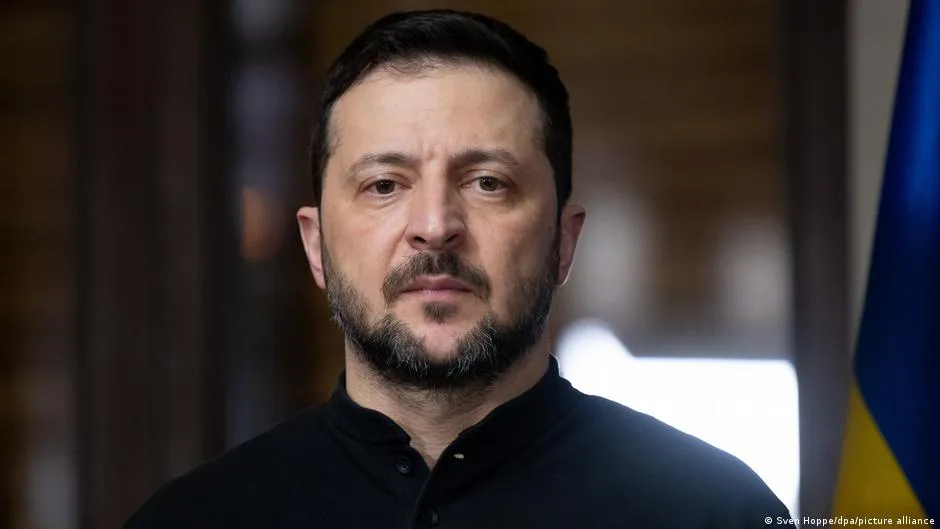
Ukrainian Prime Minister Yulia Svyrydenko stepped down after barely a year in office, and President Volodymyr Zelenskyy is already in talks with potential successors. For decision-makers, the immediate question is whether the reshuffle improves governance capacity without disrupting continuity at a sensitive time.
Ukrainian Prime Minister Yulia Svyrydenko stepped down after barely a year in office, and President Volodymyr Zelenskyy is already in talks with potential successors. That combination, a fast resignation plus early successor discussions, signals the Cabinet reshuffle is not a distant political event. It is an active process that can quickly change how Ukraine runs day to day, and how external partners assess continuity.
The stake here is timing. When a prime minister leaves after roughly a year, you expect some transition work, but the speed matters because Cabinets are not just symbolic. They manage the machinery behind budgets, ministries, regulations, procurement, and implementation. If Zelenskyy is already speaking to potential replacements, it suggests the president wants to prevent a power vacuum in the center of the government. For anyone making decisions that depend on Ukrainian policy clarity, the practical question becomes: how fast can a new Cabinet be assembled, and how reliably will it execute the existing agenda?
To understand why executives and boards should care, zoom out to how governments and markets interact during high-pressure periods. In countries under strain, continuity in policy execution can matter as much as the headline platform. Investors, lenders, and contractors typically look for consistency in approvals, procurement timelines, and administrative follow-through. Even if a reshuffle does not instantly rewrite laws, it can change the speed and tone of implementation across ministries. That is the second-order risk. New leadership often brings new priorities, and even small changes in internal coordination can ripple outward to compliance processes, licensing, and contract administration.
There is also the internal governance angle. In parliamentary systems and coalition-style governance (Ukraine’s political setup has its own complexities, but the broader principle holds), Cabinet stability affects how effectively ministries collaborate. A prime minister is usually the operational manager of the Cabinet. When that role turns over quickly, the next leader has to build authority, align deputies, and set working rhythms. Zelenskyy’s apparent readiness to discuss successors early points to an effort to keep that operational manager function from stalling. But it also raises a different question for decision-makers: how centralized will the new arrangement be under the president versus within the Cabinet?
Cabinet reshuffles are often framed publicly as political recalibration. Privately, they can be about capacity, risk management, and political alignment under stress. The source confirms only a few core facts: Svyrydenko stepped down after barely a year, Zelenskyy is already in talks with potential successors, and the central topic is what Ukraine can expect from the reshuffle. Even with that limited information, the pattern is clear. Rather than waiting for a long process, the president appears to be compressing the timeline. In practical terms, a faster personnel pipeline can reduce uncertainty for ministries and partner institutions, but it can also increase pressure on the incoming team if they have less time to assemble the right coalition of ministers.
For external stakeholders, the policy and regulatory dimension is where uncertainty becomes expensive. Government cabinets influence how rules move from draft to enforcement, how quickly agencies respond, and whether administrative decisions are consistent across departments. Those details often determine whether businesses can plan and execute. A reshuffle can also affect the working relationship between executive leadership and the bureaucracy, including which initiatives get immediate attention and which get delayed. In fast-moving environments, these timing changes can become budget changes, especially for organizations that rely on government counterparties.
The strategic stakes are not only operational, they are also reputational. Zelenskyy is the central figure in Ukrainian executive leadership, and the president’s approach to Cabinet formation sends a signal to domestic institutions and to the international community. Early successor talks imply a priority on maintaining momentum. That can be stabilizing. But executives should still watch for a subtle shift: when personnel decisions are made quickly, it can indicate the leadership is seeking performance and control more than experimentation. In that case, the next Cabinet may focus on execution and continuity over broad rebranding.
For peers in similar roles, the lesson is straightforward: government leadership transitions are not waiting-room events. They are active decision points with real downstream effects. If you are an investor, contractor, or board member working with public institutions, you should think through what changes when the prime minister changes, what does not, and how quickly systems can re-stabilize. With Svyrydenko stepping down after barely a year and Zelenskyy already discussing successors, Ukraine is effectively beginning the next phase now. The reshuffle will not just rearrange titles. It will test whether Ukraine can keep governance running while people and priorities shift.
This story's Key Insights and Take-aways are locked.
Create a free account to unlock Executive Actions for one credit.
Register to UnlockAlways free for Executives Club members. Join the Club
More in Politics

LA County: DOJ's 20,000 'noncitizen' voter list is 'unreliable,' includes U.S.-born
Preliminary review by Los Angeles County election officials finds errors in the federal list, raising the stakes for voter roll integrity ahead of November.

Trump's $1.5B Pentagon chip investment lands in North Carolina
A $1.5 billion defense infusion for North Carolina chipmaking signals a new era of Pentagon-backed reshoring - here's what it means for the industry.

Nigeria confirms first Ebola case in Abuja, a woman just off a Uganda flight
Health Minister Muhammad Ali Pate says the patient flew in from Uganda, putting Africa's latest outbreak on Nigeria's doorstep.