
Zhuque-2E upper stage broke apart near Starlink after June 9 launch, Space Force says
A Chinese rocket breakup seeded 100 to 150 pieces of debris in a crowded orbit used by ISS and Starlink.

China's Zhuque-2E launched on June 9, but its upper stage broke apart in orbit shortly after reaching it. The event drew US Space Force confirmation and raises near-term conjunction safety work for fleets operating near low-Earth orbit.
A Chinese rocket has broken apart dangerously close to the Starlink constellation. The upper stage from the commercial Zhuque-2E launch last week scattered debris across a heavily trafficked slice of low-Earth orbit, including the orbital neighborhoods used by the International Space Station and a significant portion of SpaceX's Starlink broadband network.
The timing matters. Zhuque-2E reached orbit on June 9 with two satellites aimed at direct-to-cell communications, and the breakup happened shortly after it arrived. That window is plausibly around when the upper stage might have been expected to perform a disposal burn, based on the sequence that mission planners often follow for spent stages. But what we know for sure is what the US Space Force confirmed on space-track.org, a public website used by the military to distribute orbit data. In its advisory, the Space Force said, "The tracked pieces are being incorporated into routine conjunction assessment to support spaceflight safety." It added, "There are currently no threats to human spaceflight. Analysis is ongoing."
If you are an operator or board-level decision-maker, the headline is not just “something broke.” It is the downstream operational reality: fragmentation turns one manageable object into many trackable, interaction-prone pieces. Ars Technica reports that the breakup likely generated 100 to 150 new pieces of space junk. That is a jump in both workload and risk management, even when the initial advisory says human spaceflight faces no immediate threat.
This is also a classic low-Earth orbit coordination problem. Low-Earth orbit is not a single lane with empty space on either side. It is a high-traffic logistics system: satellites you can name, spacecraft you can’t, and debris you inherit from past missions. The ISS adds an obvious constant. Starlink adds a different flavor of constant: a large broadband network with many satellites distributed across orbital planes. The source notes the breakup occurred in a “heavily trafficked part of low-Earth orbit” home to the ISS and a significant portion of Starlink. That matters because conjunction assessment is about probabilities and geometry, not about intent. When the debris field overlaps where operational spacecraft are already flying, even small changes in object count can increase the frequency of screening and potential maneuver discussions.
It also lands in a regulatory and policy space that has been hardening for years, even if the enforcement cadence varies by country and mission type. A public advisory from the US Space Force is one signal of how increasingly formal the tracking and risk communication process has become. Conjunction assessment routines are the safety layer that keeps “routine” from becoming “incident.” Here, the Space Force explicitly framed the pieces as entering routine conjunction assessment. That language is important because it tells you how the system is supposed to absorb shocks: track, incorporate, assess, and act if the numbers require it.
For business leaders, the second-order implication is less about blame and more about cost. Debris does not only threaten spacecraft. It drives extra planning time, additional monitoring, more frequent coordination cycles, and potentially more station-keeping or avoidance maneuvers. Even when an advisory concludes there is no current threat to human spaceflight, the operational burden can still ripple through satellite operators and their insurers, and through mission controllers who have to validate safety thresholds under uncertainty.
There is another incentive layer too. Zhuque-2E carried two satellites providing direct-to-cell communications. In other words, the mission’s upside is commercial and competitive, not scientific. When an upper stage fragments shortly after reaching orbit, it can become a reputational and compliance stress test for the ecosystem around it. The source suggests the breakup occurred around the time a disposal burn might have been expected, which is the kind of sequence that debris mitigation rules and best practices generally aim to enforce. Even without additional details beyond the advisory and the breakup report, this kind of event tends to heighten scrutiny of how stages are passivated and how reliably disposal burns execute.
Finally, the strategic stakes extend beyond any single company. Starlink is mentioned in the source because it is a major presence in low-Earth orbit, but this is a wider pattern every satellite operator will understand: one breakup event can reshape the near-term conjunction landscape for multiple fleets. For executives and boards, the question is whether your risk and compliance program is built to handle “analysis is ongoing” scenarios, not just neatly scheduled mission operations. When the object population changes by roughly 100 to 150 pieces, the safety workflow has to absorb it quickly. The winners are the organizations that can keep operations steady while the world around them gets more crowded, more dynamic, and occasionally more messy.
This story's Key Insights and Take-aways are locked.
Create a free account to unlock Executive Actions for one credit.
Register to UnlockAlways free for Executives Club members. Join the Club
More in Technology

Nvidia's $89B data center quarter: the 9 companies cashing in
The AI buildout is minting fortunes beyond GPUs, and memory, cloud, and cooling suppliers are riding the same wave.
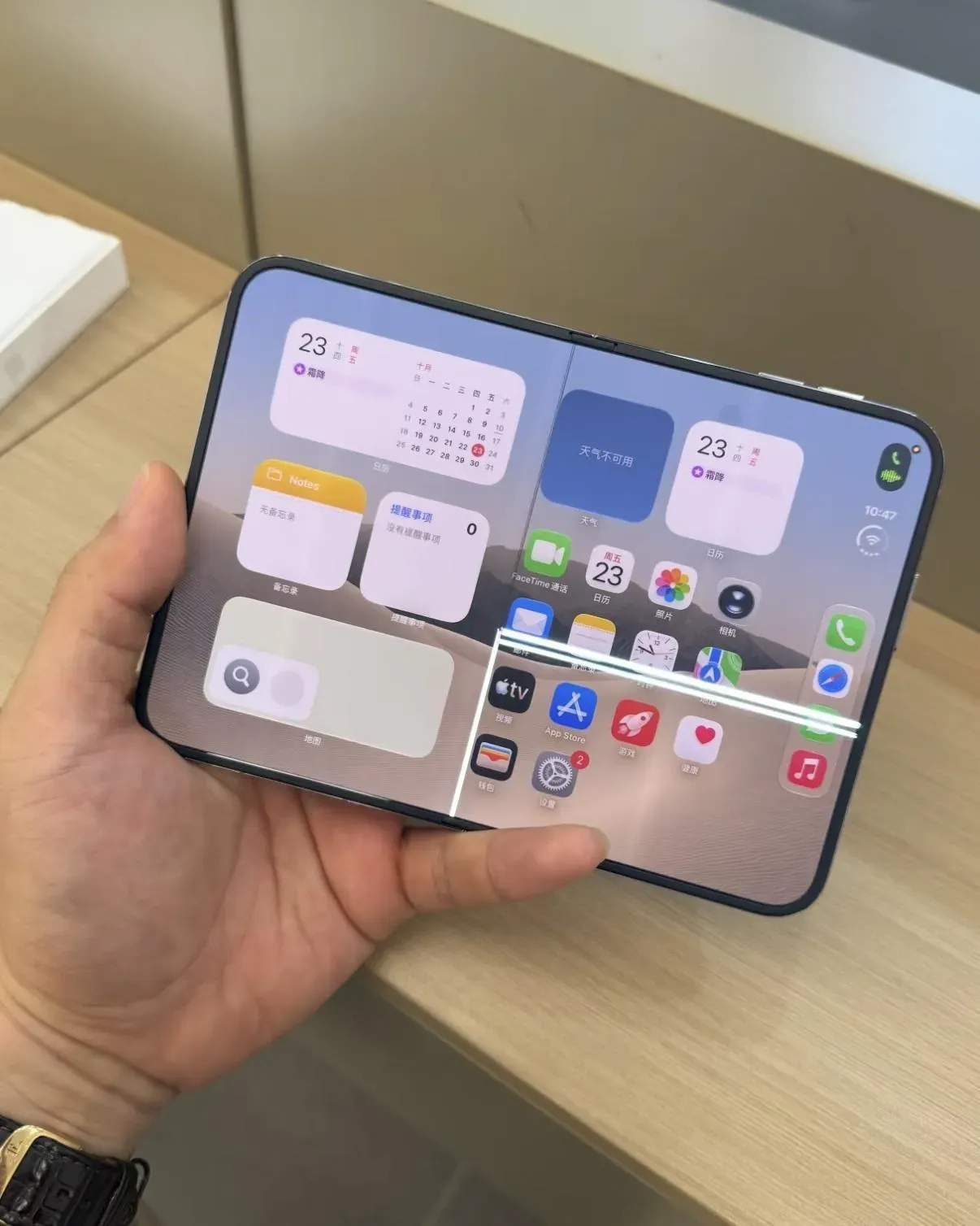
A YouTuber dissected the iPhone Duo and thinks he found crackgate's cause
CuriousHagi's teardown of Apple's foldable reveals a gear-like hinge that may explain why screens crack in the same spot within hours.

Google quietly links your phone number to every Android account on your SIM
Adding a SIM now ties your phone number to all Google accounts - and future accounts inherit it. Here's the security and privacy stakes.