

Apple's first winning session under CEO John Ternus, per tech guru Gil Luria
Why an analyst-controlled break from succession-era uncertainty marks the real test of Apple's new regime.

Tech analyst Gil Luria says Apple's first investor session under CEO John Ternus was a winner. For a company navigating its first change at the top in over a decade, the reception tells boards that markets reward clarity on strategy, capital, and product cadence.
Tech analyst Gil Luria is calling Apple's first investor session under CEO John Ternus a winner. The verdict matters less for the quarter it covered and more for what it signals: that a fresh chief executive can step out of a decade-long shadow and hold the room. Luria, a close watcher of the company's supply chain and product cadence, framed the session not as a single strong quarter but as a proof point that Apple's leadership transition is no longer a discount on the stock. For anyone who has run an earnings call after a succession, that is the hardest sell to make, and Ternus made it on his first try.
A winning session is rarely about one number. It is about tone, about who does the talking, and about whether the CEO can field a hostile question without leaning on the CFO. Ternus, who came up through hardware engineering, had the product story in his bones. Luria's praise suggests the new CEO threaded the needle: he ceded the financial mechanics to his finance chief while taking ownership of capital allocation and the roadmap. That division of labor, long routine at Apple under prior leadership, now becomes the template for Ternus's tenure. When an analyst says "winning" in the same sentence as a rookie CEO, they are signaling that the street's anxiety about the transition has, at least temporarily, been retired.
The stakes behind this session go beyond Apple's own trading. Succession at mega-cap technology companies has a poor track record: founders and long-tenured CEOs leave behind operating rhythms that are brutal to inherit, and investor appetite for rookie mistakes is thin. Apple's board, which had spent years signaling a deliberate succession bench, has now watched Ternus clear his first public milestone. Analyst commentary like Luria's does quiet work for the board as well. It gives compensation committees a defensible baseline for tying equity grants to investor confidence. It also reframes the internal succession playbook: what mattered was not the product demos Ternus had already proved he could deliver, but the discipline of letting the numbers speak through the finance chief while the CEO set the strategic frame.
There is a capital side to this too. A new CEO inheriting a gusher of free cash flow faces an old question dressed as new: do we keep buying back stock, hold the dividend, or raid the balance sheet for acquisitions? Ternus's answer, as read through Luria's commentary, was continuity, which is itself a strategic statement. Markets hate surprise capital programs during transitions because they read as desperation. By signaling no radical departure, Ternus bought himself patience: patience on the margin, patience on service revenue, patience on whatever the next hardware launch actually is. A “winning session” buys a new CEO roughly two to three quarters before the street demands a product-shaped answer to the question he deferred.
The broader signal here is for every board wrestling with succession at an industrial-scale company. The lesson from Apple's first Ternus session is that the debut investor event is now a de facto product launch, and it must be choreographed like one. That means naming the decision makers, rehearsing the hostile questions, keeping the CFO at the CEO's right hand, and-critically-doing none of it as a pivot from the previous regime's capital story. Analysts like Luria reward reduction: a new CEO who can compress the enterprise story into a few crisp commitments. Ternus did that without disowning the past. That discipline is the difference between a winning session and a lost one.
For peers in similarly fraught transitions, the takeaway is uncomfortable. The bar has moved. Investors now expect a first session to answer questions Apple had a decade to dodge. Supply chain execs, incoming COOs, and CEOs at firms with commanding balance-sheet positions will all be measured against the Ternus benchmark: clarity without contrivance, continuity without inertia. Luria's verdict is a canary for the entire mega-cap cohort. When an analyst who watches a company's every move calls a first session a winner, the peer group hears it as a challenge to level up their own disclosures and their own bench depth.
Finally, the session testifies to the quiet power of the boards that hired Ternus. A successful CEO debut is nearly always a board achievement disguised as executive performance. The directors had to set the stage: they had to make clear that this was Ternus's call to run, not an inherited script. That kind of a board creates the conditions in which an analyst like Luria can say the word "winning" without irony. The real confirmation will come over the next two years, when Apple's product cycle and capital returns either vindicate Ternus's first session or reveal it as a grace period. For now, the market has its answer: leadership change at Apple does not have to be a correction. It can be a catalyst, but only if the first session is won before a single shareholder enters the room.
This story's Key Insights and Take-aways are locked.
Create a free account to unlock Executive Actions for one credit.
Register to UnlockAlways free for Executives Club members. Join the Club
More in Business
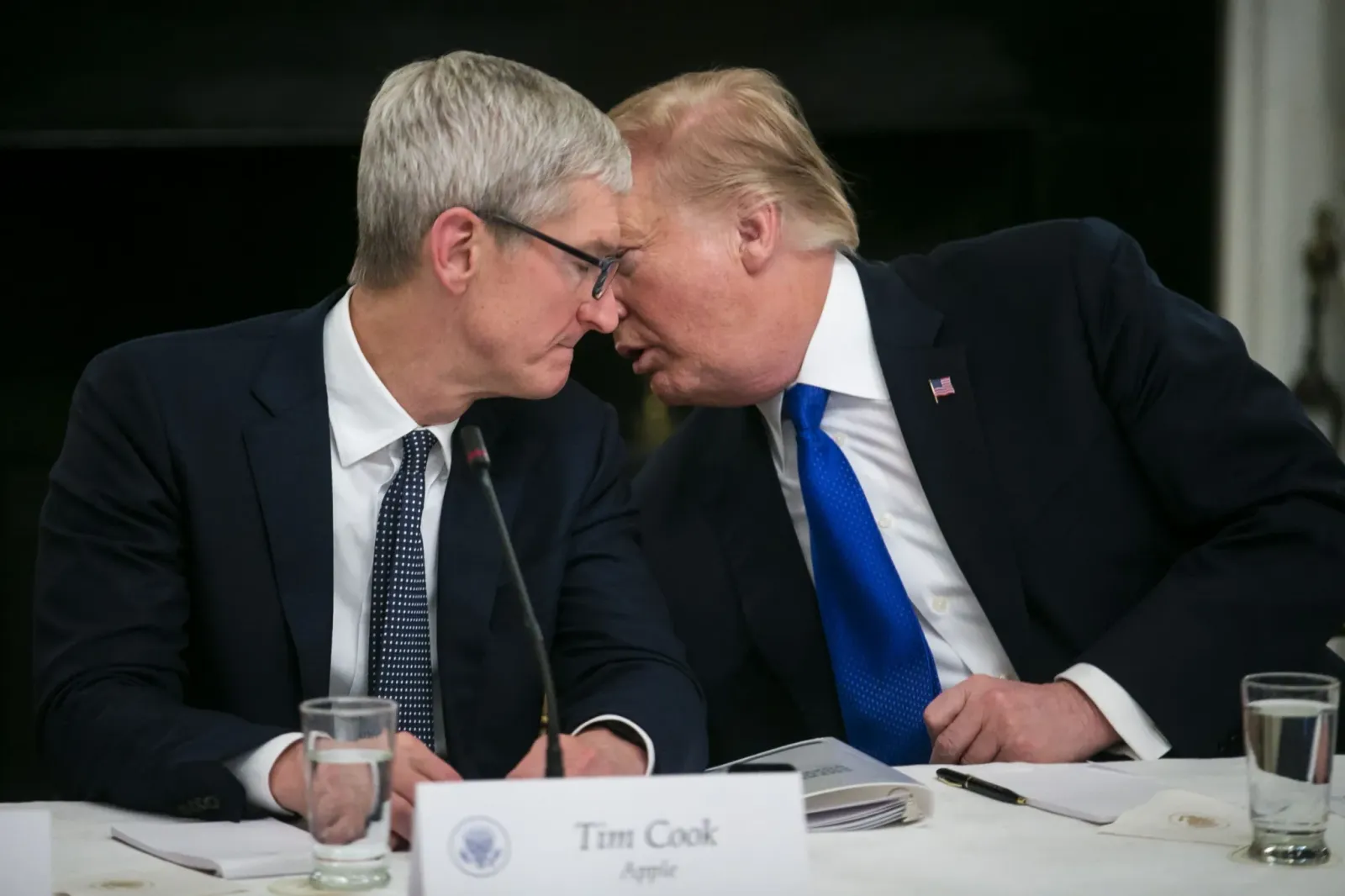
Tim Cook steps down as Apple CEO, stays on as chair with $45M equity
The 'Trump whisperer' keeps his White House and Beijing access as Apple navigates tariffs and a $4.6 trillion market cap.

Snowflake shares surge as AI data demand crushes estimates, lifting full-year forecast
Stocks jumped on stronger-than-expected guidance, signaling enterprise AI workloads are accelerating faster than Wall Street priced in.
Tim Cook's 15-year Apple CEO run ends: 3 lessons for any successor
After 15 years, Tim Cook hands Apple to John Ternus - here's how he turned a $350B company into a $4.6T juggernaut.