
Ark says Starlink alone could support SpaceX's $2 trillion IPO valuation
Brett Winton is anchoring ARK's SpaceX thesis on Starlink, a signal that satellite broadband is now being treated like core infrastructure, not moonshot fluff.

Brett Winton said SpaceX's Starlink satellite broadband network is the primary driver of ARK's valuation thesis. For investors and boards, that means the market may increasingly value SpaceX less as a rockets company and more as a communications platform with IPO-scale upside.
Brett Winton is not just saying SpaceX is valuable. He is saying Starlink alone, the company's satellite broadband network, supports a $2 trillion value at an IPO. That is the core of ARK Invest's valuation thesis, and it is the kind of number that instantly changes how people think about SpaceX. The headline is not that SpaceX has optionality. It is that one product line, Starlink, is being treated as enough to justify a valuation that would sit in the very top tier of public markets.
That matters because Starlink is not the same story as SpaceX's rocket business. The source makes clear that Starlink is the primary driver of ARK's valuation thesis, which means the firm's view is that the broadband network is doing the heavy lifting in the math. For decision-makers, that is a useful reminder of how growth investors often frame conglomerate-style companies: the headline enterprise can look like one thing, while the market is really underwriting a different engine underneath. In this case, the engine is a satellite internet network, not just launch services.
There is a reason that setup gets attention far beyond one fund's model. Satellite broadband sits at the intersection of communications, infrastructure, and national-scale connectivity. It is easy to dismiss until you remember what it could replace or supplement in markets where terrestrial broadband is weak, expensive, or absent. That is part of why Starlink can be framed as a primary value driver instead of a side project. In plain English, if a company can own enough of the pipe, the pipe can start to matter more than the hardware used to lay it.
ARK's stance also tells you something about how venture and public-market investors are looking at SpaceX through different lenses. A venture ETF owning SpaceX means the company still sits in a growth bucket where investors are willing to underwrite huge future outcomes. But calling out a $2 trillion value at IPO suggests the thesis has moved from 'promising private company' to 'public-market scale asset.' That is a major psychological shift, even if the company itself is still private and the source does not say anything about a listing timeline. The number does the work here: it signals just how much future usage, pricing power, and market expansion ARK is assuming Starlink can capture.
For operators, that kind of valuation logic carries an important lesson. Public markets do not always pay up for broad ambition alone. They pay for a story that can be tied to a specific monetization engine. Winton's framing does exactly that by narrowing the case for SpaceX to Starlink, which is easier for investors to map onto revenue potential than a general 'space company' narrative. The broader SpaceX brand may still matter, but the source says the satellite broadband network is the primary driver. That means the company is being read, at least by ARK, as a communications and connectivity business with a space-based delivery system.
There is also a capital-markets angle here. A $2 trillion IPO value is not just a number tossed out for effect. It implies that, in ARK's view, the market could eventually price Starlink and SpaceX at a scale associated with the largest and most strategically important listed companies. For peers, that is a flashing signal about where investor enthusiasm may cluster next. Not every frontier technology gets treated this way, but when one does, it can reset expectations across adjacent sectors, from telecom to infrastructure to aerospace. Executives in those industries should read this as a reminder that the market is always hunting for the asset that can turn a technological edge into a platform business.
The regulatory backdrop also matters, even though the source does not detail any specific filings or approvals. A satellite broadband network that aims to serve a large global market inevitably lives in a world shaped by spectrum rights, cross-border service rules, launch constraints, and telecom oversight. Those issues are part of the terrain for any company trying to scale communications infrastructure from orbit. That is one reason valuations like this are so striking: they assume the execution, regulatory navigation, and commercialization all line up at massive scale. Investors are not paying only for what exists today. They are paying for the possibility that the network becomes indispensable.
For boards and executives, the bigger takeaway is not that every company should chase a trillion-dollar comparison. It is that capital markets reward clarity about the value engine. ARK's thesis, as presented here, is sharply focused: Starlink is the primary driver. That clarity can be powerful because it tells investors exactly which product matters most, which market is being targeted, and why the company could be worth far more than its current footprint suggests. If you run a company with multiple lines of business, the lesson is obvious: the market will eventually decide which one deserves the halo. Better to know the answer before it does.
The final strategic stake for peers is simple. When a product is described as the main support for a $2 trillion valuation, the competition is no longer just about technology. It is about whether you can build a network, a customer base, and a regulatory posture that looks like infrastructure rather than experimentation. That is the bar Starlink is now being judged against in ARK's model, and it is the bar other ambitious companies will be measured against too.
This story's Key Insights and Take-aways are locked.
Create a free account to unlock Executive Actions for one credit.
Register to UnlockAlways free for Executives Club members. Join the Club
More in Business

SpaceX targets $1.75trn IPO as investors question the price
SpaceX wants to raise up to $75bn at $135 a share, but critics say the fixed-price deal may leave buyers overpaying before book building even starts.
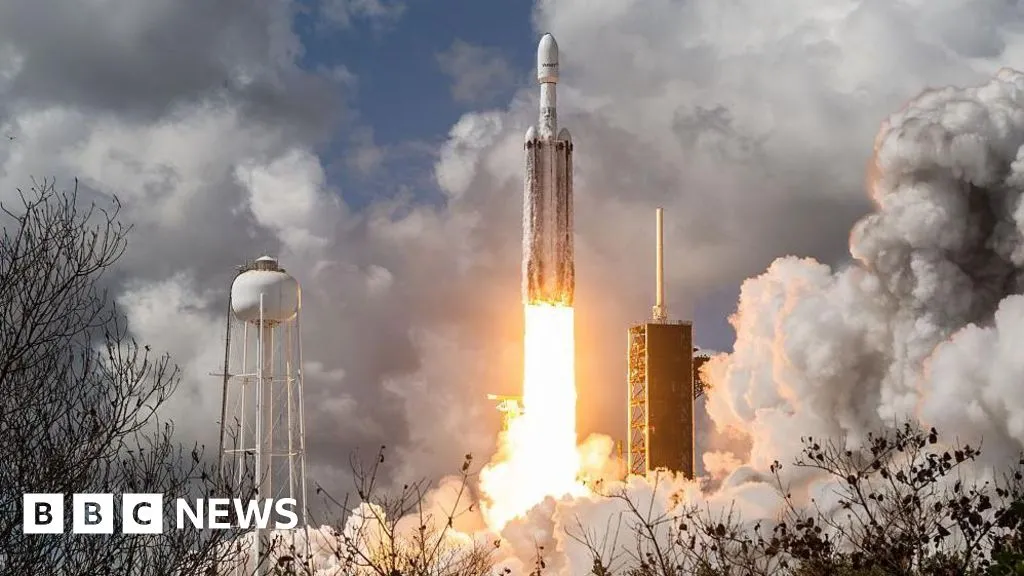
SpaceX sets price for record stock debut earlier than expected
Elon Musk’s company is moving faster toward a market debut that could reset expectations for private space valuations and investor demand.
SpaceX says it is worth $1.75tn before its stock market debut
The Elon Musk company set a target price for buyers earlier than expected, putting a giant private valuation in the market’s spotlight.