
Cell division “breaks” chromosomes on purpose, and the damage can make cells stronger
Quanta explains how microscopic forces during cell division are managed by molecular machines that turn strain into resilience.
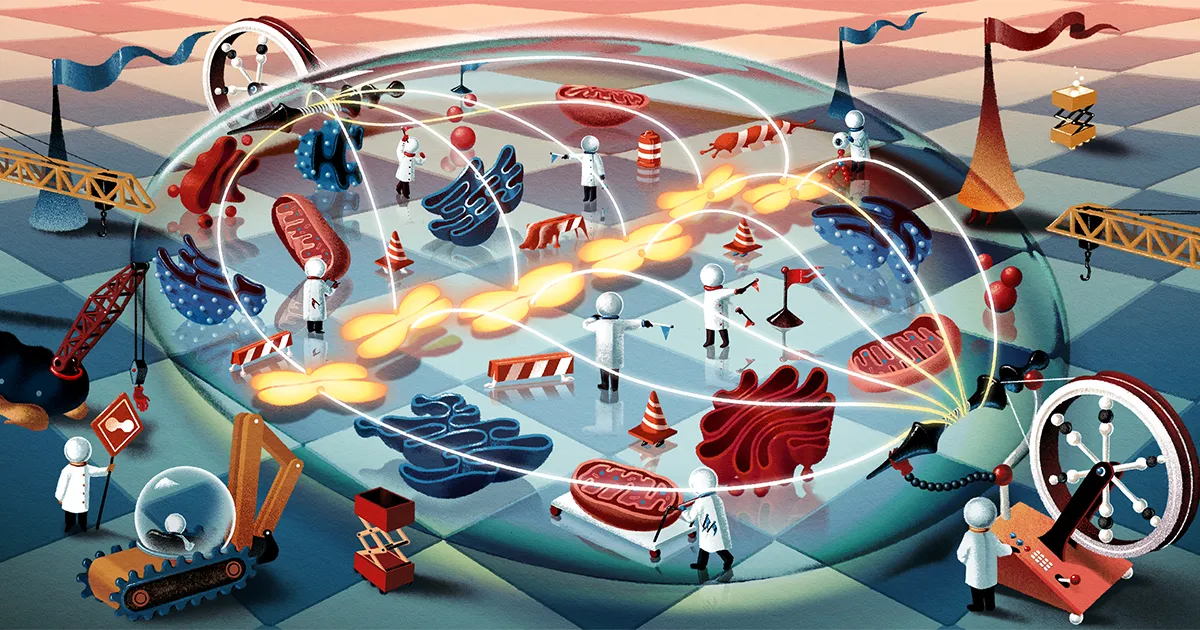
Quanta Magazine breaks down how cells undergo division by condensing chromosomes into X shapes and then using mechanical processes that generate intense microscopic forces. The consequence: understanding how cells handle strain can reshape how executives think about robustness in complex systems, from drug design to biotech risk.
Cells do not quietly copy themselves. They actively tear themselves apart and then rebuild two functioning units out of the chaos. Quanta Magazine frames this as a mechanical problem first: the process of cell division exerts powerful, if microscopic, forces. The obvious question is also the most interesting one: if those forces strain the cell, how do the molecular machines that power division avoid breaking the process entirely, or worse, turning lethal stress into a failure mode?
The answer starts with what the cell is doing right before division. In animal, plant, and fungal cells, the beginning of life for a new cell starts when a parent cell becomes two daughters. Just before that split, the parent doubles its nuclear DNA and carefully condenses it into X-shaped chromosomes. Then the nucleus disassembles, letting those genetic instructions float free in the cell’s interior. The cell is effectively setting up an extreme mechanical event, and it has to keep working while the physical world around the chromosomes shifts under its feet. The “ribs” idea comes from the fact that the cell’s structural machinery and the tension it experiences are inseparable from what makes division work.
That is the core tension Quanta explores: cells experience mechanical strain during division, but they still complete the choreography. And because the strain is real, the molecular machinery cannot treat it like background noise. The cell needs a way to handle the forces produced during division without letting damage accumulate faster than it can be repaired or corrected. Put plainly, cell division is a high-stakes production line where every step produces stress on the parts that must keep assembling themselves. If something goes wrong, the whole batch fails.
This is where the “breaks a cell’s ribs can make it stronger” framing matters. Quanta’s focus on mechanical strain implies that the relationship between damage and resilience is not one-directional. In many systems, stress can be purely destructive. But in biology, there is a long-standing logic that selective pressure favors mechanisms that can survive harsh conditions. When the process itself includes force, the cell has a strong incentive to evolve molecular strategies that prevent those forces from becoming catastrophic. The result is a set of molecular behaviors that manage strain as an input, not only as an accident.
For executives, the interesting part is not that cells have chromosomes. It is the design principle hiding inside the biology. Complex systems under load often fail in predictable ways: misalignment, fatigue, and runaway damage. Quanta is describing a system that has to run while “microscopic forces” are in play, and the system needs to ensure that those forces do not derail the genetic instructions at the center of the operation. That translates into a practical implication for biotech and adjacent industries: robustness is not just a matter of choosing a stable component. It is also about how the system responds to mechanical stress generated by the process itself.
In a regulatory or capital context, that matters because the most difficult failures tend to be the ones that show up only under stress. Drug candidates, cell therapies, and lab processes can behave one way in ideal conditions and another way when physical forces or handling conditions vary. Quanta’s description of cell division as a mechanically driven event is a reminder that biological performance depends on the mechanics of execution, not only the chemistry. Boards and leaders should treat process variability and stress exposure as first-class risk factors, not afterthoughts.
There’s also a second-order implication for research strategy. If cells can turn certain kinds of breaking or strain into strength, then the biological pathway may include sensors, feedback, or repair logic that is active during the division window itself. That changes how scientists might prioritize targets. Instead of only hunting for “prevention of damage,” it becomes equally important to understand “management of damage” during the high-force phases. In other words, resilience might come from controlled handling of strain, not from never being strained.
Ultimately, Quanta Magazine’s story is a window into how living systems stay functional under mechanical assault. Cells of animals, plants, and fungi condense DNA into X-shaped chromosomes, disassemble the nucleus to let instructions disperse, and then still manage the forces generated by division. That combination of preparation, structure, and strain management is the real takeaway. For leaders in science and health, the stake is clear: the more you understand how systems survive their own physical stress, the better you can design interventions, de-risk platforms, and build organizations that do not crumble the moment conditions get real.
This story's Key Insights and Take-aways are locked.
Create a free account to unlock Executive Actions for one credit.
Register to UnlockAlways free for Executives Club members. Join the Club
More in Science
2026 Nikon Small World Winners Reveal the Hidden Machinery of Everyday Life
A mycologist's frozen Edinburgh garden became the backdrop for vivid views inside cells, a reminder of what advanced imaging now makes visible to researchers and the industries built on biology.

Study: 1 in 4 depression cases may be a body-clock problem, not a chemical one
A 10,000-person study finds standard antidepressants often fail these patients, but melatonin and morning sunlight may hit the real root cause.

Start-Up Says A.I. Designed a Virus to Attack One Patient's Superbug
If the claim holds up, personalized phage therapy could become a new frontline weapon against antibiotic resistance - but proof is far from final.