
Flynas starts nonstop Jeddah-Rabat flights on 4 July, first Saudi operator on the route
A new weekly route links Saudi Arabia and Morocco and signals how airlines are aligning with aviation strategy targets by 2030.
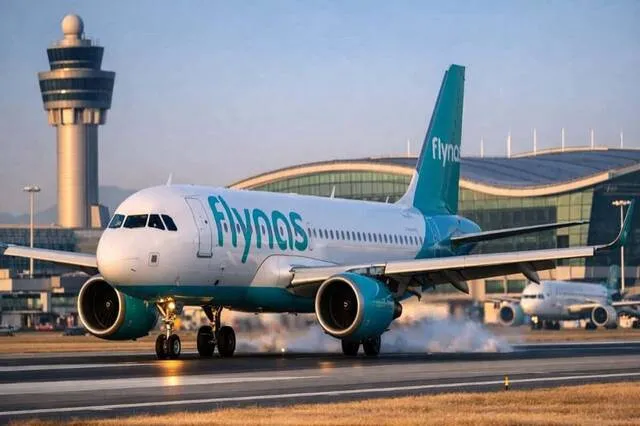
Flynas Company launched direct flights connecting Jeddah with Rabat starting 4 July, making it the first Saudi carrier to serve the route. The move expands its network, adds travel options between Saudi Arabia and Morocco, and supports the Kingdom’s National Civil Aviation Strategy goals.
Flynas Company just started something quietly ambitious: direct flights connecting Jeddah to Rabat begin on 4 July, and Flynas becomes the first Saudi carrier to operate nonstop service between the two cities.
That date matters for anyone tracking airline network buildouts, because it turns a “nice-to-have” connectivity story into an actual schedule you can plan around, price around, and measure against. According to a press release, the weekly operations will expand Flynas’ flight network and offer more travel options between Saudi Arabia and Morocco.
To understand why this is more than a route announcement, you have to look at how airlines typically treat point-to-point service. Direct flights reduce friction for travelers and business travelers, usually shortening total trip time and cutting down on baggage handling and delays that can happen on connections. In airline operations, that means better passenger experience claims, but also higher discipline: when you commit to a direct route, you are betting that demand will support recurring weekly frequencies rather than remaining a low-yield seasonal pattern.
Flynas has already been moving in this direction. In 2023, the airline operated three weekly flights between Jeddah and Casablanca. That history is important, because it suggests this Jeddah-Rabat launch is not a random detour, but part of a broader strategy to “connect the world to the Kingdom” while it continues growth in the African market, as described in the press release.
This is where the policy layer shows up. These flights contribute directly to achieving the goals of the National Civil Aviation Strategy, which aims to reach 330 million passengers and connect the Kingdom to 250 international destinations by 2030. In plain English: every new international route can be treated as both a market opportunity and a KPI. For executives, that changes how airline expansion is evaluated. Route growth becomes tied not only to revenue expectations, but to strategic destination counts and overall passenger volumes that regulators and national aviation planners are targeting.
At the same time, network expansion has to be operationally real, not just marketed. Last week, the national carrier joined forces with Cluster2 Company to establish a new operations base at Prince Naif bin Abdulaziz International Airport in Qassim. Even though this specifically mentions the national carrier in partnership with Cluster2, it reinforces the broader industry direction: airlines and their ecosystem partners are investing in bases, operations infrastructure, and the supporting capacity that make route expansion sustainable.
There is also a competitive subtext executives should care about. When a carrier claims “first” on a direct route, it changes the bargaining landscape. Travel agents, corporate travel buyers, and frequent flyer programs tend to simplify choices when nonstop options exist, and that can create early demand advantage. It can also raise the bar for competitors evaluating whether to match frequencies or wait and see. If you are on the board or in strategy, the question becomes: does this route open a durable corridor for Saudi-Morocco travel, or is it a stepping stone to a wider network play?
Finally, second-order effects tend to show up in adjacent decisions. More options between Saudi Arabia and Morocco can support inbound travel planning, tourism-related demand, and cross-border business travel. For airlines, it can also influence partnerships and codeshare negotiations, because nonstop service provides a clearer, more scalable product than connecting itineraries. For corporate travel teams and airport operators, it can shift traffic patterns in measurable ways.
For decision-makers, the stakes are straightforward. Flynas is building a new nonstop lane on a specific start date, expanding its network with weekly operations, and aligning that growth with national targets for 2030. In an industry where route announcements are abundant and actual execution is harder, the combination of “first Saudi carrier on the route” and a defined 4 July launch date is the kind of concrete move that can reshape how competitors plan their next network investments.
This story's Key Insights and Take-aways are locked.
Create a free account to unlock Executive Actions for one credit.
Register to UnlockAlways free for Executives Club members. Join the Club
More in Business

SpaceX jumps 6% in premarket, valuing the company at $2 trillion+ after its debut
The stock’s first-day surge pushes SpaceX past $2 trillion, reshaping how investors and regulators think about private space risk.

Mena construction CPMI slips 12% in April 2026, but execution momentum rebounds to 1.01
GlobalData’s April CPMI shows resilience masking pre-execution caution, with conflict risk surfacing unevenly by country and sector.

Michael Truell told Cursor to cancel meetings and build its own AI model
The Cursor CEO’s “emergency” over Anthropic Claude’s momentum forces a high-stakes pivot with SpaceX risk attached.