
Jonathan Pryce says dementia makes “Slow Horses” easier: “You’re free of the past.”
The actor explains how playing David Cartwright’s dementia shifted workload, portrayal choices, and the season’s key payoff.
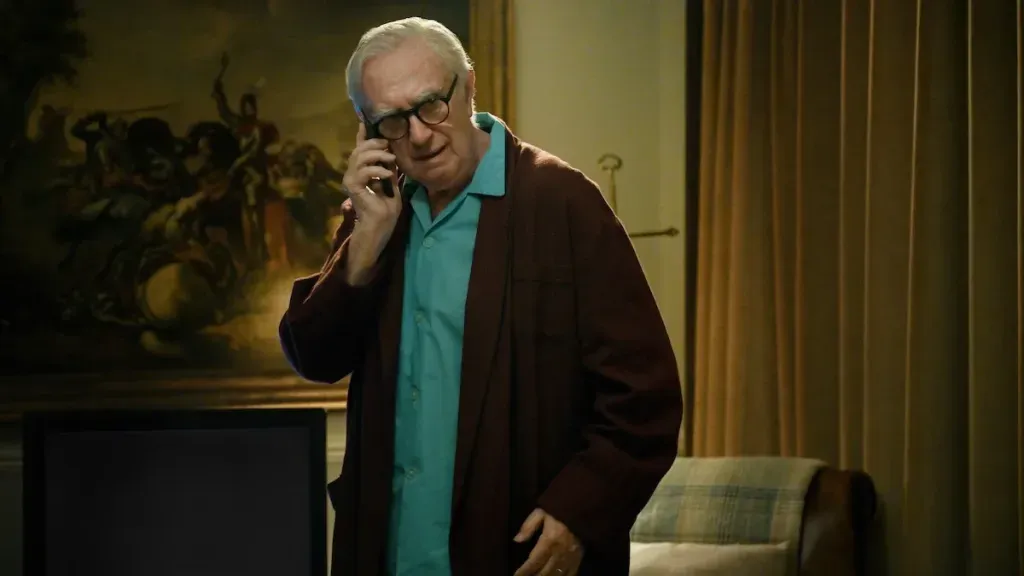
Jonathan Pryce, star of Apple TV’s “Slow Horses,” discusses how filming David Cartwright’s dementia storyline changed his approach. For decision-makers in creative and media ecosystems, it’s a reminder that character constraints can improve execution and sharpen narrative outcomes.
Jonathan Pryce is playing David Cartwright in Apple TV’s “Slow Horses,” and in Season 5, the dementia arc changes more than the performance. Pryce says his job becomes easier once the character begins to forget, describing it as being “free of the past” and having “almost no filter anymore.” That shift matters because Season 4, which aired in the fall of 2024, set up Cartwright’s dementia as a major plot engine. David, the grandfather of agent River Cartwright, appeared in most episodes and helped River discover that his father was a brilliant and deadly mercenary, even as David was taken to a care facility against his will.
Then Season 5 arrives in September 2025 and the dementia storyline practically disappears. David is almost entirely absent, showing up in only a phone call in Episode 5 and a scene in the sixth and final episode. In that final scene, his ramblings about bees give River the key to an attack that is about to happen. Pryce’s role is smaller than ever, but his impact is concentrated. And Pryce is clear about why his workload changes: “My job does change. It becomes easier. You have a simple line to follow. There are none of the complexities. You’re free of the past in a way, and there’s almost no filter anymore.”
If you’re watching this from the perspective of executives and operators, the interesting part is the mechanics: dementia on screen is not just a sympathy beat, it is a storytelling constraint that alters how actors build scenes. Pryce, 79, has played characters with dementia three times recently, including Florian Zeller’s play “The Height of the Storm,” “Slow Horses,” and the 2025 Chris Columbus film “The Thursday Murder Club.” He is also an ambassador for the Alzheimer’s Society, and he frames the responsibility of portrayal in terms of education and compassion. In his view, when disability or illness is depicted sympathetically, it educates viewers and encourages people to be more compassionate. That matters commercially too, because audiences do not only consume narratives for plot. They notice tone, and that tone can influence whether a series earns trust over multiple seasons.
Pryce also explains something that reads like a production strategy, even if he’s talking about acting. When he took “Slow Horses,” he didn’t know the dementia storyline was coming because he purposefully didn’t read the books by Mick Herron. He wanted to “discover things as they were evolving,” keeping the audience’s experience aligned with his own. He said the audience discovers things at the same time as he discovers them, and he finds that “a very satisfactory way to work.” In other words, uncertainty is not always a problem. In this case, it reduces performance overfitting. The actor is not trying to “fulfill something that I knew would eventually happen,” which can prevent him from playing ahead.
Cartwright’s case is also layered. In the series, David is a mysterious character whose past remains murky to the audience, except when Jackson Lamb, played by Gary Oldman, “occasionally blasts him for past misdeeds.” Pryce didn’t mind being in the dark about David’s future, but he did talk with creator Will Smith about hidden history. Pryce needed to know “certain elements” of his past. In the books, David is called “the Old Bastard,” described by Pryce as “a horrible man,” but Pryce says he didn’t want to play him as simply “a bastard.” The angle is specific: the man thinks his behavior is the correct behavior, and if his job meant killing someone, then he did his job well. That decision matters because it shapes how “ramblings” land later. When dementia shows up, the writing and performance must still carry the character’s underlying logic, even if it fractures into incoherence.
That is where Season 4’s setup connects to Season 5’s payoff. Season 4 includes a crisis: David’s dementia progresses to the point that he is taken to a care facility against his will. Pryce said he got “quite upset” watching that earlier scene in Season 4, thinking, “That could be me,” and he wanted the story resolved “in a positive way.” He specifically wanted the scene with Jack Lowden’s character River Cartwright to show David “happy and content,” and he frames this as deeply personal because he has a family member with dementia. The emotional goal becomes an execution goal: resolve the arc in a hopeful register, without denying the reality of the condition.
There’s also the show-within-a-show craft question. Pryce says the dementia changes his job because forgetting removes certain complexities, which sounds counterintuitive until you remember that acting is about continuity and choices. If a character’s past is no longer reliably accessible, actors can stop wrestling with who the character was and instead focus on what the character can still do in the moment. In Season 5, that “moment” becomes operational. David’s bees ramble is not just atmosphere. It is the clue River uses to unlock an attack that is about to happen in the sixth and final episode. The smaller presence, the concentrated clue, the altered performance workload, all point to the same business lesson: constraints can be leveraged to make outcomes sharper.
Finally, Pryce’s comments land in a broader context of what high-skill performers and studios both try to manage: how much the actor knows, when it is revealed, and how that timing aligns with the audience experience. He didn’t want to read ahead with “Slow Horses,” but he did base his approach to other roles on timing and discovery too. He played the High Sparrow in “Game of Thrones,” initially reading Season 5 scripts where the character appears caring, positive, and devoted to helping the poor, which he says he played as a “good man.” Then he read Season 6 scripts, found out the character becomes a monster, and he said he was like, “Holy s-, this guy’s a monster,” and he’s glad he didn’t know he was a monster. Across his career, from “Comedians” on stage to “Brazil” and “Game of Thrones,” Pryce’s through-line is intentional craft: build roles from what’s revealed in sequence, not from what you already predict.
For executives building long-running IP, the stakes are straightforward even if the setting is fictional. When storytelling includes dementia, portrayal decisions affect both audience trust and the emotional legitimacy of plot mechanics. When writers and actors coordinate how much is known and when it is revealed, performance can become more focused, not less. Pryce’s “More Responsibility, Less Work” framing captures the paradox: a heavier subject can yield a simpler scene-to-scene path, and that simplicity can make the final payoff hit harder.
This story's Key Insights and Take-aways are locked.
Create a free account to unlock Executive Actions for one credit.
Register to UnlockAlways free for Executives Club members. Join the Club
More in Entertainment
Oscar buzz hunts 'Obsession' as Curry Barker's breakout horror hits $19M
Academy voters and Hollywood gatekeepers face a new problem: a YouTuber-driven hit is rewriting awards-season math.

Michael J. Fox voices Dougie in Icon’s CG “Dragoons” animated feature
A celebrated actor joins a new CG studio project where a normal worker’s dragon transformation hinges on his apprentice.

Keith Urban built a “flow state” studio lark into a yacht rock album, Flow State
The Grammy winner turned Nashville’s old Tracking Room Studio into Sound, then hired Dann Huff to make 70s covers feel like his own.