
Mark Lanier says Boodlebox cut his trial prep hours by 3x
In the Meta and Google social media addiction case, a Texas lawyer used AI daily, not magically, to move faster.

Texas trial lawyer Mark Lanier used an AI tool called Boodlebox before and during the social media addiction trial earlier this year, including when preparing to cross-examine Meta CEO Mark Zuckerberg. The result was a $6 million jury award against Meta and Google and a playbook that other legal and compliance teams are already copying.
Mark Lanier, the Texas lawyer who represented the plaintiffs in the landmark social media addiction trial, says his AI workflow lets him do about three times as much work in the same limited time outside court. In a Business Insider interview, Lanier described waking up after four hours of sleep in February, then using his team’s AI-assisted preparation to review hours’ worth of cross-examination material before going into court the next day.
His core claim is simple: “In the 10 hours I might be working outside of court, I can get 30 hours of work done.” Lanier compared the AI tool he used before and during the trial to “Disney World compared to a swing set in the backyard,” saying it effectively gave him “10 additional workers” who could work around the clock without breaks, so his team could cover more ground during a trial that lasted over a month.
This matters because the case itself was not just another lawsuit. The jury found Meta and Google negligent and ruled the companies knew their platforms were “dangerous” but failed to warn the plaintiff. Lanier won the case, and the plaintiff was awarded $6 million. The verdict served as a bellwether for thousands of similar lawsuits brought against social media companies, meaning the trial did more than decide one dispute. It signaled how courts and juries might treat the “we didn’t know” defense when plaintiffs argue platform design harms users.
And in the background of the legal claims, the AI method Lanier used is the interesting part for decision-makers beyond law firms. The legal industry has been wrestling with both the promise of AI and the risk. Business Insider notes that AI in law has been touted as an opportunity and a cautionary tale, with stories of hallucinations and fake citations. Lanier’s message is that his use is not “unbridled.” He framed it as “trade craft,” and said his firm is “doing some things that nobody else is doing,” while also stressing that AI does not replace judgment. “You are an important part of the equation,” he said.
So what did he actually use? Lanier said the AI tool he relied on was Boodlebox, which he pays for at a cost of six figures annually. He described Boodlebox as an education-technology platform that gives access to major models like ChatGPT, Claude, and Gemini, with the ability to switch between them or compare results. He also said it is collaborative, letting Lanier and his team work with the AIs in the same digital workspace, rather than each person using separate prompts and tools. Lanier worked with Boodlebox to create a custom license tailored to his needs, and he described it as a way to incorporate decades of experience into the workflow. “We could, in essence, take my brain, take 42 years of my experience, take the things that I have learned and studied and published and not published and incorporate it into the brain that drove my AI queries and results,” he said.
In practice, Lanier described daily, operational uses during the trial. One example: he took transcripts from court each day and asked different models to evaluate them. Another: he used AI to find more creative or visceral ways to describe something in court. He also said he would feed AI jury notes that came up during deliberations and ask it to evaluate where the jury was in the process. At the end of court each day, he said his team held a “war room,” debriefed, and assigned tasks, like pulling the five most critical documents supporting point A. Then the team would do much of that work in Boodlebox so Lanier could review what they produced and how.
Lanier also said his team, which includes several of his daughters, spent thousands of hours on the platform. That level of embedded usage hints at why this is more than a one-off trial hack. Boodlebox’s representative told Business Insider that most of its clients are big universities, but the company is exploring more enterprise and law adoption, in part because of its work with Lanier. In other words, a high-stakes courtroom result is feeding a broader go-to-market story for AI tooling in regulated, document-heavy industries.
For executives, boards, and compliance leaders, there is a second layer here. If plaintiffs’ lawyers can compress the “work done between hearings” window by 3x, it pressures everyone else in the system: defense teams, insurers, and corporate legal groups that manage similar litigation. You still need to verify citations and facts, and Lanier said he does not use AI in a way that “gets people into trouble.” He described at least one instance where AI cited something from the record and he knew it was not correct. But the general advantage is clear: faster synthesis, faster iteration, and more structured review, all while trial time remains the scarcest resource.
Lanier’s closing advice to other lawyers trying to use AI was to keep up with rapid developments. He said he has an AI team at his firm that sends him a document every Friday with developments in AI, typically three pages single-spaced. “Next trial, I will make what I did last trial look like Fred Flintstone and the Stone Age,” he said. For decision-makers watching how legal work gets automated at the edges, the strategic stake is obvious: the organizations that learn the trade craft fastest will move faster in the moments that actually decide cases, not just in demos.
This story's Key Insights and Take-aways are locked.
Create a free account to unlock Executive Actions for one credit.
Register to UnlockAlways free for Executives Club members. Join the Club
More in Business

SpaceX IPO lifts it to $2T market cap after Nasdaq debut, seventh most valuable US
SpaceX joins the top ranks by value even though its revenue is tiny versus tech megacaps, forcing a new market yardstick.

Mena construction CPMI slips 12% in April 2026, but execution momentum rebounds to 1.01
GlobalData’s April CPMI shows resilience masking pre-execution caution, with conflict risk surfacing unevenly by country and sector.
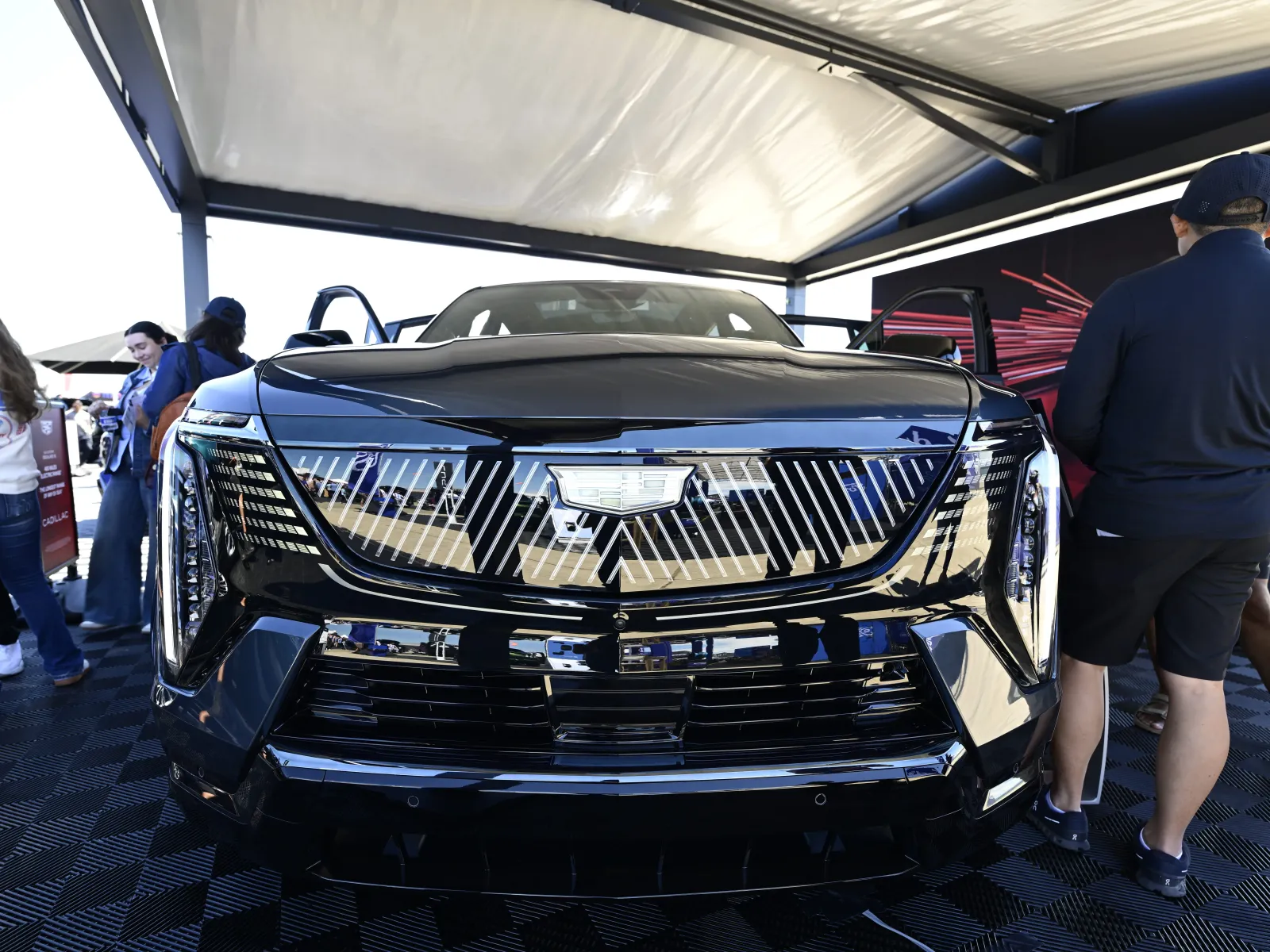
GM spent $10B on Cruise, then built eyes-off highways anyway, via Sterling Anderson
Even after shutting down Cruise in 2024, GM says autonomy in personal cars will converge on robotaxis.