

Poland opposition power struggle: expelling Mateusz Morawiecki threatens a far-right popularity hit
A bid to remove former PM Mateusz Morawiecki could fracture Poland's opposition and reshape electoral momentum.
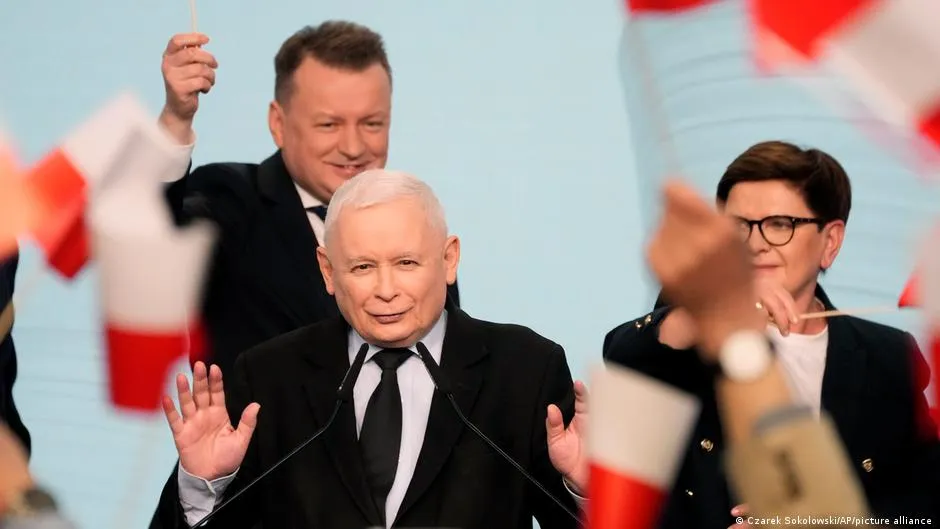
Poland's main opposition force is facing a power struggle that has reached a head, with a move to expel former Prime Minister Mateusz Morawiecki. For decision-makers watching the political risk environment, the move could weaken the right-wing party's popularity rather than strengthen it.
Poland's main opposition force is in a full-throttle power struggle, and the decision now on the table is simple to describe but messy in consequence: expelling former Prime Minister Mateusz Morawiecki. The underlying claim in reporting is that this internal fight has come to a head, and the proposed expulsion may “greatly weaken the right-wing party's popularity.”
That matters for anyone trying to model near-term political stability in Poland, because opposition coherence often functions like a market signal. When a major opposition group appears to be scrambling internally, it can change how voters, activists, donors, and political partners interpret the movement's ability to lead. In this case, the stakes are not abstract. A push to remove Morawiecki risks turning an internal dispute into a public legitimacy problem, and the reporting specifically points to popularity as the vulnerable variable.
To understand why an expulsion can hit harder than it sounds, you have to think in terms of incentives inside parties. Morawiecki is not just any figure; he is a former Prime Minister, which means he represents both political experience and a recognizable brand of authority within the right-wing sphere. When a leadership faction moves to expel someone with that level of profile, it signals that the opposition's internal rules and alliances are under stress. And when those rules break down, it can become harder for a party to present one story to voters.
There is also a second-order effect that executives tend to notice first: uncertainty concentrates. Even if the policy agenda is unchanged, political uncertainty can shift timing decisions by businesses and investors, especially those with exposure to regulatory and legislative calendars. In many countries, changes in opposition leadership or intensity of intra-opposition conflict can affect how quickly legislation moves, how willing legislators are to compromise, and how likely political negotiations become headline-driven rather than policy-driven. The reporting here does not spell out policy specifics, but it does provide the core risk: a popularity hit for the right-wing party.
Another layer is how opposition parties compete for narrative control. In a coalition environment, factions often fight not only over who leads, but over whose interpretation of the political “moment” becomes the dominant framing. Morawiecki's removal attempt suggests that at least some part of the opposition sees him as a liability or as insufficiently aligned with the current leadership's direction. Meanwhile, supporters of Morawiecki could interpret expulsion as an attempt to sideline a heavy hitter, which can feed backlash dynamics. Even without inventing motives, the plain structure is there: expelling a former PM is a high-visibility move, and visibility is the currency of backlash.
The article's central idea is that an internal power move can backfire electorally. If the move to expel Morawiecki “may greatly weaken the right-wing party's popularity,” then the opposition is effectively gambling on an internal resolution improving external outcomes. That is a gamble parties often make when factional discipline matters more than broad optics. But it is also the sort of gamble that can misfire, particularly if voters interpret the conflict as dysfunction.
For decision-makers outside politics, including boards and leaders of firms exposed to Poland's business environment, the strategic implication is that political governance capacity and political messaging capacity often move together. If the opposition appears unable to keep its own leadership stable, stakeholders can expect more frequent disruptions in public confidence, coalition-building, and negotiating posture. That can raise the bar for forecasting, and it can change how quickly and confidently counterparties commit to longer-term plans.
For peers tracking similar dynamics in other markets, this is also a warning about the difference between internal consolidation and external appeal. A party can be “strong” in the sense of disciplining members, but weak in the sense of attracting and retaining popular support. The reporting here does not describe a completed expulsion, but it does identify the direction of travel: a move to expel Morawiecki is underway, and it may harm popularity. In politics, that is exactly the kind of detail that can ripple outward, because popularity is what converts into votes, coalitions, funding, and leverage.
In short: the opposition's power struggle has reached a head, the target is former Prime Minister Mateusz Morawiecki, and the proposed expulsion carries the explicit risk of a major popularity decline for the right-wing party. If that happens, it won't just be a headline about internal politics. It will be a signal about the opposition's ability to translate leadership decisions into public momentum.
This story's Key Insights and Take-aways are locked.
Create a free account to unlock Executive Actions for one credit.
Register to UnlockAlways free for Executives Club members. Join the Club
More in Politics

Houthi retaliation escalates after Saudi strikes military targets in Red Sea
Riyadh hits Houthi military targets on Friday. The Houthis call it dangerous escalation after a Red Sea blockade and ship attacks.

Trump jokes about 2028 third term at rescheduled White House Correspondents' Dinner
The president uses the comeback gala to lash out at

Trump returns to the White House Correspondents' dinner after 3 months
A rambling, hour-long speech resets the political-media signal just as the season turns and scrutiny ramps up.