

USF team hunts Antarctic sea-squirt toxins as a potential melanoma weapon
A six-week expedition gathered sea squirt samples that could translate bacterial toxins into future melanoma treatments.
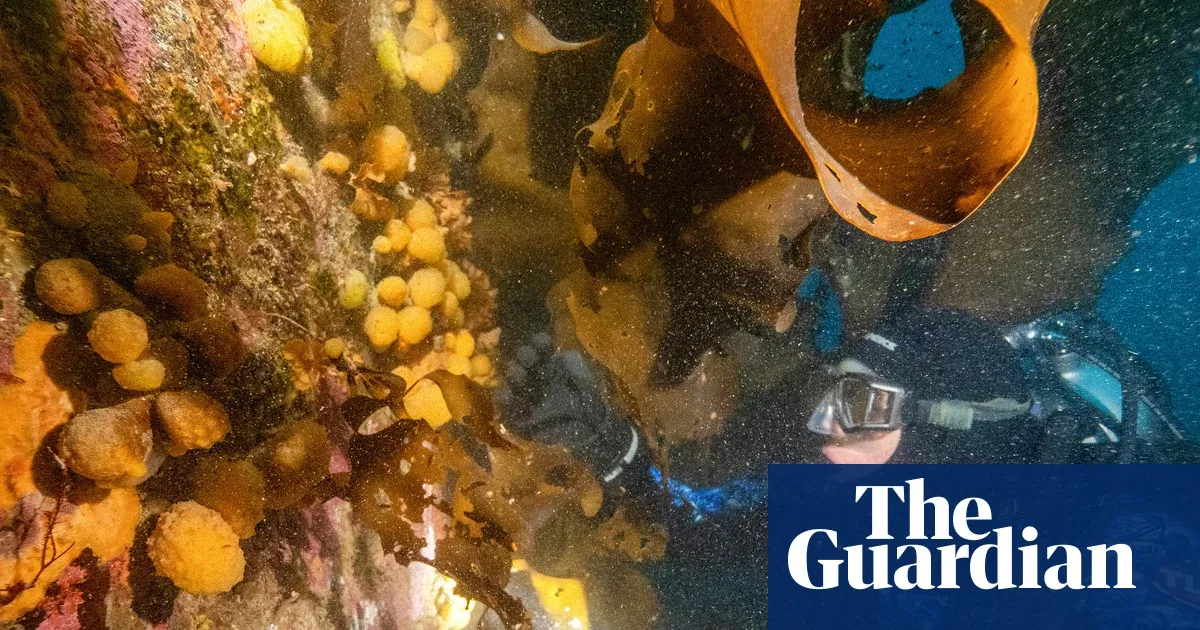
Researchers at the University of South Florida (USF) returned from a six-week Antarctic expedition and collected samples of ascidians, or sea squirts. They say bacterial toxins produced by these tiny marine organisms they have studied in Antarctica could become an effective treatment for melanoma.
Melanoma is aggressive, and the research trail is rarely straightforward. Still, a USF team believes tiny Antarctic sea squirts may have something clinically useful hidden in their biology: bacterial toxins that could one day be turned into a melanoma treatment.
According to the report, researchers at the University of South Florida (USF) recently returned from a six-week expedition to one of the world’s remotest regions. Their mission was not glamorous, but it is strategically important: they collected samples of ascidians, invertebrates known as sea squirts that thrive in icy waters. The goal is to support a possible therapeutic use of bacterial toxins tied to these organisms, including for melanoma, described as the deadliest form of skin cancer.
Why executives should care is simple. Melanoma is one of those areas where “promising science” is a high bar because the disease burden is serious, the competitive landscape is crowded, and the regulatory pathway punishes weak signals. A treatment idea built on natural products can be scientifically exciting, but it has to earn trust through reproducibility, safety profiling, and a credible mechanism that connects lab activity to real clinical outcomes. The USF team is not claiming a finished drug in the piece. What they are doing, instead, is building the upstream pipeline: sourcing and studying biological material from Antarctica that they say they have already studied before, and gathering new samples to deepen that work.
There is also a quiet but meaningful point about how the evidence gets assembled. When research rests on toxins produced in complex marine ecosystems, the “it works in a dish” stage is usually only step one. Translation requires understanding what exactly is doing the work, how consistent it is across samples, and how you can manufacture it or a derivative at scale without losing activity. That consistency question is where many otherwise interesting mechanisms get stuck. By returning from a targeted, time-bounded expedition and collecting ascidians, the USF team is effectively trying to reduce sampling uncertainty, not just marvel at Antarctic wildlife.
From a funding and governance perspective, this kind of project sits at a familiar intersection: academic discovery pushing toward therapeutic relevance. Boards and investors often ask whether academic work can become a product without drifting into endless exploration. The report’s framing helps because it ties the Antarctic biology directly to a specific clinical target, melanoma, and identifies a plausible therapeutic class, bacterial toxins. That connection to a deadliest-form-of-skin-cancer use case matters. It turns abstract marine discovery into a development narrative that can be measured with concrete milestones: identifying toxin candidates, testing them in relevant systems, and then determining whether any candidate has a safety profile that is workable for humans.
Regulators, too, will care about how this moves from discovery to a drug-like candidate. Natural toxins have an inherent challenge: they can be potent, but potency without selectivity becomes a safety problem. That means future scrutiny will likely focus on purification, dose finding, toxicity, and off-target effects. Even though the source does not lay out any clinical steps yet, the implication for decision-makers is clear. If this line of research proceeds, it will need a disciplined translational plan that treats toxin biology like an engineering problem, not just an interesting story from the ocean.
Second-order implications for executives and their peers in pharma, biotech, and venture are worth underlining. If Antarctic marine organisms continue to yield leads, it can shift how portfolios think about source diversity, intellectual property strategy, and time-to-proof. It also raises questions about where expertise will come from. Toxin discovery in marine systems typically requires specialized lab capabilities and field-to-lab logistics. That can influence partnership decisions, such as whether to bring in complementary academic groups, contract research organizations, or specialized manufacturing partners once a candidate becomes clearer.
Finally, for anyone tracking the melanoma arena, the competitive reality is that “deadliest form of skin cancer” is not a marketing phrase. It signals that new treatments must improve outcomes in a way that matters to patients and clinicians. The USF team’s Antarctic expedition is one early piece of a long chain. But it is a notable chain piece because it starts with specific biology, specific sampling, and a stated therapeutic hypothesis aimed at melanoma. If this survives the next stages of validation, the story could move from icy waters to regulatory submissions. If it does not, the lesson for boards is still valuable: the difference between a cool discovery and a funded program is whether you can convert field-collected samples into reliable, testable candidates on a timeline that stakeholders can govern.
This story's Key Insights and Take-aways are locked.
Create a free account to unlock Executive Actions for one credit.
Register to UnlockAlways free for Executives Club members. Join the Club
More in Science
2026 Nikon Small World Winners Reveal the Hidden Machinery of Everyday Life
A mycologist's frozen Edinburgh garden became the backdrop for vivid views inside cells, a reminder of what advanced imaging now makes visible to researchers and the industries built on biology.

Study: 1 in 4 depression cases may be a body-clock problem, not a chemical one
A 10,000-person study finds standard antidepressants often fail these patients, but melatonin and morning sunlight may hit the real root cause.

Start-Up Says A.I. Designed a Virus to Attack One Patient's Superbug
If the claim holds up, personalized phage therapy could become a new frontline weapon against antibiotic resistance - but proof is far from final.