
Vaccines trigger broad HIV neutralizing antibodies in primates, Nature reports
A new primate study suggests vaccination can elicit broadly neutralizing antibodies, tightening the race toward an HIV vaccine.

A Nature study reports that vaccination elicited HIV broadly neutralizing antibodies in primates. For decision-makers, the finding de-risks one of the hardest scientific hurdles in HIV vaccine development and reshapes how funders and regulators may assess next steps.
In a field where “promising” often means “not yet effective,” Nature published a result with cleaner momentum: vaccination elicited HIV broadly neutralizing antibodies in primates. The paper, published online 30 June 2026 (doi:10.1038/s41586-026-10837-5), lands in the exact bucket that has frustrated scientists and investors for years, because broadly neutralizing antibodies, or bnAbs, are the class of immune responses most likely to cover diverse HIV strains.
The headline takeaway is the bridge from theory to biology. The study shows that when primates are vaccinated, their immune systems can produce HIV broadly neutralizing antibodies, not just narrow responses against one variant. In plain terms, this suggests a vaccine strategy can train the immune system to recognize conserved regions of the virus, which is the difference between chasing a moving target and aiming at something that stays the same.
Why does this matter beyond the immunology? Because HIV is not one virus. It is a moving ecosystem of variants, and the virus evolves under immune pressure. A vaccine that only generates antibodies that work against a single strain can look great at first and then fade as diversity wins. Broadly neutralizing antibodies are attractive because they raise the probability of neutralization across more viral forms, which is what “vaccine” needs to mean if it is going to protect people over time.
From a decision-maker standpoint, this is also about what gets funded and what gets scaled. HIV vaccine development has historically attracted long-duration research cycles, and the biggest risk for boards and sponsors has been the gap between immune readouts and real-world protection. bnAb responses are not the same thing as clinical efficacy, but they are a mechanistic milestone. They give regulators and oversight bodies something concrete to track when designs move from early preclinical proof-of-concept toward larger trials. When a Nature paper shows bnAb induction after vaccination in primates, it can shift how internal project teams prioritize candidate immunogens, how external partners evaluate licensing potential, and how investors decide whether to underwrite scale-up or wait for better data.
It is also a signal to the broader landscape of HIV prevention and therapeutics. Many organizations pursue multiple paths at once: broadly neutralizing antibody therapies, long-acting delivery, and vaccine approaches that try to replicate what passive antibodies do naturally. A vaccination result that produces bnAbs in primates does not replace other modalities, but it changes the negotiation dynamic across the ecosystem. Companies with antibody platforms may now face more direct competition from vaccines that aim to induce the same kind of immune weapon in the body. Meanwhile, vaccine developers may find it easier to recruit collaborators and data-sharing partners because the target immune outcome is more clearly within reach.
Regulatory framing is usually conservative for infectious disease vaccines, especially when the endpoint is complex and long-term. While the source here does not list specific trial designs or additional numeric outcomes, the publication in Nature itself helps set expectations for scientific rigor and peer scrutiny. For boards, that means the next phase is not just “more experiments.” It is designing the pathway that connects bnAb induction to measurable protection. That connection is exactly where oversight bodies will look, because an immune response can be real but not sufficient.
Second-order implications follow fast. First, bnAbs as an elicited outcome can reshape go-no-go decisions. Projects may reallocate budget toward immunogen designs and delivery systems that are more likely to drive breadth, not just titers. Second, it may affect partnership strategy. If multiple groups can claim similar immune milestones in primates, differentiation will likely shift to which approach is easiest to manufacture, the durability of the response, and the clarity of the translation plan. Third, it can influence trial governance. When the scientific story becomes more coherent, committees may be more willing to approve protocol changes that aim to optimize breadth earlier, rather than waiting for late-stage signals.
For executives and investors tracking the HIV vaccine race, the signal here is straightforward. Nature reports vaccination elicited HIV broadly neutralizing antibodies in primates, published online 30 June 2026. That does not guarantee a successful human vaccine, but it meaningfully tightens the risk calculation. The next question for the field is whether these primate immune responses can translate into robust protection in humans, with the durability and breadth needed to keep pace with HIV’s diversity. If they can, this result becomes a cornerstone reference point for how the industry decides what to build next, and who gets the runway to build it.
This story's Key Insights and Take-aways are locked.
Create a free account to unlock Executive Actions for one credit.
Register to UnlockAlways free for Executives Club members. Join the Club
More in Science
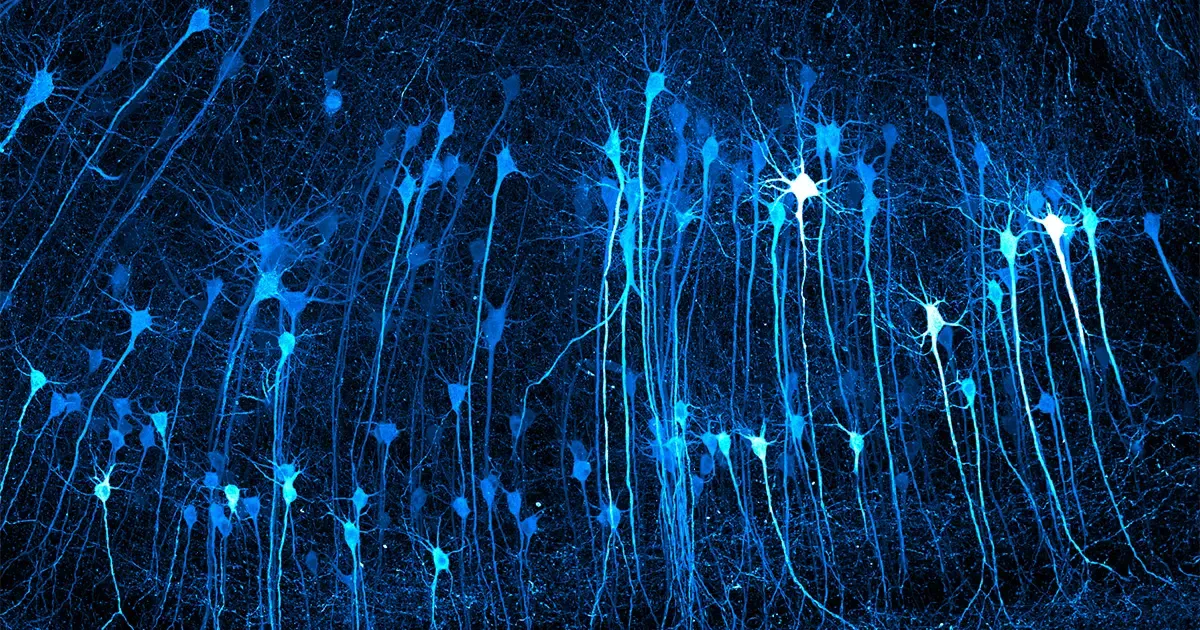
2026 Nikon Small World Winners Reveal the Hidden Machinery of Everyday Life
A mycologist's frozen Edinburgh garden became the backdrop for vivid views inside cells, a reminder of what advanced imaging now makes visible to researchers and the industries built on biology.

Study: 1 in 4 depression cases may be a body-clock problem, not a chemical one
A 10,000-person study finds standard antidepressants often fail these patients, but melatonin and morning sunlight may hit the real root cause.
Start-Up Says A.I. Designed a Virus to Attack One Patient's Superbug
If the claim holds up, personalized phage therapy could become a new frontline weapon against antibiotic resistance - but proof is far from final.