

Vancomycin gets a comeback: pghi-4 blocks resistance and kills drug-resistant E. faecium
Instead of replacing vancomycin, researchers paired it with pghi-4 to restore killing power against resistant E. faecium.
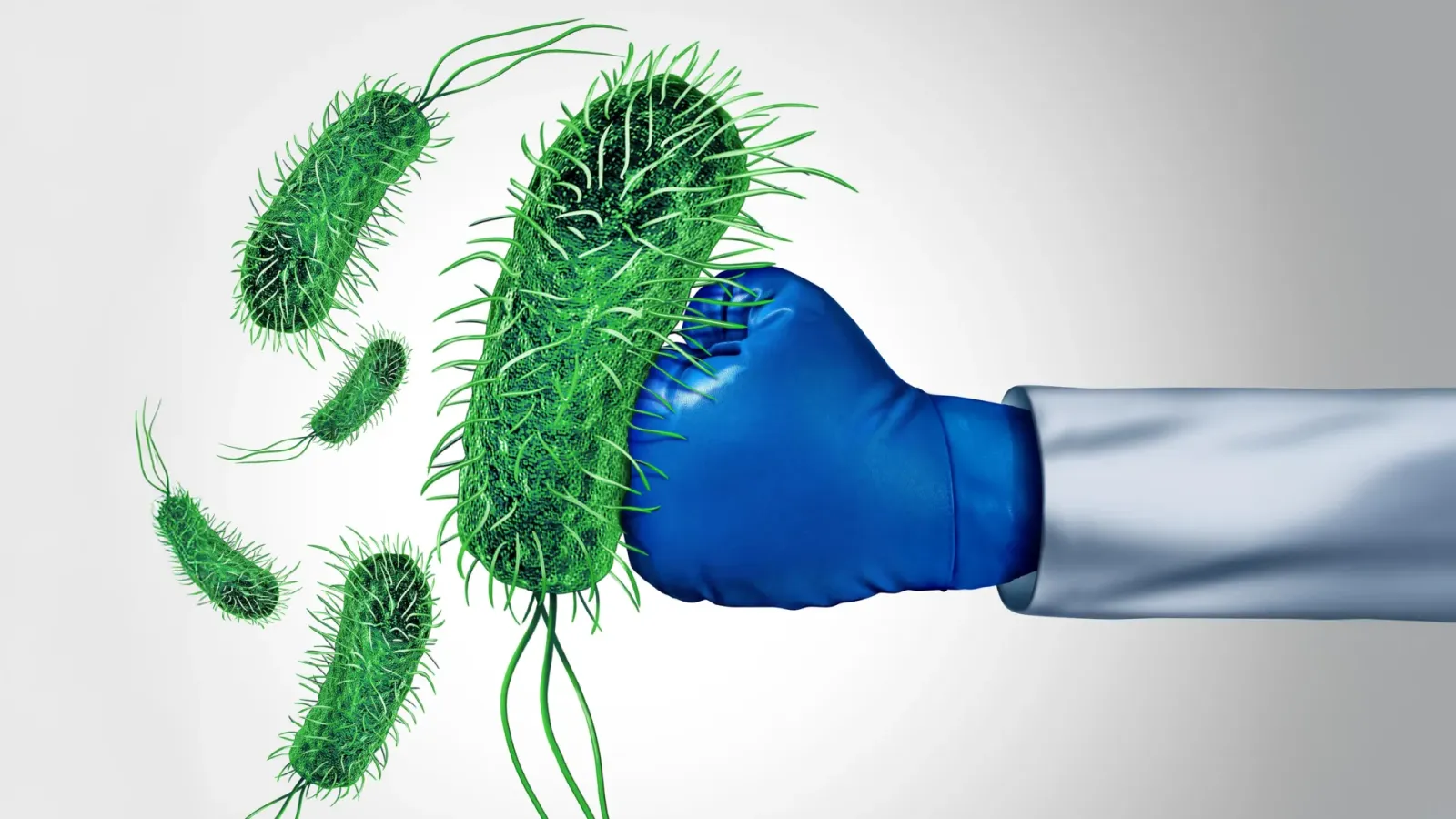
Researchers revived vancomycin by pairing it with a small molecule called pghi-4 that blocks a bacterial enzyme tied to resistance. The combination restored vancomycin’s ability to kill drug-resistant E. faecium, suggesting “chemical helper” strategies could rescue other antibiotics.
A lot of antibiotic R and D is built on a grim math problem: bacteria evolve faster than pharma can invent brand-new drugs. That is why this new research hit like a rare piece of good news. Scientists found a way to revive vancomycin, the powerful antibiotic that some dangerous bacteria have learned to resist, without throwing away the original medicine.
The key move is simple enough to remember, but serious enough to matter. Researchers paired vancomycin with a small molecule called pghi-4. Pghi-4 blocks a bacterial enzyme linked to resistance, and that combination restored vancomycin’s ability to kill drug-resistant E. faecium. In other words, the bacteria had an answer for vancomycin alone. Add pghi-4, and that answer stops working.
For executives and decision-makers, the strategic punch is not just “it worked.” It is the pattern. This approach is not trying to win by novelty. It is trying to win by leverage. Building an entirely new antibiotic is expensive, slow, and often faces a moving target as resistance spreads. In contrast, pairing an existing antibiotic with a helper compound can be a faster path to regain efficacy, especially when resistance mechanisms are known and targetable.
Zoom out one layer and you can see why “rescue” chemistry gets board-level attention. Antibiotic pipelines are crowded with hard-to-market products, because regulators, payers, and clinicians all want evidence that a drug is truly effective in the real world. When a previously trusted antibiotic loses punch, the clinical need does not disappear. It shifts to “how do we restore effectiveness safely and convincingly?” A combination strategy has an obvious operational appeal: it can potentially reuse much of the existing clinical and manufacturing knowledge around vancomycin while adding a defined mechanism via pghi-4.
There is also a regulatory and development reality hiding under the science. Regulators evaluate drugs and combinations with a close eye on mechanism, safety, and whether the combination actually produces a benefit that the components cannot deliver alone. This research matters because it is mechanism-forward: pghi-4 blocks an enzyme linked to resistance, and the combo restored killing of drug-resistant E. faecium. That linkage is exactly the kind of story regulators look for when the question becomes, “Why should this work in patients?” It is not just a lab observation described in vague terms.
Now consider the business landscape around antibiotic resistance. Superbugs are not only a clinical problem. They are also a capital allocation problem. When resistance reduces the usable lifespan of older antibiotics, the market becomes less about searching for the next blockbuster and more about managing survivability of existing treatments and reducing failure rates in late-stage development. A “chemical helper” strategy can change the risk profile. It offers a potential route to re-animate known antibiotics rather than betting everything on brand-new scaffolds that may still face resistance within years.
The second-order implication for companies building antibiotic portfolios is that the focus may shift from single-agent dominance to combination intelligence. If helper molecules can block specific enzymes tied to resistance, then the industrial challenge becomes identifying which resistance pathways are actionable and designing helpers that reliably pair with antibiotics. That is a different kind of R and D. It is not just “find a drug that kills.” It is “find a control knob that turns off resistance.”
There is also a network effect for peers in similar roles. The moment vancomycin can be functionally restored against drug-resistant E. faecium, the question becomes: how many other failing antibiotics are not fully dead, just outmaneuvered? This research raises hopes that similar chemical helpers could rescue other medicines. For investors and boards, that hope can translate into a more modular view of antibiotic development, where antibiotics are cores and helpers are add-ons tuned to resistance mechanisms.
To be clear, this is research, not a finished product announcement. But the signal is strong: instead of starting from scratch, scientists used a resistance-linked enzyme block to bring back an antibiotic’s killing ability. In a world where superbugs keep rewriting the rules, this is the kind of tactical reversal that changes conversations from “can we discover our way out?” to “can we engineer our way back in?”
This story's Key Insights and Take-aways are locked.
Create a free account to unlock Executive Actions for one credit.
Register to UnlockAlways free for Executives Club members. Join the Club
More in Science

Juno sees Io’s subsurface heat surge: 40+°F rising just feet down
Two close flybys let NASA measure below Io’s surface, proving tidal heating and reshaping how scientists read volcanoes.

Sperm whales off Dominica shift clicks near boats, researchers can predict ship proximity
A four-year study finds a boat-related “vowel” pattern in sperm whale clicks, enabling near-real-time detection of marine traffic.

Galaxy Watch Ultra 2 adds 800mAh battery, costing $699.99
Samsung lifts battery specs and preventive health focus, including a 35% jump on Ultra 2’s 47mm model.