

Zelensky backed down after protests over firing a popular minister
Ukraine’s street pressure forced a leadership reversal, with lessons for how legitimacy can move policy fast.

Ukraine faced mass protests that forced President Volodymyr Zelensky to reverse course on the firing of a popular minister. The immediate consequence is political, but the second-order effect is that public legitimacy can override planned executive actions quickly.
Mass protests in Ukraine forced President Volodymyr Zelensky to reverse course on the firing of a popular minister. That is the headline, but it is also the point: even in a high-stakes political system under intense strain, public consent is not a nice-to-have. It is a lever that can yank decisions back from the brink.
This matters because firing a minister is not a small internal housekeeping task. It is an act of executive control, a signal of who has authority, and a mechanism to reshape how government priorities get implemented. When protests are large enough to compel a reversal, it suggests the political cost of pushing through is higher than the cost of backing off. In other words, Zelensky did not simply change his mind. He responded to the reality that the leadership calculus had shifted after the streets lit up.
Ukraine’s political reality is often framed around war and external pressures, but the Foreign Policy piece is specifically focused on something more basic: people still matter. That phrase can sound sentimental until you treat it like strategy. Protests are a form of signaling. They communicate that there is a constituency willing to show up, not only to criticize, but to disrupt the normal decision flow. When that signaling is clear enough, it can force a reconsideration even when the executive branch has already set a course.
For decision-makers elsewhere, the relevant question is not “Could street protests change policy in my country?” It is “How fragile is my internal process when legitimacy becomes a variable?” In many governments, especially during stress, leaders have incentives to move quickly: replace officials, tighten control, and present unity. But legitimacy constraints are real. If the executive team misreads what the public considers “popular” or “acceptable,” the backlash can become a governance bottleneck.
There is also an organizational angle. Ministers and their offices tend to be nodes of responsibility, influence, and networks. Removing a popular minister can trigger more than political drama. It can reshape alliances inside the coalition, shift civil-military coordination, and alter how policies get executed in practice. When Zelensky reversed course after mass protests, it implicitly acknowledged that the planned removal had consequences that outweighed the intended benefits.
Now connect this to how executives think about risk. In corporate life, boards monitor execution risk, reputational risk, and operational continuity risk. In government, the equivalents are accountability, public trust, and administrative stability. A firing that is perceived as illegitimate can create a confidence gap. Even if the formal chain of command remains intact, implementation may slow, compliance may weaken, and key constituencies may disengage. Reversing course can be a way to restore continuity and reduce the drag that follows legitimacy shocks.
The broader second-order implication is that legitimacy can be operational. When protests become mass, they change the environment in which leaders negotiate, communicate, and implement. That can influence timelines, bargaining dynamics, and the credibility of future decisions. For other political leaders, and for executives advising them, the lesson is not that street pressure is always decisive. It is that when it is decisive, it often does not stay localized. The precedent changes expectations. People learn what actions generate reversals, and institutions learn what signals trigger escalations.
In that sense, Ukraine’s cardboard Maidan metaphor is doing more than painting a picture. It is an argument about persistence and participation, even when the protest infrastructure is not about expensive force. The message to leaders is uncomfortable but clear: the public can still steer outcomes. And when executives ignore that possibility, reversals can turn from a one-off adjustment into a pattern that erodes confidence in decision-making.
This story's Key Insights and Take-aways are locked.
Create a free account to unlock Executive Actions for one credit.
Register to UnlockAlways free for Executives Club members. Join the Club
More in Politics

Houthi retaliation escalates after Saudi strikes military targets in Red Sea
Riyadh hits Houthi military targets on Friday. The Houthis call it dangerous escalation after a Red Sea blockade and ship attacks.
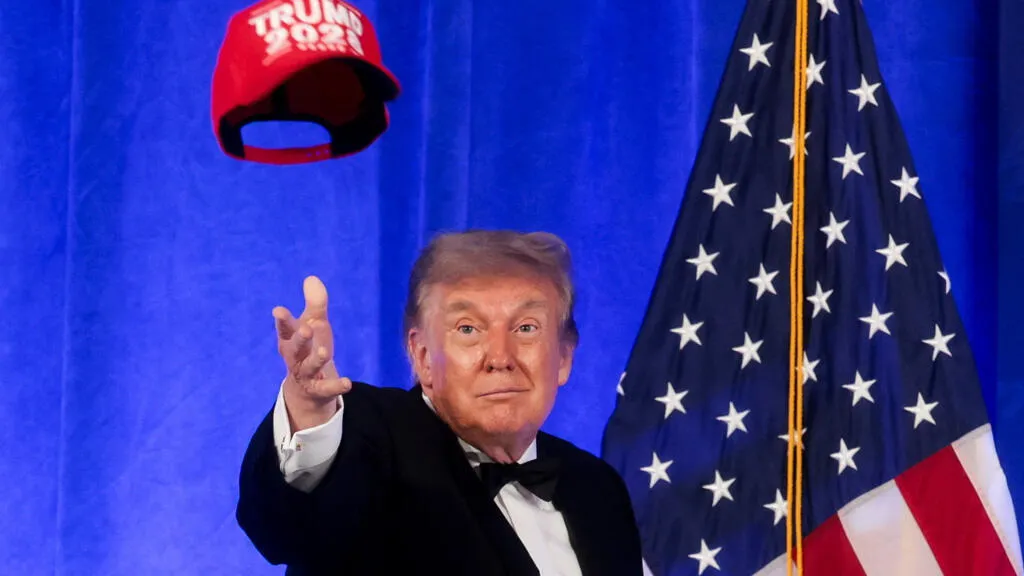
Trump jokes about 2028 third term at rescheduled White House Correspondents' Dinner
The president uses the comeback gala to lash out at

Trump returns to the White House Correspondents' dinner after 3 months
A rambling, hour-long speech resets the political-media signal just as the season turns and scrutiny ramps up.