
Zhipu rockets higher while Minimax fades, splitting China AI stocks’ momentum
The rally and the stumble in Zhipu and Minimax show how fast capital rotates in China’s AI names.

Zhipu and Minimax, two prominent Chinese AI companies, moved in opposite directions as investors re-priced their prospects. For decision-makers, the divergence is a live signal: sentiment, regulatory comfort, and perceived execution speed can flip the market quickly.
China’s AI stock tape is doing that annoying thing markets do when there is too much ambition and not enough time: it is splitting winners and punishing laggards in the same sector. In the latest read, Zhipu is soaring while Minimax stumbles, leaving Chinese AI investors with a straightforward but uncomfortable lesson. When capital decides which narrative feels real, it can rotate aggressively, even inside a single theme like “AI platform.”
The headline-level split is the entire story’s first clue. Zhipu is moving up sharply, while Minimax is slipping. That kind of divergence matters because it suggests the market is not treating Chinese AI stocks as one uniform basket. Instead, it is pricing individual companies differently, likely based on how investors interpret their product momentum, business traction, and the overall risk profile of their AI deployments. For executives watching this space, it means you cannot assume “AI exposure” alone will carry your stock or your funding story. In this market, being in AI is table stakes. Being perceived as executing better, faster, or with fewer friction points is what gets attention.
Zoom out one notch and the context becomes clearer. China’s AI boom is happening in a regulatory environment where oversight and compliance are not background noise. AI companies operate under scrutiny that can directly affect deployment timelines, product features, and how data is handled. That does not mean every company faces identical risk, but it does mean investors tend to treat regulatory comfort as part of the valuation. When the market believes one firm is navigating that environment more effectively, it tends to reward it quickly. When another firm looks less clear on the path, the penalty can show up just as fast.
That is why this divergence feels more consequential than a routine stock-market move. Chinese AI names are still being priced with a lot of “optionality,” meaning investors are paying partly for future possibilities. But options do not get exercised by hope alone. They get exercised when a company can demonstrate credible progress that reduces uncertainty. In practice, that can come down to whether a model is improving, whether product adoption is broadening, whether commercialization is moving beyond demos, or whether governance and compliance look stable. The market is effectively running a continuous live audit on those signals, and the tape is reflecting the results.
For Minimax, “stumbles” is more than a vibe. When a stock underperforms peers in a sectoral run, it can change how investors categorize the company. They may shift it from “rising operator” to “execution risk,” or simply lower their confidence in near-term catalysts. That can affect not only its share price, but also how easily it can attract partners, negotiate with customers, and raise capital. In markets where attention is scarce, a downgrade in sentiment can create a feedback loop. Investors start to ask harder questions, and even good news may not be valued as quickly.
For Zhipu, “soars” signals the opposite dynamic. A strong move can pull in incremental buyers, strengthen momentum, and make the company look more like the category leader. Momentum is not the same thing as fundamentals, but in early-stage and fast-moving sectors like AI, markets often use price action as a proxy for narrative strength. That can raise expectations, too. Once expectations rise, the company has to keep delivering, because investors can punish even minor disappointment when the stock has already priced in optimism.
The bigger second-order implication for executives and boards is about incentives and timing. If the market can clearly separate Zhipu and Minimax, boards need to be ready for fast repricing based on signals that may not feel “financial” in the moment. That means investor communications, product roadmaps, and compliance posture can end up mattering as much as headline revenue in the near term. It also means teams should monitor competitive positioning not just in model quality, but in the operational story investors want to hear: what is shipping, what is working, and what regulatory or implementation friction could slow growth.
For peers in China’s AI space, this divergence is a reminder that capital is selective and speed matters. Even within the same broad category, the market is willing to pay dramatically different prices. If you are an operator or investor, the strategic takeaway is not to chase every intraday move. It is to understand what those moves imply about how investors are thinking about execution risk, regulatory comfort, and the credibility of commercialization. In a sector where futures are priced daily, the winners can look obvious only after the market has already decided.
This story's Key Insights and Take-aways are locked.
Create a free account to unlock Executive Actions for one credit.
Register to UnlockAlways free for Executives Club members. Join the Club
More in Business
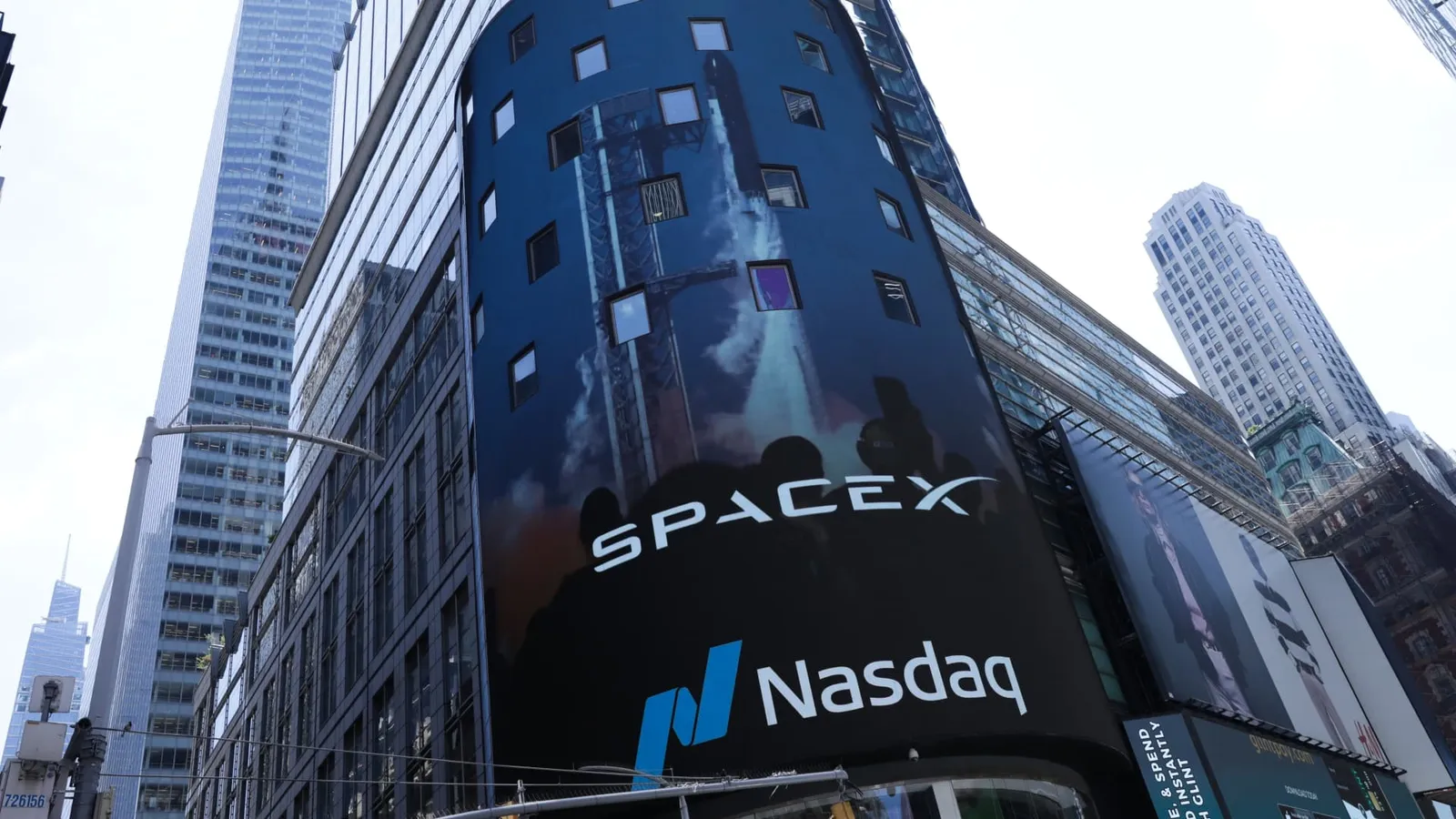
SpaceX jumps 6% in premarket, valuing the company at $2 trillion+ after its debut
The stock’s first-day surge pushes SpaceX past $2 trillion, reshaping how investors and regulators think about private space risk.

Mena construction CPMI slips 12% in April 2026, but execution momentum rebounds to 1.01
GlobalData’s April CPMI shows resilience masking pre-execution caution, with conflict risk surfacing unevenly by country and sector.

Michael Truell told Cursor to cancel meetings and build its own AI model
The Cursor CEO’s “emergency” over Anthropic Claude’s momentum forces a high-stakes pivot with SpaceX risk attached.