
Sam Levinson and Marcell Rév made Euphoria Season 3 feel like the Wild West
From a border-wall stunt to 65mm epic landscapes, HBO’s shift changes how the story hits.
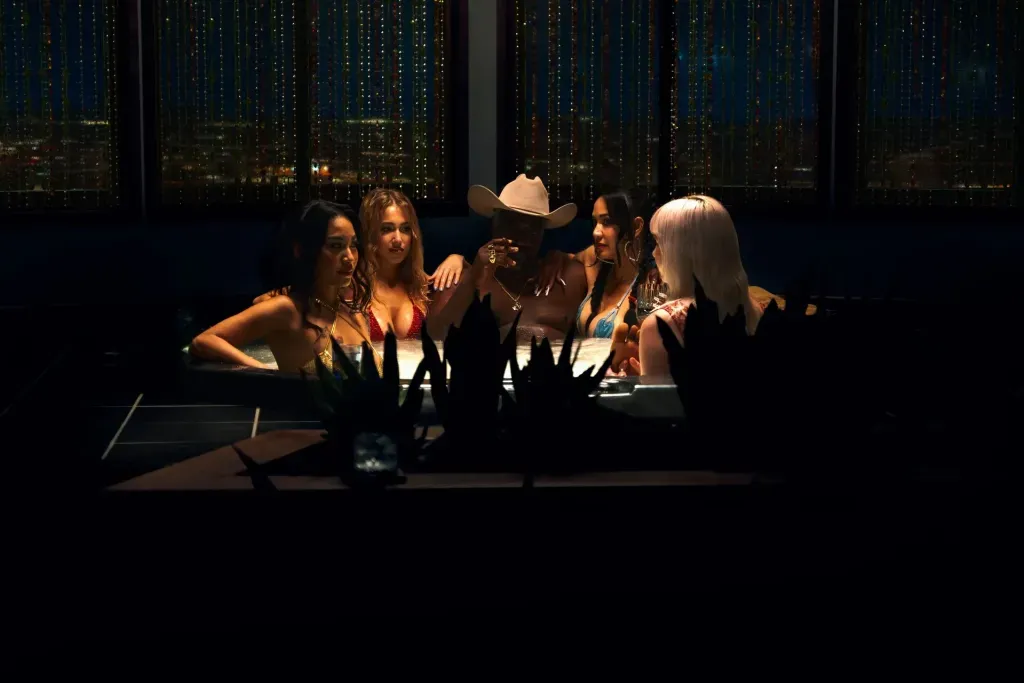
Sam Levinson, the creator of HBO’s Euphoria, and cinematographer Marcell Rév redesigned Season 3’s look to evoke a Wild West, filmed five years after the characters’ last appearance. The choices reframe the series from subjective teenage close-ups to wide, operatic adult-world storytelling, with real production constraints driving the aesthetic.
Season 3 of HBO’s Euphoria is almost unrecognizable because Sam Levinson and cinematographer Marcell Rév deliberately changed the camera’s personality. Instead of the earlier series’ tight, glittery close-ups and expressionist pink, purple, and blue lighting that conveyed teenage inner worlds, Season 3 pulls far back. Levinson puts it plainly: “We’re leaving high school and wanted to explore what the wider world looked like.” The visual outcome matches the plot’s shift to adulthood, including epic landscapes, characters that look small in frame, and storytelling that is “not as subjective from a storytelling perspective as we were in Seasons 1 and 2.”
That shift shows up immediately in the opening scene, where Rue Bennett (Zendaya) attempts to drive an SUV over the border wall between Mexico and the United States. The sequence is staged so viewers can see Rue, in a wide shot, looking “as tiny as a toy figurine,” rocking the vehicle back and forth over the top of the fence. The lighting is conventional and the colors rich on film, but aligned with what you would see in real life. It is a far cry from the show’s earlier look, and it is not just a style change. It signals that Rue’s world is now bigger, harsher, and less filtered through teenage immediacy.
Levinson and Rév say their original mission was to make Euphoria look like how Gen Z teenagers imagine themselves, rather than how they appear from the outside. Season 3 continues that mission but bends it around time passing and consequences arriving. The season is set five years after we last saw the characters, and the story’s adult realities land through Rue’s drug addiction, which becomes the basis for provocative storytelling. She pays off a debt by smuggling narcotics across the border. Meanwhile, Maddy (Alexa Demie) grows frustrated with being overlooked as a Hollywood assistant, looking for the happiness projected by engaged couple Nate (Jacob Elordi) and Cassie (Sydney Sweeney). It is a mix of escape fantasies and adulthood bureaucracy, and the production design supports that tension through scale.
On the technical side, Rév’s comments reveal that the aesthetic was not a purely theoretical exercise. Seasons 2 and 3 were captured on film, moving away from the trademark haze that softened the first season’s digital edges. For Season 3, the team wanted to shoot in 35mm anamorphic, a process that intentionally distorts an image to give it an expanded look. Then they ended up working more and more in large-format 65mm. Rév says the reason is simple and cinematic: it “renders the spaces in such an epic way,” combining the two approaches. That “epic space” goal is the production translation of Levinson’s Wild West idea, where the landscape becomes a kind of character and the protagonists become figures you can lose in the frame.
But evolving a hit look in a long-running show is rarely smooth sailing. Levinson describes the “trap of television” as the incentive for everyone around you to preserve what worked, and he recalls long conversations with HBO between seasons. The network’s question, in his recounting, was essentially: why change it if it worked the first season? Levinson credits Marcell Rév with a shared instinct to evolve: “I remember having long conversations with HBO in between seasons where they would say, ‘Well, why are you changing it? It worked the first season.’ What I appreciate so much about working with Marcell is that we both have a desire and an instinct to evolve.” For executives and boards, that dynamic matters because it is a reminder that creative direction is not only an art decision. It is an organizational one, shaped by risk tolerance, brand memory, and the fear of touching something that is already winning.
The camera scale and production choices also show up in how the show handles adult sexuality and exploitation. As several characters accept jobs as, or adjacent to, sex workers this season, the narrative follows them into a strip club run by antagonist Alamo Brown (Adewale Akinnuoye-Agbaje). The camera does a “substantial amount of ogling,” tracing the women’s curves to set a sensual mood, which then heightens the effect of more harrowing club scenes. A specific example underscores the contrast: Kitty (Anna Van Patten), a new dancer, reapplies her makeup in harsh fluorescent lighting in the club bathroom after being sexually assaulted by rowdy patrons. Rév explains why those lighting realities mattered for the film stock: the stock “works well with those daylight-balanced tubes and the colors of the wall” built on a soundstage, and “You can’t use [that film stock] with the other lighting in the club.” In other words, the look was not just a vibe. It was constrained by physics, palette, and what the camera could actually capture.
Even the most headline-ready moment, the border-wall opening sequence, required serious logistics. Levinson and Rév note that shooting at 15 to 20 feet in the air made it one of the most difficult challenges. The crew built a five-foot replica for close-up shots, while the remainder remained “a tall order.” And the payoff is that the show feels grand and operatic, in line with Levinson’s stated aim. He says, “I’m really proud of this season. We set out to do something that felt grand and operatic, and I think we pulled it off in a really emotional and nuanced way.” The season culminates in a nearly two-hour series finale where beloved character Rue meets a tragic fate, and Levinson also points to performance as a driver of cinematography, noting, “Zendaya is such a naturally gifted physical performer,” which allowed the opening scene to resemble “Buster Keaton meets ‘Jurassic Park.'”
For leaders in media, tech-enabled production, and any business where brand and format are repeatable assets, Euphoria Season 3 is a case study in controlled reinvention. Changing lens distance, film stock choices, and lighting constraints translated directly into a new storytelling posture: less subjective interiority, more adult-world scale. The second-order implication is that creative evolution is not a “nice to have,” it is a strategy to keep audiences from feeling like they already saw everything. If you are an executive trying to protect a franchise while modernizing it, this is a reminder that the biggest creative shifts often begin with one decision: who the camera is for, and what kind of world it’s willing to show you.
This story's Key Insights and Take-aways are locked.
Create a free account to unlock Executive Actions for one credit.
Register to UnlockAlways free for Executives Club members. Join the Club
More in Entertainment

Sword Art Online returns July 2026 with an all-new adventure
A July 2026 return signals franchise momentum. Here is what it means for fans, studios, and IP investors.
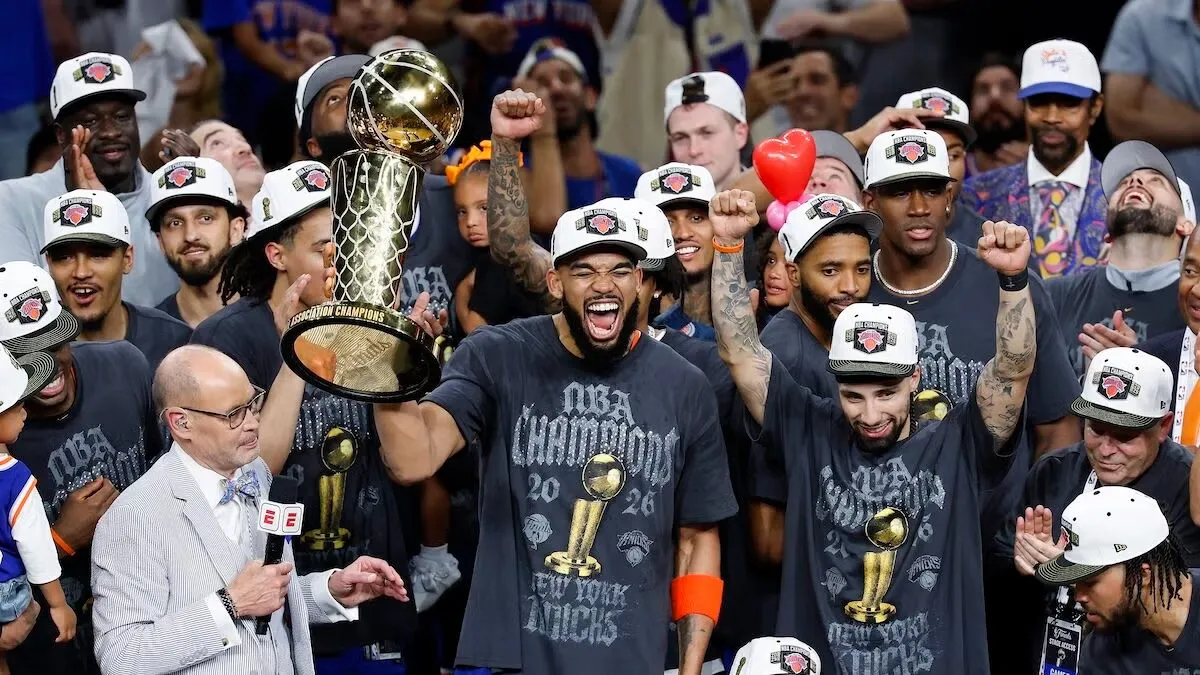
Knicks smash Game 5 ratings: 24.5 million viewers, biggest since 1998
A 157% jump lifts the NBA Finals audience, resetting what ABC and ESPN can expect from Game 5.
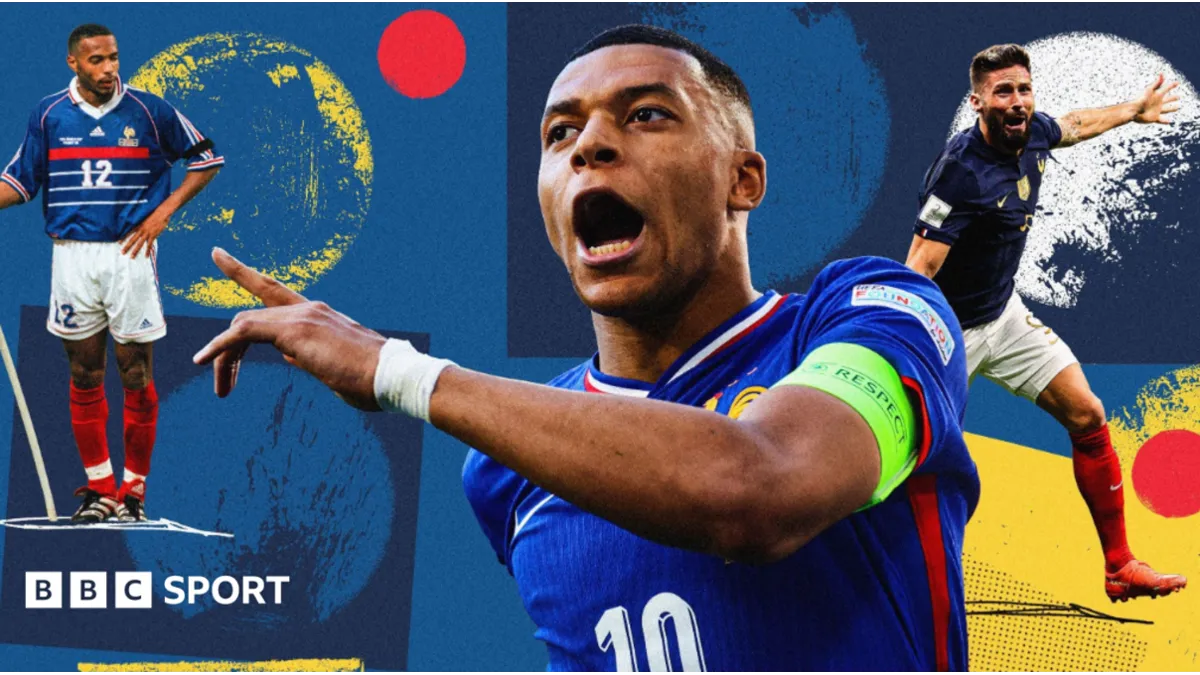
Mbappe becomes France's joint record scorer at 27, rewriting the meaning of longevity
A quick timeline of Kylian Mbappe's rise to France's joint scoring record, and why it matters for football’s next generation.